“grains” search results (7222)

Yunnan small grain coffee
Origin: in 1892, French missionary Father Tian succeeded in growing coffee in a place called Zhukula in Yunnan. Up to now, there are still 24 coffee trees which are more than 90 years old in Zhukula Township. Zhu Kula is a mysterious, legendary and beautiful natural village, which belongs to the Zhukula Village Committee of Pingchuan Town, Binchuan County, Dali Prefecture. It is located on the banks of Yupao River, a tributary of the Jinsha River. It is a Dali Prefecture and Chuxiong.
2014-07-02 Yunnan small grains of coffee Yunnan coffee beans boutique coffee beans
Yunnan Tieka Coffee Flavor description small Grain Taste characteristics process introduction of Fine Coffee
According to reports, in 1892, French missionary Father Tian used coffee fruit to breed the first coffee tree outside the church, and then cultivated more coffee trees and planted them around the church. Since then, the village of Zhukula began to grow coffee, and the village has been surrounded by coffee trees ever since. The two oldest elders in the village, Qi Guanghui and Li Fu
2016-10-09 Yunnan pickup coffee flavor description small grains taste characteristics process boutique
Tippi Katim Coffee Flavor description characteristics of Grinding degree introduction of high-quality coffee beans in producing areas
Baoshan Lujiangba belongs to the south subtropical, northern tropical and semi-dry tropical climate, which is very suitable for the growth of small-grain coffee. The small-grain coffee grown here has the characteristics of excellent quality, fast growth, early fruit and high yield. most of the nutrients are close to or higher than those of foreign products, and the contents of crude fiber and sugar are higher than those of foreign products. As early as 1958, the international coffee tasting was held in London, England.
2016-10-13 Tin Kaka Tim Coffee Flavor description Grinding characteristics varieties producing areas
Coffee cultivation techniques
Coffee, cocoa and tea are called the three major beverages in the world, and their output, consumption and output value all rank first. In addition to being used as a beverage, coffee can also extract caffeine and coffee oil; in medicine, it can be used as an anesthetic, stimulant and diuretic cardiotonic agent.
2014-06-17 Coffee knowledge coffee cultivation techniques coffee encyclopedia
Yunnan Dehong small Coffee planting Base
Dehong small grain coffee is native to Africa and Ethiopia and is the main cultivated variety in the world. In 1951, coffee seed was first introduced to Dehong Luxi Cotton cropping Experimental Station for productive cultivation. The seedlings were planted in 6 mu and grew well. In 1956, the Dehong Prefecture Committee decided to vigorously develop coffee in the whole state, and held a training course on coffee planting techniques throughout the state, so that small-grain coffee was widely developed in the whole state. 1958 de
2015-10-07 Yunnan Dehong Xiao Grain Coffee planting Base Origin
Yunnan Dehong small Coffee planting Base
Dehong small grain coffee is native to Africa and Ethiopia and is the main cultivated variety in the world. In 1951, coffee seed was first introduced to Dehong Luxi Cotton cropping Experimental Station for productive cultivation. The seedlings were planted in 6 mu and grew well. In 1956, the Dehong Prefecture Committee decided to vigorously develop coffee in the whole state, and held a training course on coffee planting techniques throughout the state, so that small-grain coffee was widely developed in the whole state. 1958 de
2014-04-27 Yunnan Dehong Xiao Grain Coffee planting Base Origin
Introduction of Dominica coffee beans with fresh and elegant, full grains and excellent acidity
Generally speaking, coffee with full and uniform grains is easier to preserve. Only the fullest and most evenly grained coffee beans can be roasted to represent the best and best coffee in the country. Unlike coffee produced in Haiti, most of the coffee grown in the Dominican Republic has been washed, which is a symbol of high quality. Dominica coffee uses washing to treat coffee beans, coffee that has been treated in this way.
2016-06-21 Fresh elegant granular full acidity excellent Dominica coffee beans introduction
The Development and Origin of Yunnan small Grain Coffee
Although Zhu Kula is poor and backward, it has an inextricable bond with coffee. In addition to growing coffee all over the country, the villagers all have a tradition of drinking coffee: self-growing, self-grinding and self-brewing, and now men, women and children in the village have the habit of drinking coffee. The villagers here have a special feeling for coffee trees, even if the coffee beans do not bring them any economic benefits.
2016-06-04 Yunnan small grains coffee development origin Zhu Kula although poor and backward it is
Basic information on coffee
[scientific name] the small grain species is Coffea arabica L., the medium grain species is Coffea canephora, the large grain species is Coffea liberica, which is also called Arabian species, the medium seed species is also called Gaffra species, and the large grain species are also called Liberian species. There are two common species: Arabica and Robusta. Rubiaceae (Rubiaceae), coffee genus (Coffea) [at home and abroad]
2014-05-13 Coffee knowledge
Characteristics of Yunnan small grain coffee
[scientific name] the small seed is Coffea arabica L., the medium seed is Coffea canephora, and the large seed is Coffea liberica family: Rubiaceae Coffee is also called Arabian species, medium grain species is also called Gaffra species, and large grain species are also called Liberian species, there are two common species: Arabica and Robusta. Coffee is rich in protein and fat.
2014-06-14 Coffee knowledge Yunnan coffee beans coffee characteristics
General knowledge of fine coffee detailed explanation of Yunnan small grain coffee
Origin: in 1892, French missionary Father Tian succeeded in growing coffee in a place called Zhukula in Yunnan. Up to now, there are still 24 coffee trees which are more than 90 years old in Zhukula Township. Zhu Kula is a mysterious, legendary and beautiful natural village, which belongs to the Zhukula Village Committee of Pingchuan Town, Binchuan County, Dali Prefecture. It is located on the banks of Yupao River, a tributary of the Jinsha River. It is a Dali Prefecture and Chuxiong.
2014-11-13 Coffee knowledge coffee common sense Yunnan coffee small grain coffee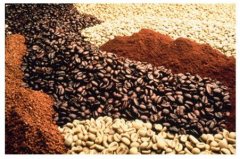
Special "requirements" for the growth environment of small-grain coffee
Small seed coffee is native to the lower part of the Ethiopian rainforest in northern Africa. The temperature is relatively low, with an average annual temperature of 20 degrees. The origin of medium-grain coffee is near the equator. Therefore, small seed coffee has stronger cold tolerance and wider adaptability than medium grain coffee. Medium-grain coffee requires a slightly higher temperature.
2014-07-10 Coffee news small grain coffee coffee planting requirements Yunnan coffee
Introduction to the taste of varieties produced by the treatment method of grindness in Huaguo Mountain of Yunnan small Coffee
Small-grain coffee is suitable for growing in the mountains at an altitude of 800 to 1800 meters. If the altitude is too high, it will taste sour, and if it is too low, it will taste bitter. Small grains of coffee are mostly planted in dry and hot valleys about 1100 meters above sea level, so they are moderately sour, rich and mellow. There is a unique environment suitable for the growth of small seed coffee in many areas of Yunnan, and the quality of small seed coffee is excellent. The planting area is mainly distributed in the
2016-10-15 Yunnan small grains coffee Huaguoshan grinding characteristics treatment varieties producing areas taste
Yunnan small-grain Coffee Huaguoshan Coffee Flavor description treatment characteristics of varieties in producing areas
Pu'er, Xishuangbanna, Wenshan, Baoshan, Dehong, Lincang and other places in the south and west of Yunnan are all the distribution areas of small-grain coffee in Yunnan. As of January 1, 2012, according to the comprehensive survey of Yunnan Province, the planting area of coffee in Yunnan has exceeded 800000 mu, and the output of coffee beans in this period is expected to exceed 55000 tons. For the future, the blueprints of local governments in Yunnan have also been drawn up:
2016-10-13 Yunnan small grains Coffee Huaguoshan Flavor description treatment characteristics varieties producing areas
Introduction to the flavor description and treatment of Yunnan small-grain coffee Huaguoshan coffee
Although the environmental problems of coffee cultivation can reach the standard of hot areas, they are far away from the equator, evaporation, large-scale coffee cultivation in Yunnan is less than 1100m above sea level, the severe drought in Yunnan in recent years, and the frost period in the producing areas, and so on, all make coffee planting can not be guaranteed normally, which directly affects the quality of coffee production. As for other processing problems, not to mention the quality of farmers, tea
2016-10-17 Yunnan small grains Coffee Huaguoshan Flavor description treatment characteristics Variety taste
Introduction to the planting environment of small grain coffee flavor and taste of Arabica coffee in Yunnan
Arabica is deeply loved by Chinese people with a short history of coffee contact because of its strong fruity aroma. it was introduced to China by missionaries in the 19th century and was widely planted in Panzhihua, Sichuan, and the dry-hot valley of the Jinsha River in western Yunnan, where the sunshine was long and there was a big temperature difference between day and night. The local people solved the problem of insufficient seasonal rainfall by diverting water up the mountain.
2016-07-15 Yunnan rabbi coffee small grains flavor taste planting environment introduction
Characteristics of caffeine content in Arabica coffee beans introduction to the manor of family members in the producing area
With the closure of the garden, growers began to look for other disease-resistant varieties. Small-grain coffee is still the most important coffee variety, accounting for about 3% of the world's total coffee production. It is mainly grown in Latin American countries, but also partly in Indonesia and the Pacific islands. The geographical and climatic conditions of Brazil, the world's largest coffee producer, are very suitable for the growth of small-grain coffee and the main coffee products grown.
2016-10-18 Rabbi coffee beans caffeine content characteristics origin taste family members village
Morphological characteristics and planting environment of small-grain coffee
Morphological characteristics edit small trees or large shrubs, 5-8 m tall, base usually much branched; old branches gray, small-grained coffee (6) nodes inflated, young branches glabrous, compressed. Leaves thinly leathery, ovate-lanceolate or lanceolate, 6-14 cm long and 3.5-5 cm wide, tip long acuminate, acuminate part 10-15 mm long, base cuneate or slightly obtuse, rarely rounded, entire or present
2016-06-13 Small grains coffee morphological characteristics planting environment editors trees or large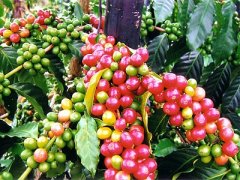
Introduction to the characteristics of Yunnan Coffee varieties whether Yunnan small-grain coffee beans are kadim or iron pickup
Typica and Bourbon, two classic high-quality coffee varieties, are the main coffee varieties in Yunnan. In 1991, Katimo Catimor series varieties were introduced from Kenya (with stronger anti-virus ability and higher yield). Arabian species (also known as small grain species)
2022-08-04 Yunnan small grains coffee varieties introduction which Tiebi Typica Bobang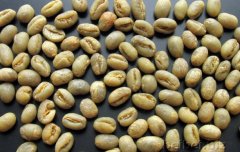
Yunnan small grain coffee round bean Peaberry
Yunnan small round coffee beans Peaberry coffee cherries generally have two flat seeds in the fruit. If one does not grow properly, only one bean seed germinates, and there is only a small round bean (deformed) in a fruit, with a small crack in the middle, it is called pea-shaped coffee bean (peaberry). Round beans (Peaberry) are also known as perle, Perla and Karakol (
2015-06-01 Yunnan small grains coffee round beans Peaberry