“gradually” search results (8246)

The spread of coffee in China
According to historical records, coffee trees were first planted in Taiwan in 1884, and coffee cultivation in mainland China began in Yunnan. In 1902, a French missionary named Tian introduced seeds from "Yingong" in Binchuan County, Yunnan Province. it was successfully planted in a place called Zhu Kula, a tributary of the Jinsha River.
2014-08-06 Coffee Culture Chinese Coffee Coffee spread
Why do coffee beans turn brown after roasting? Why is there an aroma?
Coffee beans are light green and turn brown when roasted. This baking characteristic brown mainly comes from the brown pigment produced by oligosaccharins, amino acids and chlorogenic acids. The so-called brown pigment does not refer to a color or ingredient, but a general term for the many ingredients that make coffee different colors. Raw beans gradually change color during baking because of the total amount of brown pigment
2016-08-24 Coffee beans through roasting why brown aroma coffee raw beans light green
Introduction of Italian Lanchio brand coffee machine: a brief introduction to the historical origin and development of RANCILIO
Rancilio has a history dating back to the 1920s and has gradually established its industry leadership in semi-automatic and household machines through continuous innovation and development in R & D and business. The design of each machine of the company not only ensures the stability of quality and performance, but also pays great attention to the appearance design and humanization of the machine. Chinese name Lanchio
2015-12-16 Italian Lanchi Leo Brand Coffee maker introduction RANCILIO History
Roasting degree, process and characteristics of coffee beans
1. Drying in the early stage of baking, raw beans begin to absorb heat, and the internal water gradually evaporates. At this time, the color gradually changed from green to yellow or light brown, and the silver film began to fall off, you can smell a faint smell of grass. The main function of this stage is to remove moisture, which accounts for about half of the baking time, because water is a good heat transfer conductor and helps to bake the internal material of coffee beans. So
2016-06-01 Coffee beans roasting degree process characteristics
Chinese Coffee Culture
The history of the introduction of coffee into China is not long, and it was not until 1884 that coffee was first planted in Taiwan Province. In the mainland of the motherland, the earliest coffee cultivation began in Yunnan. At the beginning of the 20th century, French missionaries brought the first batch of coffee saplings to Binchuan County, Yunnan Province, and began to grow coffee in the mainland. In terms of natural conditions, many parts of our country and
2014-08-06 China coffee culture coffee introduction history not long until 1884
Boutique coffee learns how to distinguish between new beans and old beans
The main components of raw beans are: carbohydrates, about 49%; moisture, about 12%; protein. About 11%; chlorogenic acid, about 7.6% alkaloids and trace elements, about 0.4%. According to the length of time, raw beans can be specifically divided into: seasonal beans (Current Crop), that is, fresh beans; new beans (New Crop), that is, raw beans of the first year; and old beans (Past Crop), that is,
2014-11-22 Coffee knowledge boutique coffee science new coffee beans old coffee beans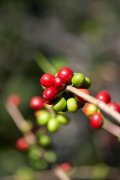
Coffee Entering China Time Imported Coffee Local Coffee Coffee History Origin
As Starbucks 'banshee image gradually became familiar to Chinese people, Chinese coffee culture slowly entered the lives of Chinese people. Throughout the history of coffee culture in China, perhaps we can find the footsteps of coffee, the birthplace of the ancient Arab culture invading the world tea culture. History records that as early as 2,000 BC, Ethiopia's Ajiao people had already been in
2016-04-18 coffee entry china time import local history origin when star buck
Coffee knowledge introduces the distinction between raw beans, new beans and old beans
After dry and wet processing, coffee fruit becomes coffee raw bean (Raw bean/Green bean). The main components of raw beans are: carbohydrates, about 49%; moisture, about 12%; protein. About 11%; chlorogenic acid, about 7.6% alkaloids and trace elements, about 0.4%. According to the length of time, raw beans can be divided into: seasonal beans (Current Cro)
2014-12-30 Coffee knowledge introduction raw beans new beans old beans distinction coffee fruit pass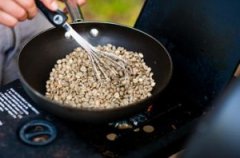
Roasting principle of boutique coffee
To put it simply, baking is heating the baking directly. Unlike cooking, you don't need oil, water, salt or sugar to bake. Just put the raw coffee beans in a heat-resistant container, then heat them on the fire, stir the coffee beans constantly while heating, so that each bean is heated evenly, and then stop heating when we reach the desired level.
2014-09-25 Coffee knowledge coffee roasting coffee baking principle
Specialty Coffee Concept (II)
In fact, there is another reason for the gradual rise of the concept of specialty coffee. It is that coffee producing countries have changed some coffee trees with strong pest resistance and high yield per plant due to the increase in consumption demand. However, they have forgotten that the taste of coffee beans produced in this way has changed. That is, they have forgotten the pursuit of quantity improvement, but they have forgotten the pursuit of taste.
2014-08-25 Coffee knowledge Fine coffee Coffee definition
Fine Coffee Learn Coffee Green beans are classified into different types according to time
Coffee fruits are processed by wet and dry methods to become coffee beans (Raw beans/Green beans). The main components of raw beans are: carbohydrates, about 49%, moisture, about 12% and protein. About 11%; chlorogenic acid, about 7.6% Alkaloids and trace elements, about 0.4%. According to the length of time, raw beans can be specifically divided into: Current Cro
2014-12-28 boutique coffee green beans time classification different kind fruit passing
Coffee producing area of Papua New Guinea, an European coffee producing country
After 991, the quality gradually declined, and the European market was lost with it.
2016-06-16 Papua New Guinea coffee producing areas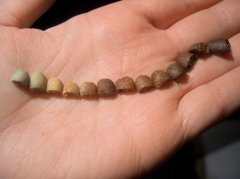
Do you believe the main reason why coffee is getting worse?
Deterioration refers to the change in which the properties of polymers are reduced and cannot be recovered. Due to the action of heat, light, ultraviolet light, oxygen, ozone and various chemicals, polymer materials will change their physical or chemical properties, such as discoloration, cracking, intensity reduction and so on. These external conditions can cause the breakage or cross-linking of the polymer main chain, resulting in structural changes and reduced properties. Baked coffee
2015-09-06 Coffee the more difficult the main reason you believe do not believe deterioration deterio
The main components of raw beans are new beans and old beans.
After dry and wet processing, coffee fruit becomes coffee raw bean (Raw bean/Green bean). The main components of raw beans are: carbohydrates, about 49%; moisture, about 12%; protein. About 11%; chlorogenic acid, about 7.6% alkaloids and trace elements, about 0.4%. According to the length of time, raw beans can be divided into: seasonal beans (Current Cro)
2015-10-13 Raw beans mainly divided into new beans old beans coffee fruit after dry and wet
Introduction to Paradise Bird Manor in Papua New Guinea Coffee Manor
After 1991, the quality gradually declined, and then the European market was lost.
2016-07-04 Spend lighter Papua New Guinea Coffee Manor producing area introduction Bird of Paradise
Boutique coffee recommends "the most expensive coffee" in Japan
Coffee first entered Japan, brought by Dutch missionaries and merchants around 1630, when the Dutch desperately promoted coffee to their Asian colonies of Sri Lanka and Java, India. But the Japanese don't accept this weird drink at all. It was not until the Meiji Restoration that Japanese society began to learn from the West that people gradually accepted the advanced West.
2014-10-29 Coffee knowledge boutique coffee Japanese coffee most expensive coffee
Coffee raw beans: the difference between new beans and old beans
Coffee raw beans: the coffee fruits of new beans and old beans are processed by dry and wet methods, and then become coffee raw beans (Raw bean/Green bean). The main components of raw beans are: carbohydrates, about 49%; moisture, about 12%; protein. About 11%; chlorogenic acid, about 7.6% alkaloids and trace elements, about 0.4%. According to the length of time, raw beans can be specific.
2015-10-15 Coffee raw beans new beans old beans coffee
Boutique coffee beans common sense how to distinguish between new beans and old beans
After dry and wet processing, coffee fruit becomes coffee raw bean (Raw bean/Green bean). The main components of raw beans are: carbohydrates, about 49%; moisture, about 12%; protein. About 11%; chlorogenic acid, about 7.6% alkaloids and trace elements, about 0.4%. According to the length of time, raw beans can be divided into: seasonal beans (Current Cro)
2014-11-20 Coffee knowledge boutique coffee bean common sense new beans old beans
The Development History of Coffee Culture in Japan
Coffee first entered Japan, brought by Dutch missionaries and merchants around 1630, when the Dutch desperately promoted coffee to their Asian colonies of Sri Lanka and Java, India. But the Japanese don't accept this weird drink at all. It was not until the Meiji Restoration that Japanese society began to learn from the West that people gradually accepted the advanced West.
2015-01-19 Japan coffee culture coffee development history the first to enter is made up of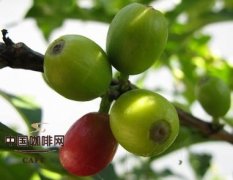
History of Coffee Development in China
According to historical records, planting in Taiwan was successful for the first time in 1884. Since then, coffee trees have been planted in China. Coffee planting in Daliu began in Yunnan Province. In 1902, a French missionary named Tian introduced seeds from India and Gong, and planted them successfully in Binchuan County, Yunnan Province, located in Zhukula, a tributary of Jinsha River. Commercial cultivation of Yunnan coffee began in 1985, but the development was slow.
2015-01-31 Coffee China History Historical Records 1884 Taiwan Cultivation First