“genus class” search results (50)
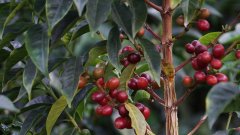
Types and characteristics of Coffee trees knowledge about Coffee trees
A single coffee tree but in places where coffee is artificially planted, people cut off the branches at the top of the coffee tree when it grows to three meters high, so that the coffee tree does not grow too high, so that it can be picked during harvest. According to the botanical classification, the coffee tree belongs to the domain: eukaryotic domain, Eukaryote kingdom: plant kingdom, Plantae phylum: angiosperm phylum, Magnoliophyta class.
2016-05-14 Coffee species characteristics about knowledge individual plant coffee is planted artificially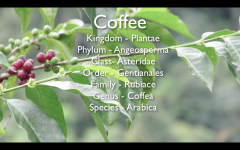
Coffee dictionary coffee beans Coffee Beans
What are coffee beans? What is Coffee Bean? Answer: coffee beans = coffee fruits or coffee raw beans or coffee cooked beans what people understand as coffee beans = coffee ripe beans but in fact, the concept of coffee beans is a mistake, there are no beans at all. # Baidu Encyclopedia entry: beans mainly refer to the seeds or pods of legumes. Leguminosae is a botanical definition.
2015-11-06 Coffee dictionary coffee beans Beans
Coffee growing environment
Arabica scientific name: Coffea arabica family: Rubiaceae coffee morphological characteristics: small trees or large shrubs, plant height 5~8 meters. Base usually much branched, older branches gray. nodes dilated, young branches glabrous. Leaves thin leathery ovate-lanceolate or lanceolate, apex long acuminate, base cuneate or slightly obtuse, entire or shallowly undulate, glabrous on both sides. Cymes several clustered in leaf axils
2014-08-08 Coffee knowledge Arabica coffee Coffee encyclopedia
An introduction to the characteristics of Yunnan small-grain Coffee Tippica Coffee Flavor and Taste Manor
Coffee is a kind of beverage crop with high economic value, which is called the three largest beverages in the world together with cocoa and tea, and its output and consumption ranks first among the three beverages. Coffee is rich in protein, fat, sucrose, starch, glucose, caffeine and other substances, rich aroma and delicious taste. Coffee is a perennial evergreen shrub or small tree of the genus Coffea of Rubiaceae.
2016-09-12 Taste delicious Yunnan small grains coffee pickup flavor taste manor producing area
The introduction and source of small coffee novice must see
Arabica scientific name: Coffea arabica family: Rubiaceae coffee morphological characteristics: small trees or large shrubs, plant height 5~8 meters. Base usually much branched, older branches gray. nodes dilated, young branches glabrous. Leaves thin leathery ovate-lanceolate or lanceolate, apex long acuminate, base cuneate or slightly obtuse, entire or shallowly undulate, glabrous on both sides. Cymes several clustered in leaf axils
2015-11-24 Arabica Coffee Introduction Origin Beginners Must-See Scientific Name Cof
Yunnan coffee common sense coffee growing environment and brewing
Arabica scientific name: Coffea arabica family: Rubiaceae coffee morphological characteristics: small trees or large shrubs, plant height 5~8 meters. Base usually much branched, older branches gray. nodes dilated, young branches glabrous. Leaves thin leathery ovate-lanceolate or lanceolate, apex long acuminate, base cuneate or slightly obtuse, entire or shallowly undulate, glabrous on both sides. Cymes several clustered in leaf axils
2015-02-07 Yunnan coffee common sense small grains growth environment brewing scientific name
Varieties of coffee trees
1.5 Arabica coffee varieties improved Arabica coffee beans include traditional varieties that are very close to the original, as well as mutants or hybrids mated with Robusta. Coffee variety improvement is not only limited to the fight against diseases and insect pests, but also the pursuit of a steady stream of harvests. 1. The variety of Arabica coffee belongs to the evergreen shrub Ara of the genus Rubiaceae.
2014-07-04 Coffee knowledge coffee trees varieties coffee encyclopedia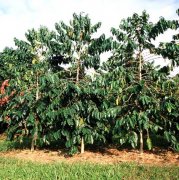
Coffee beans and coffee trees types of coffee trees
In general, coffee trees can grow to 4-5 meters high, and even 9-10 meters high. A single coffee tree but in places where coffee is artificially planted, people cut off the branches at the top of the coffee tree when it grows to three meters high, so that the coffee tree does not grow too high, so that it can be picked during harvest. According to the botanical classification, the coffee tree belongs to the domain: eukaryotic domain, Eukaryote realm:
2014-09-18 Coffee knowledge types of coffee trees coffee beans coffee trees
China Yunnan Arabica Coffee Bean Flavor Description Taste Variety Characteristics Production Area Introduction Grinding Degree
Yunnan coffee China Yunnan coffee is mainly concentrated in Baoshan, Dehong and Pu 'er three areas. Although the main varieties are basically Catim, but due to local microclimate, soil elevation and other natural reasons, its taste is also very different. Baoshan area belongs to Nujiang dry and hot valley, its coffee taste rich, rich aroma, moderate acidity. Pu 'er coffee tastes soft
2016-10-19 China Yunnan Arabica Coffee Bean Flavor Description Taste Variety Region Characteristics
Introduction to the planting environment of varieties in Yunnan Huaguoshan flavor coffee by cold extraction time grinding scale treatment
Baoshan: the cultivation of coffee in Baoshan began in the mid-1950s, and the first coffee seedling was introduced by the late patriotic overseas Chinese Mr. Liang Jinshan in Southeast Asia. The local famous Lujiangba small grain coffee is of excellent quality. It was rated as first class in London, England as early as the late 1950s. In recent years, with the expansion of international trade, Lujiangba's small-grain coffee is more famous. Europe, the United States, Afghanistan
2016-10-19 Yunnan Huaguoshan Flavor Coffee extract time Grinding scale treatment Variety
Where can coffee trees be planted in Yunnan under the coffee bean planting program?
There are mainly three kinds of coffee products in the business, and there are different categories under these three varieties. Arabica coffee (arabica) coffee is the most important and the best quality coffee beans, derived from esopian, is currently the most widely cultivated coffee. Liberica coffee comes from Rabindranath Basta (robusta) comes from fruit. The name of the latter indicates that it is rough.
2016-10-11 Planting coffee beans planning internal which place can coffee business
Guatemala Coffee Bean Introduction Volcanic soil is the highest Arabica variety
Each region of coffee beans have their own characteristics, but also for Guatemala won a lot of international praise, especially Antigua it sour, sweet, mellow texture is how perfect harmony; add a hint of smoke, more emphasis on its mystery, after tasting you will have reason not to let yourself look for alternatives everywhere. Guatemala coffee beans are mostly cultivated in volcanic areas at high altitudes where the soil is highest
2016-06-21 mountain soil genus superior Arabica species Guatemala coffee
Flavor and taste characteristics of coffee manor in Tanzania introduction of Kilimanjaro Coffee Bean
The national emblem of Tanzania was developed in 1964 on the basis of the Tanganyika national emblem. The shield in the center is divided into four parts: the top burning torch cuts through the pre-dawn darkness and lights the flame of freedom and hope; it is painted with the Tanzanian flag; the red ground below is crossed with tomahawks and spears; finally, the waters of the Indian Ocean and the lakes in the territory. Shield
2016-08-12 Tanzania coffee manor producing area flavor taste characteristics boutique coffee beans
Flavor and taste characteristics of coffee manor in Kenya introduction of fine coffee beans
The Kenyan flag is based on the Kenyan flag and the Kenyan flag based on the flag of the African National Union of Kenya before independence. It is rectangular, with a ratio of length to width of 3:2. From top to bottom, it is made up of three parallel horizontal rectangles of black, red and green, with a white edge above and below the red rectangle. The pattern in the middle of the flag is a shield and two crossed spears. Black symbolizes Ken.
2016-08-19 Kenya coffee manor producing area flavor taste characteristics boutique coffee beans medium
Coffee beans are not beans?! Are you kidding me?
Coffee beans / red beans / soybeans / black beans are all called beans, but do you make them? Coffee beans are not beans. So, what exactly are coffee beans? To tell you that lattes and cappuccinos are not a kind of coffee, they are a kind of drink, and the taste of this drink is made up of espresso plus milk and milk foam. And the flavor of espresso is
2015-10-07 Coffee beans no are you kidding me? coffee beans red beans soybeans black beans called
The growth process from Coffee Tree to Coffee Bean
Coffee tree, a perennial evergreen shrub or small tree of Rubiaceae, is a horticultural perennial cash crop with the characteristics of fast growth, high yield, high value and wide market. Wild coffee trees can grow to a height of 5 to 10 meters, but coffee trees planted on the manor are often cut to less than 2 meters in order to increase their fruit and facilitate harvesting. The opposite leaves of coffee trees are long oval.
2016-05-06 Coffee coffee beans growth process production process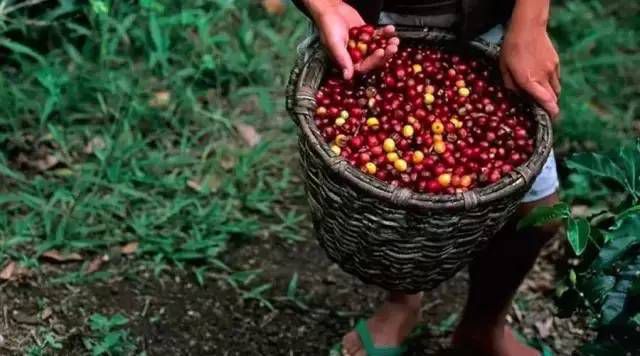
Understanding of coffee beans-coffee beans are not beans but fruits
Coffee beans / red beans / soybeans / black beans are all called beans, but do you make them? Coffee beans are not beans. So, what exactly are coffee beans? To tell you that lattes and cappuccinos are not a kind of coffee, they are a kind of drink, and the taste of this drink is made up of espresso plus milk and milk foam. And the flavor of espresso is
2015-11-16 Coffee beans not beans but fruits coffee beans red beans soybeans black
Yunnan Tieka Coffee Variety Flavor description introduction of Fine Coffee beans
Pu'er, Xishuangbanna, Wenshan, Baoshan, Dehong, Lincang and other places in the south and west of Yunnan are all the distribution areas of small-grain coffee in Yunnan. As of January 1, 2012, according to the comprehensive survey of Yunnan Province, the planting area of coffee in Yunnan has exceeded 800000 mu, and the output of coffee beans in this period is expected to exceed 55000 tons. For the future, the blueprints of local governments in Yunnan have also been drawn up:
2016-09-29 Yunnan pickup coffee variety producing area flavor description boutique coffee beans introduction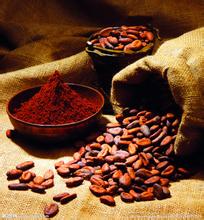
Kenya Jinchu Valley Coffee Flavor Taste Manor Production Characteristics Boutique Coffee Bean Introduction
Purple-breasted Buddhist monk (Coracias caudatus), feathers are blue and green, Kenya's national bird Purple-breasted Buddhist monk Kenya's national bird Purple-breasted Buddhist monk chest is purple, bright and beautiful, and feeds on insects. Birds\Buddhist Monks\Buddhist Monks\Buddhist Monks. Woodlands and savannahs of sub-Saharan Africa and southern Arabia. It is the national bird of Kenya and Botswana.
2016-09-01 Kenya Coffee Flavor Taste Manor Region Characteristics Boutique
China Yunnan coffee beans Yunnan small grain coffee China Yunnan coffee beans quotation
, fertile soil, sufficient sunshine, rich rainfall and large temperature difference between day and night, these unique natural conditions form the particularity of Yunnan small grain coffee taste strong but not bitter, fragrant but not strong, slightly fruity. As early as the 1950s, Yunnan small seed coffee was very popular in the international coffee market and was rated as the top grade of coffee. The history of coffee cultivation in Yunnan can be traced back to 1892.
2016-05-04 China Yunnan coffee beans small grains coffee quotation soil fertile sunshine sufficient