“europe” search results (7471)

1/3 of the people in the world drink coffee. The way people drink coffee in other countries.
People all over the world drink coffee in different ways, but if you ask how many ways to drink coffee, I'm afraid no one can tell. It can be said that there are many ways to drink coffee in as many countries as there are in the world. 1/3 people in the world drink coffee, but it seems that no two countries drink coffee in the same way. People in Arab countries
2015-10-12 World 1/3 people drink coffee countries people ways
The history of coffee roaster basic knowledge of coffee
As early as the 13th century, the Arabs invented to put coffee beans in a pot, stir-fry them with fire, grind them into powder, and then brew coffee. The early Arabs liked to bake the beans shallowly and boil them with spices such as cardamom. Later, this coffee stir-frying method spread to Syria, Turkey and Egypt, where it was used to stir-fry the coffee black, then grind it into powder and add it.
2015-07-06 Coffee roaster history basics common sense
The Historical Development of Coffee spread in the World
Origin: coffee was first discovered in the kaffa region of southern Ethiopia in the 6th century AD. There are many theories about the origin of coffee, but the more recognized is the story of Cuddy, the shepherd, who discovered coffee. Kadi, a shepherd in Kafa province in southern Ethiopia, one day when he was herding his sheep, he found that the normally meek sheep were suddenly abnormal.
2014-09-11 Coffee knowledge coffee world coffee communication coffee development history
European Coffee Culture High-quality Coffee Culture
In Europe, coffee culture can be said to be a very mature form of culture. from the entry of coffee into this continent to the emergence of the first coffee shop in Europe, coffee culture is developing at an extremely rapid speed, showing extremely exuberant vitality. In Vienna, Austria, coffee, music and waltz dance are also called the three treasures of Vienna, which shows the far-reaching significance of coffee culture. Care a lot.
2015-02-07 Europe coffee culture boutique common sense it can be said a kind of
World Coffee History in the sixth Century Ethiopian shepherds discover red coffee fruits
In the sixth century, Ethiopian shepherds discovered red coffee fruits. In the eleventh century, Arab merchants spread coffee to Europe. In the 16th century, Franz Geora Kolschitzky, a Viennese, established the first coffee shop in Europe. He also started the trend of drinking coffee with milk. In 1554, coffee in Istanbul became black gold, and it was very popular with Ethiopian shepherds in the sixth century.
2015-01-26 World Coffee History sixth Century Yesso Bia Shepherd Discovery Red Fruit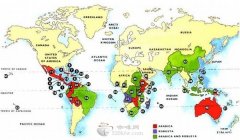

The first coffee shops in the world.
----Central Asia---------------- Although originally intended for religious purposes, these places soon became centres for chess, small talk, singing, dancing and music. From Mecca, cafes spread throughout Asia.
2015-04-28 early cafe countries in the world earliest appeared
The first cafes around the world
-Central Asia-the earliest cafe, called Kaveh Kanes, was built in Mecca. Although originally for a religious purpose, these places soon became centers for playing chess, chatting, singing, dancing and listening to music. Since Mecca, cafes have spread all over Asia.
2014-07-09 Coffee brand coffee culture the first batch of cafes
The earliest cafes in various countries
-Central Asia-the earliest cafe, called Kaveh Kanes, was built in Mecca. Although originally for a religious purpose, these places soon became centers for playing chess, chatting, singing, dancing and listening to music. Since Mecca, cafes have spread all over Asia.
2014-06-12 Coffee culture coffee shop earliest coffee shop
The first cafes in the world
-Central Asia-the earliest cafe, called Kaveh Kanes, was built in Mecca. Although originally for a religious purpose, these places soon became centers for playing chess, chatting, singing, dancing and listening to music. Since Mecca, cafes have spread all over Asia.
2014-07-25 The first batch of cafes coffee shop features
History of Coffee Culture on the Source of Coffee
The history of coffee can be traced back to the tenth century AD, but those are unverifiable history. For example, the widely spread story of shepherds, the story of monks across the desert and so on. What is really well documented is the spread time of coffee beans, that is, from Africa to Europe and the whole world, probably around the 16th-17th century AD, which is known to be a great voyage.
2014-09-05
Introduction to the Origin Culture of Indonesian Coffee beans Malaba Coffee in India
Strictly speaking, monsoon coffee can not be attributed to coffee varieties, but a unique processing method of raw coffee beans, is a new flavor created inadvertently. In the 17th and 18th centuries, India shipped coffee beans to Europe by sailboat, which took six months. The raw beans were placed on the bottom of the barn and absorbed the moisture and salty taste from the sea. The raw beans had already gone bad when they arrived in Europe, and the color changed from dark green.
2016-06-05 Indonesia coffee beans origin culture introduction India Malaba Rabbah coffee
How African Coffee Beans Were Accepted by European Civilization
Balzac carried a coffee-pot with him, and with the aid of this drink he was able to write for twelve hours a day; Beethoven must have consumed no less than sixty grams of coffee beans per cup of coffee, or he would have been furious; Voltaire is said to have drunk fifty cups of coffee a day, and no other drink has played such an important role in the history of human civilization
2015-03-24 africa coffee beans how europe civilization acceptance
How African coffee beans were accepted by European civilization
Balzac carries a coffee pot with him. With the help of this drink, he can write for 12 hours a day. Beethoven must use no less than 60 grams of coffee beans per cup of coffee, or he will be furious. It is said that Voltaire drinks 50 cups of coffee a day except coffee, no drink can play such an important role in the history of human civilization, this drink is located in a corner, in Europe
2014-10-15 Coffee knowledge African coffee beans European civilization
The only coffee elephant bean drunk by the royal family in Europe
All kinds of coffee beans have different tastes, but they are almost the same size, but the elephant bean is different, it is three times or more than other coffee beans. The taxonomic name of elephant bean is Maragogipe (also known as Maragogype), which comes from Malagogippe County, Bahia State, Brazil. The taxonomic status of elephant beans was first established in the county in 1870. Arabica coffee
2015-05-14 European royal use only one kind coffee like beans all kinds coffee beans flavor
Boutique Cafe the earliest coffee shop in history
-Central Asia-the earliest cafe, called Kaveh Kanes, was built in Mecca. Although originally for a religious purpose, these places soon became centers for playing chess, chatting, singing, dancing and listening to music. Since Mecca, cafes have spread all over Asia.
2014-12-01 Boutique cafe history early - Asia
Italian Coffee: an introduction to the History and cause of American Coffee
[introduction] the name American coffee comes from the habit of American soldiers in Europe during the war to mix hot water into small portions of espresso that are common in Europe. It is said that the Apollo spaceship, which landed on the moon for the first time, had a life-and-death failure on its way home. At that time, the ground crew comforted the three astronauts with a word: come on! Delicious hot American coffee is waiting for your return.
2015-12-05 Italian style Coffee American style Development History reason introduction name
Coffee shop the earliest coffee shop in history
-Central Asia-the earliest cafe, called Kaveh Kanes, was built in Mecca. Although originally for a religious purpose, these places soon became centers for playing chess, chatting, singing, dancing and listening to music. Since Mecca, cafes have spread all over Asia.
2014-10-14 Coffee knowledge coffee shop history the first batch of cafes
The history of coffee roasters
As early as the 13th century, the Arabs invented to put coffee beans in a pot, stir-fry them with fire, grind them into powder, and then brew coffee. The early Arabs liked to bake the beans shallowly and boil them with spices such as cardamom. Later, this coffee stir-frying method spread to Syria, Turkey and Egypt, where it was used to stir-fry the coffee black, then grind it into powder and add it.
2014-07-31 Coffee roaster history as early as the 13th century Arabs clear coffee beans
The Cultural course of Coffee and European Coffee
From the end of the 15th century to the beginning of the 16th century, coffee was already a popular drink in the Middle East, but it was also regarded as a kind of medicine. European ambassadors and merchants in the Turkish Empire also believed that coffee was a healthy drink with special curative effects, and many positive comments helped to import coffee into Europe. Lovov, a famous German doctor and botanist, wrote a book about coffee as early as 1582, but
2015-06-18 Coffee Europe culture history fifteenth century end of the century sixteenth century coffee has been