“declaration” search results (1107)

Puerto Rican Coffee Flavor with complete Flavor; introduction to the characteristics of boutique coffee beans in manor area
On September 23, 1869, the people of Puerto Rico were in R. Under the leadership of Emmetrio Betons, an uprising was held in the town of Larez (known as the voice of Larez in history), which declared the establishment of a republic on the 24th and was later suppressed by the Spanish colonial army. After a long struggle, Puerto Rico was finally granted local self-government by Spain. However, from then on, after the Spanish-American War, the island became an American colony, when
2016-08-29 Flavor complete Puerto Rico coffee taste manor producing area characteristics boutique
Delicious and light Venezuelan coffee beans from San Cristobal area
Coffee cultivation in Venezuela begins with the introduction of coffee trees from Martinique in 1730, and the development of coffee in this country did not receive much attention at the time of introduction. Because Venezuela was in the heyday of the oil industry, coffee development was in the doldrums. It was not until later that it slowly recovered and not only planted the original Tippica and bourbon coffee trees, but also developed new producing areas.
2016-06-29 Delicious light Venezuela coffee beans Crystal Val producing area
Interesting German statement on banning Coffee
Frederick the Great of Germany issued a declaration banning coffee in 1777, which made it clear that he was partial to beer. This statement is interesting and worth reading: it breaks my heart to learn that our people's coffee consumption is increasing and our country's money is flowing out. Excessive soaking in coffee all over the world must be strictly prohibited and corrected. Beer is our nation's drink, and our people must not give it up. I, my ancestors and the officials of the whole country all drank.
2015-04-02 Interesting Germany ban coffee declaration Frederick the Great 77 7 years
Coffee ban in History Coffee Culture History
Although coffee has become a necessity of people's life, no one would think that coffee is harmful to the human body, but in history, coffee was regarded as the embodiment of the devil. Let's take a look at the tragic fate of coffee at different historical stages in different countries. 1. Mecca (Saudi Arabia) the ruler of Mecca banned people from drinking coffee in 1511. The authorities believe that drinking coffee will make people do it.
2015-09-01 Historically coffee bans cultural history although today coffee has become people
Did you know that delicious coffee was banned once?
Although coffee has become a necessity of people's life, no one would think that coffee is harmful to the human body, but in history, coffee was regarded as the embodiment of the devil. Let's take a look at the tragic fate of coffee at different historical stages in different countries. 1. Mecca (Saudi Arabia) the ruler of Mecca banned people from drinking coffee in 1511. The authorities believe that drinking coffee will make people do it.
2015-06-12 Know delicious coffee once forbidden although today become people
Do you know anything about coffee bans in history?
Although coffee has become a necessity of people's life, no one would think that coffee is harmful to the human body, but in history, coffee was regarded as the embodiment of the devil. Let's take a look at the tragic fate of coffee at different historical stages in different countries. 1. Mecca (Saudi Arabia) the ruler of Mecca banned people from drinking coffee in 1511. The authorities believe that drinking coffee will make people do it.
2015-09-18 Understand historically coffee ban although today become people alive
Interesting German "statement on banning Coffee" Common sense of Coffee Culture
Frederick the Great of Germany issued a declaration banning coffee in 1777, which made it clear that he was partial to beer. This statement is interesting and worth reading: it breaks my heart to learn that our people's coffee consumption is increasing and our country's money is flowing out. Excessive soaking in coffee all over the world must be strictly prohibited and corrected. Beer is our nation's drink, and our people must not give it up. I, my ancestors and the officials of the whole country all drank.
2015-02-12 Interesting Germany ban coffee declaration coffee culture common sense Frederick big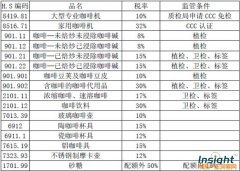
Policy Analysis of Coffee Industry in Cafe
According to the relevant laws of China, coffee beans and their peripheral products (except sugar) are free trade goods. The relevant policies and regulations related to the import of coffee beans in China mainly include: (1) the import tax rate and regulatory conditions are related to the import tax rate and regulatory conditions. Professional coffee machine (boiler above 10 liters / excluding 10 liters) can apply for 3C exemption. The label belongs to the scope of commodity inspection, which is stipulated from 2.
2015-01-07 Coffee shop operation coffee industry policy analysis according to China related law
Having a cup of coffee while having class? The most romantic major will be Yunnan Agricultural University.
Have you ever heard of such a romantic and interesting class in college class, such as identifying coffee beans, learning to taste coffee and making fancy coffee? Yunnan Agricultural University will declare the coffee and coffee project, relying on the Tropical crops College, not only to enable students to master coffee production, consumption, trade and other related knowledge, but also to train students to identify coffee varieties, master coffee services, brew coffee and other specialties.
2016-08-17 While drinking coffee class romance major Yunnan agricultural university university lessons
Flavor description of Arusha Coffee Manor in Tanzania introduction of boutique Coffee in Variety producing area
In 1886, Tanganyika Inland was placed under the German sphere of influence. In November 1917, British forces occupied the whole territory of Tanganyika. In 1920, Tanganyika became a British mandate. In 1946, the United Nations General Assembly adopted a resolution to change it into a British trust. On May 1, 1961, Tanzania achieved internal autonomy. On December 9 of the same year, independence was declared, and the Republic of Tanganyika was established a year later. Zanzibar became a British guarantor in 1890
2016-09-28 Tanzania Arusha coffee manor flavor description variety producing area characteristics
Analysis of the policy of China's import and export coffee industry the process of coffee bean import
According to the relevant laws of China, coffee beans and their peripheral products (except sugar) are free trade goods. The relevant policies and regulations related to the import of coffee beans in China mainly include: (1) the import tax rate and regulatory conditions are related to the import tax rate and regulatory conditions. Professional coffee machine (boiler above 10 liters / excluding 10 liters) can apply for 3C exemption. The label belongs to the scope of commodity inspection, which is stipulated from 2.
2015-09-08 Analysis China Import and Export Coffee Industry Policy Coffee beans Import process Root
Coffee short story-German coffee
In 1721, the earliest coffee shop in Germany was born in Berlin. As soon as cafes became popular in Germany, they were restricted by the local authorities. Therefore, compared with other countries, the development of German coffee is relatively simple. It was not until the early 19th century that coffee became one of the best money-making tools at the disposal of Germans. Coffee farming was vigorously developed in Latin America and Central America in the mid-19th century.
2014-08-05 Coffee culture German coffee coffee story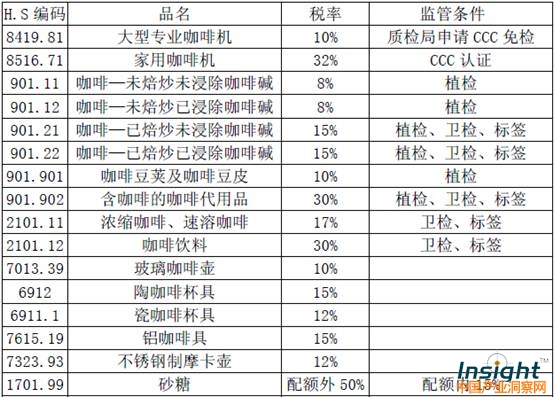
Development trend of Coffee in China Coffee Industry Policy Analysis of Yunnan Coffee in China
According to the relevant laws of China, coffee beans and their peripheral products (except sugar) are free trade goods. The relevant policies and regulations related to the import of coffee beans in China mainly include: (1) the import tax rate and regulatory conditions are related to the import tax rate and regulatory conditions. Professional coffee machine (boiler above 10 liters / excluding 10 liters) can apply for 3C exemption. The label belongs to the scope of commodity inspection, which is stipulated from 2.
2015-03-04 China Coffee Development trend Industry Policy Analysis according to related France
Coffee short Story German Coffee Culture History
In 1721, the earliest coffee shop in Germany was born in Berlin. As soon as cafes became popular in Germany, they were restricted by the local authorities. Therefore, compared with other countries, the development of German coffee is relatively simple. It was not until the early 19th century that coffee became one of the best money-making tools at the disposal of Germans. Coffee farming was vigorously developed in Latin America and Central America in the mid-19th century.
2015-07-29 Coffee Story Germany Cultural History 1721 early Cafe
Coffee culture story The origin of German coffee
In 1721, Germany's first café was founded in Berlin. Cafes in Germany have just begun to flourish and are subject to many restrictions by local authorities. Therefore, compared with other countries, the development of German coffee is relatively single. It wasn't until the early 19th century that coffee became one of the best money-making tools available to Germans. Coffee growing in Latin and Central America in the mid-19th century
2015-01-17 coffee culture story Germany coffee origin 1721 early
Introduction of Coffee Flavor and Taste characteristics of Congo Manor in Nicaragua
Columbus arrived here in 1502 and reached the east coast of Nicaragua. In 1522, Spanish colonists began to conquer the region. The cities of Granada and Leon were founded in 1524. From then on, Nicaragua became a Spanish colony and came under the jurisdiction of the Governor's Office of Guatemala. The city of Leon developed into a political and cultural center; Granada became a commercial and agricultural center. In the later period of colonial rule
2016-09-01 Nicaragua Los Congo Manor Coffee Flavor Taste characteristics Fine goods
The History of Fine Coffee Culture Coffee Culture in Germany
In 1721, the earliest coffee shop in Germany was born in Berlin. As soon as cafes became popular in Germany, they were restricted by the local authorities. Therefore, compared with other countries, the development of German coffee is relatively simple. It was not until the early 19th century that coffee became one of the best money-making tools at the disposal of Germans. The vigorous development of coffee cultivation in Latin America and Central America in the mid-19th century
2015-04-07 Boutique coffee cultural history Germany coffee culture 1721 early
Fragrant Nicaraguan coffee flavor taste manor boutique coffee introduction
Columbus arrived here in 1502 and reached the east coast of Nicaragua. In 1522, Spanish colonists began to conquer the region. The cities of Granada and Leon were founded in 1524. From then on, Nicaragua became a Spanish colony and came under the jurisdiction of the Governor's Office of Guatemala. The city of Leon developed into a political and cultural center; Granada became a commercial and agricultural center. In the later period of colonial rule
2016-08-31 Incense taste Nicaragua coffee flavor manor boutique introduction
Fragrant and delicious Nicaraguan Coffee Manor flavor and taste characteristics of lemon tree manor
Columbus arrived here in 1502 and reached the east coast of Nicaragua. In 1522, Spanish colonists began to conquer the region. The cities of Granada and Leon were founded in 1524. From then on, Nicaragua became a Spanish colony and came under the jurisdiction of the Governor's Office of Guatemala. The city of Leon developed into a political and cultural center; Granada became a commercial and agricultural center. In the later period of colonial rule
2016-08-12 Aroma delicious Nicaragua coffee manor producing area flavor taste characteristics introduction
Slightly bitter Jamaican Coffee Flavor Taste introduction to the characteristics of boutique coffee beans in manor area
Columbus came to Jamaica in 1494, and in 1509 Spain declared Jamaica its colony and renamed it Santiago. Spain's slave policy towards the indigenous peoples led to the extinction of the Arawaks on the island as a result of war, disease and enslavement. In order to supplement Jamaica's labor force, Spain began to sell slaves from Africa to Jamaica since 1517, resulting in
2016-09-02 Slightly bitter Jamaica coffee flavor taste manor producing area characteristics boutique