“coffee pests” search results (2100)

Varieties of coffee trees
1.5 Arabica coffee varieties improved Arabica coffee beans include traditional varieties that are very close to the original, as well as mutants or hybrids mated with Robusta. Coffee variety improvement is not only limited to the fight against diseases and insect pests, but also the pursuit of a steady stream of harvests. 1. The variety of Arabica coffee belongs to the evergreen shrub Ara of the genus Rubiaceae.
2014-07-04 Coffee knowledge coffee trees varieties coffee encyclopedia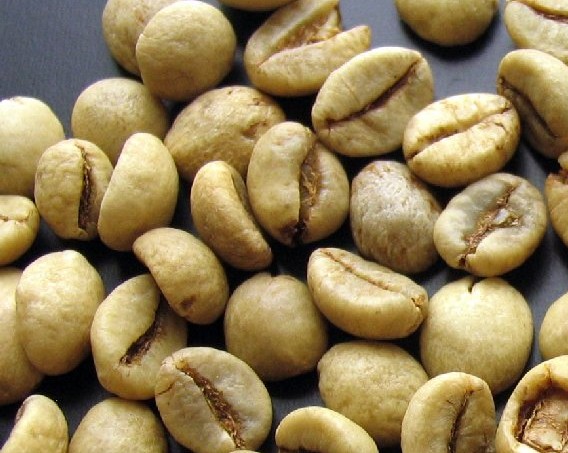
Robusta's secret.
[guide] "Robusta" coffee, commonly known as "thick beans", can be grown at low elevations (200 to 800 meters above sea level), has strong resistance to diseases and insect pests, is not vulnerable to agricultural pests, has a high annual output per unit area, and is harvested in large quantities by machine. in general, the cost of production is much lower than that of Arabica. "Robusta" coffee is commonly known as "stout beans", at low elevations (200 above sea level)
2015-11-13 Rob Booth unknown secret.
What kind of coffee beans do you have in Tanzania coffee?
Due to political instability and rampant diseases and insect pests, the coffee industry in Tanzania has been damaged, leading to a decline in the overall level of coffee and instability in quality, which in turn lead to lower prices, which are usually the result of a further decline in the coffee industry. What's more, it is estimated that more than 12% of the Arabica coffee grown in northern Tanzania from 1969 to 1985 has gone.
2016-04-19 Tanzania coffee individual products which coffee beans market due to political instability.
Water washing grade AA of Jiatugi treatment plant in Nyeri production area of Kenya
According to botanists in SL laboratory, SL28 and SL34 are genetic variants. Among them, SL28 has a mixed pedigree of French missionaries, mochas and Yemens Tibica. The goal of cultivating SL28 was to mass produce coffee beans with high quality and resistance to diseases and insect pests. Although the later production of SL28 was not as large as expected, copper leaves and broad bean-shaped beans were very popular.
2016-06-20 Kenya Nyeri production area Tuji Gatugi treatment plant washing
The coffee beans in Tanzania have extraordinary quality.
Coffee beans in Tanzania have an extraordinary quality. For example, the fine Tanzanian AA coffee (Chagga AA), produced in the Moshi district near Mount Kilimanjaro, is famous for its full-grained and fragrant quality. Due to political instability and rampant diseases and insect pests, the coffee industry in Tanzania has been damaged, leading to coffee as a whole
2016-05-24 Tanzania coffee beans specific different loud quality
The most classic high-quality Arabica variety of tin coffee flavor introduction
Catimor: Catimor is not purely Arabica, it is a hybrid of Timor species (belonging to Robusta species) and caturra(a variant of Popan species), so catimor has 25% Robusta lineage, and its Robusta lineage also determines its taste defects: aroma is not rich enough, and the overall taste is bitter, prone to astringent and pungent
2016-07-05 classic quality rabbi kind pickup coffee flavor taste presentation tim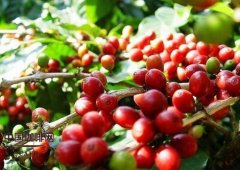
Kenyan Coffee Flavor of Jiatugi processing Plant in Nyeri production area of Kenya
According to botanists in SL laboratory, SL28 and SL34 are genetic variants. Among them, SL28 has a mixed pedigree of French missionaries, mochas and Yemens Tibica. The goal of cultivating SL28 was to mass produce coffee beans with high quality and resistance to diseases and insect pests. Although the later production of SL28 was not as large as expected, copper leaves and broad bean-shaped beans were very popular.
2016-05-18 Kenya Nyeri producing area Home Tuji Gatugi processing Plant Coffee
Source of espresso coffee beans
We know that coffee beans are generally divided into Arabica and Robusta, the former is usually more advanced, the latter is promoted because the latter is easy to feed, like weeds with strong vitality. The former is not only usually raised at high elevations, but also vulnerable to insect pests.
2014-06-13 Coffee knowledge Espresso coffee encyclopedia coffee bean sources
Coffee Bean Manor Huilan Lerusa Manor, Colombia
Manor basic information origin: Colombia Huilan Lerusa Manor Tree species: old varieties Bobang 60%, Tibica 40% altitude: 1550 meters taste: sweet pulp, mellow, depth, excellent sense of balance the manor does not use a high-speed and convenient dryer, but uses the traditional SUN DRY drying method, acid and alcohol bitterness get the greatest concentration and sublimation. The highest grade in Huilan District, a famous place in Colombia.
2015-02-15 Coffee beans Manor Columbia Huilan amp #12539 Le Liu Chuang
Arabica Coffee Bean Red Wine treatment Coffee production area introduces Colombian flavor
Arabica coffee accounts for about 65% and 80% of the world's coffee beans, and its excellent flavor and aroma make it the only coffee among these native species that can be drunk directly and alone. However, its resistance to drying, frost, diseases and insect pests is low, especially to the biggest natural enemy of coffee, leaf rust, so all producing countries are committed to improving varieties. For example, the well-known Sri
2016-04-18 Rabbi Coffee beans Red Wine processing Coffee producing area introduction Columbia Flavor
Coffee originals-Arabica, Robasta, Riperica, Exelsa
There are four original species of coffee: Arabica species in Ethiopia, Robasta and Riperica species in Congo, and Exelsa. The original species are used for breeding and research. So far, there are more than a hundred coffee varieties in the world, of which 76% are Arabica, and 24% are Robasta and Riperica. A: Arabica species (Arabica): at present
2014-09-13 Coffee origin Arabica Robasta Riperica Exelsa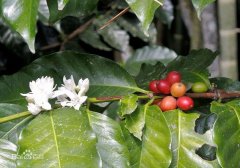
Nyeri Central Dashan area of Jiatugi processing Plant in Nyeri production area of Kenya
According to botanists in SL laboratory, SL28 and SL34 are genetic variants. Among them, SL28 has a mixed pedigree of French missionaries, mochas and Yemens Tibica. The goal of cultivating SL28 was to mass produce coffee beans with high quality and resistance to diseases and insect pests. Although the later production of SL28 was not as large as expected, copper leaves and broad bean-shaped beans were very popular.
2016-07-08 Kenya Nyeri producing area home Tuji Gatugi processing plant central
The best coffee in the world
When tasting single-origin coffee, you will see some information about the variety in addition to the country of origin, production area and geographical and climatic conditions. Arabica, Robosta, Bourbon, etc. For coffee flavor, of course, the difference in the production area is relatively large. Variety differences become interesting when discussing the variety of beans produced in the same region.
2014-11-19 Coffee knowledge Fine coffee learning Coffee varieties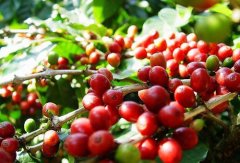
Arabica coffee accounts for about 65% and 80% of the world's coffee beans.
Arabica coffee accounts for about 65% and 80% of the world's coffee beans, and its excellent flavor and aroma make it the only coffee among these native species that can be drunk directly and alone. However, its resistance to drying, frost, diseases and insect pests is low, especially to the biggest natural enemy of coffee, leaf rust, so all producing countries are committed to improving varieties. For example, it is well known that
2016-06-01 All over the world coffee beans rabbis growers coffee about 65% 80% the whole world.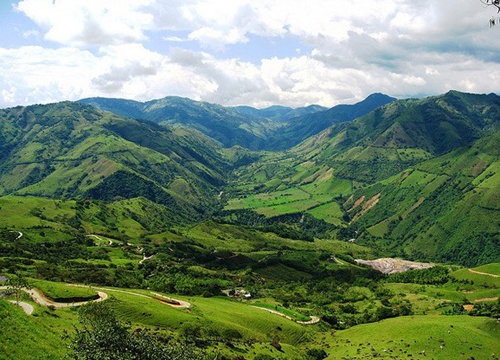
Columbia Coffee Coffee Manor Columbia Huilan Coffee Estate
Manor basic information origin: Colombia Huilan Lerusa Manor Tree species: old varieties Bobang 60%, Tibica 40% altitude: 1550 meters taste: sweet pulp, mellow, depth, excellent sense of balance the manor does not use a high-speed and convenient dryer, but uses the traditional SUN DRY drying method, acid and alcohol bitterness get the greatest concentration and sublimation. The highest grade in Huilan District, a famous place in Colombia.
2016-03-18 Colombia Coffee Manor Huilan Foundation Information Origin
Introduction to the Flavor characteristics of Tanzania Coffee
Due to political instability and rampant diseases and insect pests, the coffee industry in Tanzania has been damaged, resulting in a decline in the overall level of coffee and instability in quality, which in turn lead to lower prices, which is usually the result of a further decline in the coffee industry. What's more, it is estimated that more than 12% of the Arabica coffee grown in northern Tanzania from 1969 to 1985
2016-06-12 Tanzania coffee flavor characteristics introduction due to political situation instability plus disease
Introduction to the Flavor characteristics of Tanzania Coffee
Due to political instability and rampant diseases and insect pests, the coffee industry in Tanzania has been damaged, resulting in a decline in the overall level of coffee and instability in quality, which in turn lead to lower prices, which is usually the result of a further decline in the coffee industry. What's more, it is estimated that more than 12% of the Arabica coffee grown in northern Tanzania from 1969 to 1985
2016-06-12 Tanzania coffee flavor characteristics introduction due to political situation instability plus disease
Coffee beans original Arabica, Robasta, Riperica, Exelsa
There are four original species of coffee: Arabica species in Ethiopia, Robasta and Riperica species in Congo, and Exelsa. The original species are used for breeding and research. So far, there are more than a hundred coffee varieties in the world, of which 76% are Arabica, and 24% are Robasta and Riperica. A: Arabica species (Arabica): at present
2015-01-04 Coffee beans original rabbi Robbas Buzz Rippe Rika Ike Sail Cha
Introduction of Arabica coffee VS Robusta coffee
Arabica species VS Robusta species as a crop, tree species and planting environment are the basic factors for the good ring of coffee beans. At present, the coffee beans in circulation in the coffee market are Arabica (Coffea Arabica) or Robusta (Coffea Robusta). Generally speaking, Arabica coffee trees have fragile vitality and low resistance to diseases and insect pests.
2015-11-09 Introduction boutique coffee rabbi card seed Robbs booth Rob
Washing AA quality coffee beans from Jiatugi treatment plant in Nyeri production area of Kenya
According to botanists in SL laboratory, SL28 and SL34 are genetic variants. Among them, SL28 has a mixed pedigree of French missionaries, mochas and Yemens Tibica. The goal of cultivating SL28 was to mass produce coffee beans with high quality and resistance to diseases and insect pests. Although the later production of SL28 was not as large as expected, copper leaves and broad bean-shaped beans were very popular.
2016-05-10 Kenya Nyeri producing area home Tuji Gatugi treatment plant washing