“coffee growth characteristics” search results (3000)

Introduction to the characteristics of Coffee Grinding treatment in Lazimus Manor, Colombia
The pure taste of Colombian coffee comes from Colombia's natural environment with the most favorable conditions for coffee growth. But beyond that, it is inseparable from the hard work of local growers. In Colombia, coffee cultivation has reached 1.07 million hectares, there are about 302000 coffee plantations in the country, and 30 to 40 per cent of the rural population depends directly on coffee production. Columby
2016-10-13 Columbia Raz Moss Manor Coffee Grinding treatment characteristics Variety production
Hawaiian Coffee, Kona Coffee, Fine Coffee Bean Flavor, taste, Manor characteristics
Kona coffee has always been grown at home. At first, only men were allowed to work in the coffee garden, and later women joined in. This kind of family production of Hawaiians preferred to rely on the efforts of their families rather than hiring workers to work, so it was normal for Hawaiians to have eight or nine children at that time. Since then, there have been new immigrants from the Philippines and the United States.
2016-08-16 Hawaii coffee Kona boutique coffee beans flavor taste manor producing area special
The topographical and climatic conditions in Kenya are very suitable for the growth of high-quality coffee.
Kenyan coffee dates back to 1893. Coffee was later grown on a large scale by the British on the plateau at an altitude of 1400 to 2100 meters, where there is volcanic ash soil rich in organic matter. In fact, most coffee is now grown on the flatter slopes around the snow-capped Mount Kenya (the main peak is 5199 meters high). Kenya is located in the tropical monsoon area.
2016-06-17 Kenya with method topography climate conditions suitable quality coffee growth
Fine coffee beans from Bali, Indonesia. Characteristics of Bali coffee beans. Types and characteristics of delicious coffee beans.
Bali coffee trees mostly grow in the high mountains of 1000-2000 meters above sea level in north-central China. Because of the cool and foggy here, Bali coffee is suitable for coffee tree growth. Bali coffee tastes neither sour nor astringent, but is more bitter and sweet. It can ripen once or twice a year, about at the end of September and March. During the ripening season, the coffee will be harvested manually, dried, screened and roasted.
2016-05-04 Boutique Indonesia Bali coffee beans characteristics delicacy species coffee trees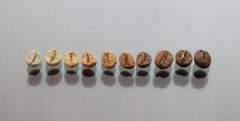
Coffee roasting
The growth environment of boutique coffee beans also has higher requirements. Generally grow at an altitude of 1500 meters or even more than 2000 meters above sea level, with appropriate precipitation, sunshine, temperature and soil conditions. Some world-famous coffee beans also have a special geographical environment, such as the alpine clouds in the Blue Mountains, the free shade provided by the afternoon clouds in Kona, and the volcanic ash soil in Antigua.
2016-05-24 Coffee roasting boutique coffee beans growth environment also have higher requirements general
Smooth, clean and mild Mexican coffee plantation flavor characteristics
Coffee growing areas in Mexico are concentrated in the southeastern highlands, near Guatemala. The mountains in the south are mostly volcanic areas, and the volcanic ash soil is not only conducive to the drainage of coffee roots, but also provides sufficient nutrients for the growth of coffee trees. Most of the coffee varieties planted are Kadura, Dibika, Bourbon, etc., and the treatment method is mostly washed by water, graded according to altitude. coffee beans
2016-09-07 Taste Smooth Clean Mild Mexican Coffee Manor Region Flavor Characteristics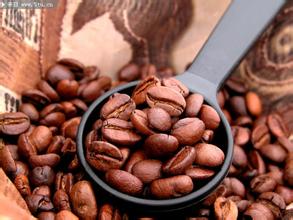
Coffee growth trainee introduction to Indonesian coffee
Coffee trees [2] like mild temperatures during the day and less than two hours of direct sunshine, so if coffee trees lack the afternoon showers or thick fog to report every day, local farmers have to plant many taller trees in the coffee garden for shade. At night, they want an environment of about ten degrees Celsius but not too low, because it is too warm
2016-06-12 Coffee growth apprenticeship Indonesia introduction coffee like daytime gentle
Introduction to the characteristics of Hawaiian Coffee Kona Coffee Flavor Manor
The Hawaiian islands are formed by volcanic eruptions, including 8 large islands and 124 small islands, stretching for 2450 kilometers, forming a crescent-shaped island chain. Hawaii is the largest island, with two active volcanoes. The climate is mild and pleasant all the year round, the precipitation is greatly affected by the topography, there are great differences in different places, and the forest coverage rate is nearly 50%. Honshu is made up of nineteen major islands and coral reefs, located in the middle
2016-09-02 Taste moist smooth Hawaiian coffee Kona flavor manor producing area characteristics
Introduction to Mercedes Manor with smooth entrance to El Salvador Coffee Bean Flavor
El Salvador's coffee accounts for 40% of the country's exports, and it is usually picked in November, December and January-March of the following year. The export of raw beans lasts almost all year round. Coffee is produced in seven of the country's 14 provinces, with the largest number in the northwestern provinces of chalatenango and santa ana. The coffee produced in El Salvador is 100% Arabica, of which 68% is
2016-08-08 Entrance smooth El Salvador coffee beans flavor taste manor producing area characteristics
Introduction of all kinds of coffee beans
Due to the different growth environment and growth cycle of different coffee beans in different producing areas and different varieties, there are great differences in the characteristics, taste, suitable production technology and citation methods of each kind of coffee bean. How to deeply understand the characteristics of each kind of coffee bean? let its most unique taste bring everyone a perfect experience? Next, we will briefly introduce several major coffee bean producing areas in the world.
2014-05-14 Coffee knowledge coffee beans
Description of coffee flavor of Mercedes Manor in El Salvador with moderate sour and sweetness characteristics of grindability in producing areas
The rainbow in the sky overflows with joy and hope. Five Central American federal flags revolve around the national emblem, expressing El Salvador's desire to reorganize the federation. At the bottom is a yellow ribbon with God, unity and freedom written in Spanish, green laurel branches and leaves around the periphery of the triangle, making the national emblem round, and the outermost golden Spanish with the name of the Central American Republic of El Salvador.
2016-09-28 Sweet and sour moderate El Salvador Mercedes des Manor coffee flavor description taste
The taste of Hawaiian Kona coffee is moist and smooth. Introduction to the characteristics of boutique coffee in the manor area.
Agriculture is the pillar of the local economy, producing sugar cane, pineapple, coffee, bananas and so on, of which pineapple production ranks first in the world. [1] Hawaii is suitable for the growth of sugar cane. Two-thirds of the land in the archipelago grows sugarcane, producing about 1 million tons of crude sugar each year. It is equivalent to 10% of the total sugar consumption in the United States each year, so it is called the sugar island of the United States. [4] Food processing is the main industry, and there are a few oil refineries.
2016-08-11 Taste Wet Shun Hawaii Kona Coffee Flavor Manor producing area characteristics boutique
Introduction to the characteristics of El Salvador boutique coffee beans with long-lasting flavor and taste manor
El Salvador implements nine-year compulsory education, with nine years in primary school and three years in secondary school. In 1995, the country's education budget was 1.74 billion kronor, accounting for 14.19 per cent of the national budget; in 1998, the resident literacy rate was about 77.8 per cent. The main domestic universities are the University of San Salvador and the University of Central America. In 2008, El Salvador accounted for 3.6 per cent of GDP on education expenditure. [8] Health 2008, El Salvador
2016-08-12 Back rhyme long-lasting taste rich El Salvador boutique coffee beans flavor
Introduction to the characteristics of Coffee Variety producing areas of Renas Manor Coffee Grinding treatment in El Salvador
Pacamara is the artificial breeding variety of Pacas and Maragogipe. It was first cultivated by researchers in El Salvador in 1958. Pacamara is an excellent variety under rare artificial breeding, which is better than blue, and perfectly inherits the advantages of the mother plant. It not only has the excellent taste of Pacas, but also inherits the large size of Maragogipe, and the bean body is at least like beans.
2016-10-12 El Salvador Renas Nass Manor Coffee Grinding processing Variety producing areas
Costa Rican Yerzaro Coffee Flavor taste introduction to the characteristics of Fine Coffee Bean Manor
After peeling, the peel and pulp of the coffee fruit are recovered as feed for livestock, or converted into organic fertilizer, as well as coffee bean dryer fuel. It can be said that in every process of coffee production, Costa Rica complies with the requirements of maintaining the natural environment. Among the many excellent producing areas in Costa Rica, there is a famous producing area named Tarrazu.
2016-09-07 Costa Rica Yelsa Luo Coffee Coffee Flavor taste Fine goods Coffee beans
Characteristics of boutique coffee beans
High-quality coffee beans must be high-quality beans with flawless beans, fine coffee beans must be excellent varieties, and the growth environment of high-quality coffee beans also has higher requirements. The best way to harvest high-quality coffee beans is to harvest them manually.
2014-05-14 Coffee knowledge coffee beans coffee characteristics
Introduction of Costa Rican Coffee Variety characteristics of Manor Fine Coffee
Among the many excellent producing areas in Costa Rica, there is a famous producing area Tarrazu, also known as Tarasu. Tarazhu is very famous in the world of boutique coffee and is one of the major coffee producing areas in the world. In the 2014 COE competition, of the 23 beans on the list, 17 came from Tarasu. Tarasu is located in the fertile volcanic region of Central America.
2016-10-13 Costa Rica coffee taste variety producing area characteristics manor boutique introduction
Mexican Coffee Flavor description of Grinding degree characteristics of producing areas introduction to the methods of taste treatment of fine coffee
Mexican coffee-growing areas are mainly concentrated in the southeastern highlands, near Guatemala. Most of the mountains in the south are volcanic areas, and the volcanic ash soil is not only conducive to the drainage of coffee roots, but also provides sufficient nutrients for the growth of coffee trees. Most of the coffee varieties planted are Kaddura, Tibica, bourbon, etc., and the treatment methods are mostly water washing treatment, which are classified according to altitude. Coffee beans
2016-09-28 Mexico coffee flavor description grinding degree producing area characteristics boutique taste
Introduction to the characteristics of Mexican Coffee Flavor Manor produced by washing method
But with a climate suitable for coffee growth, excellent coffee varieties, good soil and high-altitude planting areas, why is the quality of Mexican coffee not satisfactory? A few days ago, when I went to Mexico, some colleagues jokingly called Mexico popcorn coffee. The raw beans exported by Mexico were of poor quality, and the raw beans bought were sometimes mixed with a little corn and sandy soil.
2016-08-08 Washing treatment Mexico coffee flavor taste manor producing area characteristics boutique
Historical Origin and Development of Colombian Coffee varieties Flavor characteristics of Colombian coffee beans
The cultural process of coffee development in Colombia is the natural environment with the most favorable conditions for coffee growth. But beyond that, it is inseparable from the hard work of local growers. In Colombia, coffee cultivation has reached 1.07 million hectares, with about 302000 coffee plantations and 30 to 40 per cent of farmers.
2022-08-14 Colombia coffee development origin coffee culture