“coffee growing belt” search results (700)

Coffee futures market hit a two-year high
Original title: ICE raw sugar fell on March 11, coffee futures market hit a two-year high, ICE Arabica coffee futures market continued to rise strongly on Tuesday, hitting a two-year high, as parts of the Brazilian coffee bean growing belt did not have enough rainfall, while Robusta coffee rose to an one-year high. Cocoa futures in New York and London rose to two-and-a-half-year highs, subject to technical buying.
2014-06-10 Coffee futures market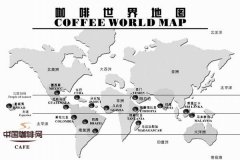
Growing conditions of coffee
Coffee can not be grown in any environment, because it is originally a plant growing in a tropical rain forest. In systematic development, coffee forms the habit of calm wind, cool, shaded or semi-shaded and humid environment.
2014-06-06 Coffee knowledge coffee trees planting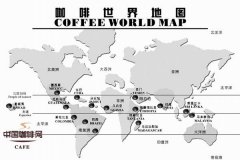
Five Environmental factors for growing Coffee
Coffee can not be grown in any environment, because it is originally a plant growing in a tropical rain forest. In systematic development, coffee forms the habit of calm wind, cool, shaded or semi-shaded and humid environment. Therefore, coffee has strict requirements on planting conditions. We call the strips on both sides of the equator, between latitudes 25 degrees south and north, suitable for coffee growth as coffee belts.
2014-07-04 Coffee knowledge coffee belt coffee encyclopedia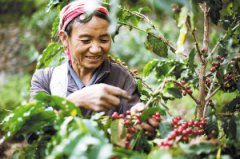
Yunnan Coffee and Chinese Coffee Market
Coffee trees need high altitude, tropical climate and fertile soil to grow the best coffee beans. Such climatic conditions on earth surround the equator, about between 25 degrees north latitude and 30 degrees south latitude. This zone, commonly known as the golden coffee belt, belongs to tropical and subtropical regions and is technically called coffee belt. When it comes to coffee in the world, let's talk about Chinese coffee first.
2016-06-07 Yunnan Coffee China Market need High altitude altitude Tropical Climate
Coffee trees grow around the equator.
Coffee trees grow in tropical or subtropical agricultural gardens centered around the equator and called coffee belts. Most of the coffee production is between the Tropic of Cancer, 25 degrees north of the tropical or subtropical equator and 30 degrees south of the equator. An area with an annual average temperature of 16-25 degrees Celsius, no Frosts Descent and rainfall of 1600-2000 mm. At present, coffee is mainly produced by seven countries.
2015-07-01 Coffee tree grow equator center coffee for the middle
Coffee Tour (III) Starting from the Equator
A good cup of coffee should be made with good coffee beans, which is the basic factor that determines the taste of a cup of coffee. The selection of coffee beans is very important. The introduction above, our hand brewing equipment is ready, now, start to choose coffee beans! The world's coffee mainly grows in the equatorial center, between 25 degrees north and south latitude coffee belt, those tropical or subtropical climate
2014-09-01 Coffee aroma fine coffee
Coffee trees grow around the equator.
Coffee trees grow in tropical or subtropical agricultural gardens centered around the equator and called coffee belts. Most of the coffee production is between the Tropic of Cancer, 25 degrees north of the tropical or subtropical equator and 30 degrees south of the equator. An area with an annual average temperature of 16-25 degrees Celsius, no Frosts Descent and rainfall of 1600-2000 mm. At present, coffee is mainly produced by seven countries.
2015-05-29 Coffee tree grow equator center coffee for the middle
Where is the growing area with coffee beans?
Coffee can not be grown in any environment, because it is originally a plant growing in a tropical rain forest. In systematic development, coffee forms the habit of calm wind, cool, shaded or semi-shaded and humid environment. Therefore, coffee has strict requirements on planting conditions. We call the strips on both sides of the equator, between latitudes 25 degrees south and north, suitable for coffee growth as coffee belts. 1. Temperature. Yes
2015-01-16 Coffee coffee beans planting region where coffee is in any environment all
Jamaica Blue Mountain Coffee, a coffee producer with a superior growing environment.
The Blue Mountain plantations are mainly distributed in the mountains of the southwest of the country at an altitude of 800-1200 meters above sea level. According to the conditions of coffee cultivation and the climate type of high-quality planting area, the most suitable natural zone for coffee bean growth is the savanna belt. From the location of Starbucks headquarters in the materials, we can see that its layout should be dominated by the city.
2016-06-18 With superior planting environment coffee producing country Jamaica Blue Mountain
Relationship between altitude and coffee flavor
The impact of location on coffee bean flavor is profound. All coffee is grown in the tropics, and the altitude at which it is grown has a profound effect on the taste of coffee. The equatorial regions of the tropical belt, which extends from 30 degrees north latitude to the southern mountains, produce the world's truly premium Arabica coffee.
2014-08-18 Coffee knowledge Elevation Coffee flavor Coffee encyclopedia
The effect of altitude on Coffee Flavor
The influence of geographical location on the flavor of coffee beans is profound. All coffee grows in the tropics, and the altitude at which it grows has a profound effect on the taste of coffee. The tropical belt extends from 30 degrees north latitude to the equatorial regions of the southern mountains that produce the world's truly high-quality Arabica coffee. Central and South America, South Asia and some Pacific islands, south-central Africa is also the most important in the world.
2015-03-17 Coffee training basics altitude flavor influence geographical location coffee
Introduction to the species and growing environment of coffee trees
Coffee trees can only grow in the tropics and subtropics. Coffee trees can grow in different climates, soils, elevations and rainfall in the middle of the coffee belt. Coffee trees thrive in the hot and humid canyons and forest rainforests of Africa; it still produces high-quality coffee beans in cold, foggy, windy Central America; and in the changeable climate, drought and torrential rain
2016-06-07 Coffee class and growth environment introduction coffee only grow in tropical subtropical
Coffee training knowledge: the effect of altitude on coffee flavor
The influence of geographical location on the flavor of coffee beans is profound. All coffee grows in the tropics, and the altitude at which it grows has a profound effect on the taste of coffee. The tropical belt extends from 30 degrees north latitude to the equatorial regions of the southern mountains that produce the world's truly high-quality Arabica coffee. Central and South America, South Asia and some Pacific islands, south-central Africa is also the most important in the world.
2014-10-08 Coffee knowledge coffee flavor coffee planting altitude
Effect of Coffee Bean planting altitude on Coffee Flavor
The influence of geographical location on the flavor of coffee beans is profound. All coffee grows in the tropics, and the altitude at which it grows has a profound effect on the taste of coffee. The tropical belt extends from 30 degrees north latitude to the equatorial regions of the southern mountains that produce the world's truly high-quality Arabica coffee. Central and South America, South Asia and some Pacific islands, south-central Africa is also the most important in the world.
2014-12-30 Coffee beans planting altitude coffee flavor influence geographical location coffee beans
Coffee Basics The effect of altitude on coffee flavor
The impact of location on coffee bean flavor is profound. All coffee is grown in the tropics, and the altitude at which it is grown has a profound effect on the taste of coffee. The equatorial regions of the tropical belt, which extends from 30 degrees north latitude to the southern mountains, produce the world's truly premium Arabica coffee. Central and South America, South Asia and some Pacific islands, South Central Africa is also the world's most important
2014-11-22 coffee knowledge coffee basics altitude coffee flavor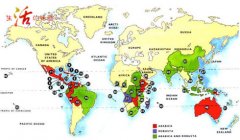
Map of global coffee producing area for the production of boutique coffee beans
Coffee trees grow in tropical or subtropical agricultural gardens centered around the equator and called coffee belts. Most of the coffee production is between the Tropic of Cancer, 25 degrees north of the tropical or subtropical equator and 30 degrees south of the equator. An area with an annual average temperature of 16-25 degrees Celsius, no Frosts Descent and rainfall of 1600-2000 mm.
2014-12-30 Boutique coffee beans production global coffee origin map tree growing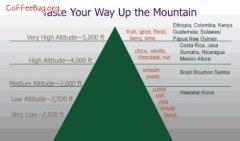
The relationship between altitude and Coffee Flavor
The influence of geographical location on the flavor of coffee beans is profound. All coffee grows in the tropics, and the altitude at which it grows has a profound effect on the taste of coffee. The tropical belt extends from 30 degrees north latitude to the equatorial regions of the southern mountains that produce the world's truly high-quality Arabica coffee. Central and South America, South Asia and some Pacific islands, south-central Africa is also the most important in the world.
2015-01-26 Coffee beans planting common sense altitude coffee flavor relationship geographical location
The relationship between altitude and Coffee Flavor
The influence of geographical location on the flavor of coffee beans is profound. All coffee grows in the tropics, and the altitude at which it grows has a profound effect on the taste of coffee. The tropical belt extends from 30 degrees north latitude to the equatorial regions of the southern mountains that produce the world's truly high-quality Arabica coffee. Central and South America, South Asia and some Pacific islands, south-central Africa is also the most important in the world.
2015-04-13 Coffee basics common sense altitude flavor relationship geographical location coffee beans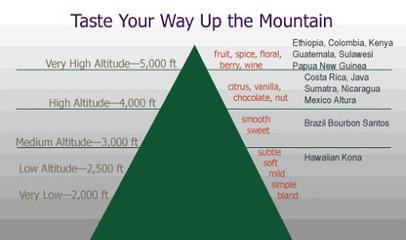
Effect of altitude on Coffee Flavor
The influence of geographical location on the flavor of coffee beans is profound. All coffee grows in the tropics, and the altitude at which it grows has a profound effect on the taste of coffee. The tropical belt extends from 30 degrees north latitude to the equatorial regions of the southern mountains that produce the world's truly high-quality Arabica coffee. Central and South America, South Asia and some Pacific islands, south-central Africa is also the most important in the world.
2015-05-06 Altitude height coffee flavor influence geographical location coffee beans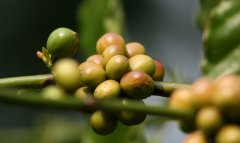
Characteristics of coffee fruit structure map! (including anatomical drawing)
Those beautiful coffee fruits! We often drink coffee, but few people have seen coffee beans, let alone coffee fruits. Some friends in the industry say that coffee is actually a kind of fruit juice, which I don't agree with. Fruit juice is a juice product obtained from fruit by physical methods such as pressing, centrifugation, extraction, etc. It generally refers to pure fruit juice or
2023-02-17 Coffee fruit coffee fruit production coffee encyclopedia