“camel” search results (159)
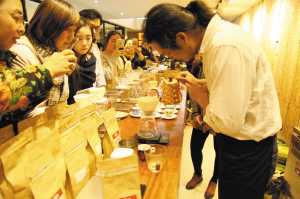
The latest news from Yunnan: camel, the world's top coffee master, visited Yunnan's "Garbo Thanksgiving Night".
Camel, one of the world's top coffee masters, visited the Jiabo Center in person. ■ Metropolis Times News (Reporter Wang Sihe) Last Friday, the Jiabo Center, together with Yunnan Shuyuanzi Culture Communication Co., Ltd., and Didi Taxi jointly held a Thanksgiving night at the Jiabo Center to remember the original ideals and aspirations. Camel, the world's top coffee master, came to the event in person to tell the guests about the magic coffee.
2015-12-03 Yunnan latest news world top coffee master camel in person Jiabo feeling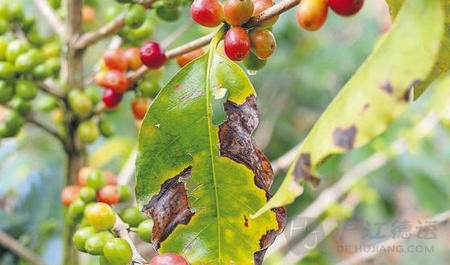
Introduction to the diseases of coffee beans: leaf rust caused by camel rust, the most destructive disease of coffee trees
Coffee rust is the most destructive disease of coffee trees, caused by coffee camel rust (Hemileia vastatrix). The disease has long occurred in coffee-producing areas such as Africa, the near East and India, Asia and Australasia. It first appeared in the Western Hemisphere in 1970 and was found in Brazil. The once thriving coffee plantations in Sri Lanka and Java were destroyed by the
2015-12-16 Coffee beans disease introduction destructive maximum coffee camel spore rust institute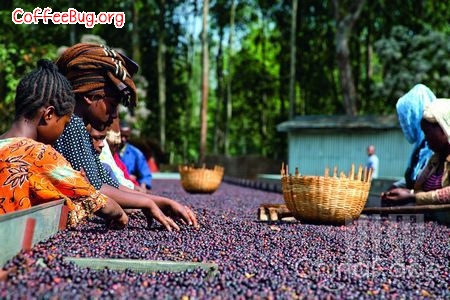
World Fine Coffee beans: an introduction to Harald Coffee in Eastern Ethiopia
For centuries, Harald coffee farmers, using camels, donkeys or horse-drawn carriages, risked being besieged by hyenas to the downhill port of Djibouti, and then shipped them to the Yemeni port of Moka to European countries. Harald (Harar) is 1600 meters above sea level, and the Harald Heights in eastern Ethiopia is one of the highest elevation areas for human coffee cultivation.
2015-12-16 World boutique coffee beans Ethiopia East Harald Rahl Coffee Jie
Kopi Luwak is expensive: 6 wonderful uses of inventory of animal droppings
Ingenious use one: high-end drinks example: Kopi Luwak Kopi Luwak, also known as civet coffee, is one of the most expensive coffee in the world. The price per jin ranges from US $300 to US $800 and is abundant in Indonesia and other places. It costs 200 to 300 yuan to drink a cup of Kopi Luwak in Hong Kong, and it is only available in one or two of the most exclusive hotels. Kopi Luwak has become an upstart in coffee, compared to the traditional
2014-05-13 Coffee knowledge Kopi Luwak coffee beans
Understanding coffee leaf rust
The most destructive disease of coffee trees is Hemileia vastatrix. The disease has long occurred in coffee-producing regions such as Africa, the Near East and India, Asia and Australasia, and first appeared in the Western Hemisphere in 1970. The once-thriving coffee plantations of Sri Lanka and Java were destroyed there
2014-08-21 understand coffee leaf rust rust destructive large disease camel spore
Coffee tree disease coffee leaf rust
Coffee leaf rust (coffee rust) is the most destructive disease of coffee trees, which is caused by coffee camel rust (Hemileia vastatrix). The disease has long occurred in coffee-producing areas such as Africa, the near East and India, Asia and Australasia. It first appeared in the Western Hemisphere in 1970 and was found in Brazil. Once-thriving coffee plantations in Sri Lanka and Java
2014-09-27 Coffee knowledge coffee tree disease coffee leaf rust
Fine Coffee Science explains Coffee Leaf Rust in detail
Coffee leaf rust (coffee rust) is the most destructive disease of coffee trees, which is caused by coffee camel rust (Hemileia vastatrix). The disease has long occurred in coffee-producing areas such as Africa, the near East and India, Asia and Australasia. It first appeared in the Western Hemisphere in 1970 and was found in Brazil. Once-thriving coffee plantations in Sri Lanka and Java
2014-11-18 Coffee knowledge boutique caffeine coffee leaf rust
Italian espresso beans imported black coffee
Italian espresso was invented by an Italian named Gegia in the 1930s. Its taste is full-bodied, mellow, highly irritating and refreshing. A good espresso depends on a light camel-colored emulsion on its surface. The emulsion should be uniform, about 3-5 cm thick, gently shake the coffee cup, and the emulsion will stick to the cup like thick syrup.
2016-05-03 Italian concentrated coffee blended coffee beans imported
Knowledge of fine coffee to understand coffee leaf rust
The most destructive coffee tree disease is caused by coffee camel rust (Hemileia vastatrix). The disease has long occurred in coffee-producing areas such as Africa, the near East and India, Asia and Australasia. It first appeared in the Western Hemisphere in 1970 and was found in Brazil. The once thriving coffee plantations in Sri Lanka and Java were destroyed by the
2014-09-15 Coffee knowledge boutique coffee coffee tree etiology leaf rust
The most destructive disease of coffee trees, leaf rust.
The most destructive coffee tree disease is caused by coffee camel rust (Hemileia vastatrix). The disease has long occurred in coffee-producing areas such as Africa, the near East and India, Asia and Australasia. It first appeared in the Western Hemisphere in 1970 and was found in Brazil. The once thriving coffee plantations in Sri Lanka and Java were destroyed by the
2015-01-08 Destructive big coffee disease leaf rust rust destructive
Italian espresso and double extra strong making process
Put the finely ground Italian coffee into an ESPRESSO machine handle or grinder and press it so that the mixture of water and steam passes quickly, and a cup of pure Italian espresso can be distilled. It sounds simple, but remember, a good cup of Italian coffee should be covered with camel emulsion, that is, the finer the aromatic hydrocarbon coffee is ground, the surface of the coffee powder and water.
2015-04-10 Italian fragrant coffee double extra strong production process ground fine Italy
Harald Coffee
For centuries, Harald coffee farmers, using camels, donkeys or horse-drawn carriages, risked being besieged by hyenas to the downhill port of Djibouti, and then shipped them to the Yemeni port of Moka for European countries.
2014-08-18 Coffee knowledge Harald coffee coffee encyclopedia
Harald producing area of Ethiopian coffee
At 1600 to 2400 meters above sea level, the Harald Heights in eastern Egypt is one of the highest elevation areas for human coffee cultivation (some even claim to be as high as 2000 to 2700 meters), overlooking the Yemeni ports of Mocha and Aden across the Gulf of Aden. For centuries, Harald coffee farmers used camels, donkeys or carriages to transport coffee beans to the downhill port of Djibouti, risking being besieged by hyenas.
2015-04-01 Ethiopia coffee Harald Rahl producing area altitude 600400 m
Introduction to Harald producing area of Ethiopian Coffee
At 1600 to 2400 meters above sea level, the Harald Heights in eastern Egypt is one of the highest elevation areas for human coffee cultivation (some even claim to be as high as 2000 to 2700 meters), overlooking the Yemeni ports of Mocha and Aden across the Gulf of Aden. For centuries, Harald coffee farmers, using camels, donkeys or carriages, risked being besieged by hyenas to transport coffee beans to Gibb, a port at the foot of the mountain.
2016-06-15 Ethiopia Coffee Harald Rahl producing area introduction altitude 600pence 4
Introduction of Coffee Bean producing areas in Harald, Ethiopia
At 1600 to 2400 meters above sea level, the Harald Heights in eastern Egypt is one of the highest elevation areas for human coffee cultivation (some even claim to be as high as 2000 to 2700 meters), overlooking the Yemeni ports of Mocha and Aden across the Gulf of Aden. For centuries, Harald coffee farmers used camels, donkeys or carriages to transport coffee beans to the downhill port of Djibouti, risking being besieged by hyenas.
2015-02-12 Ethiopia Coffee Harald Lal producing area Coffee Bean introduction altitude 6
The History and Culture of Harald Coffee
Harald (Harar) is 1600 meters above sea level, and the Harald Heights in eastern Ethiopia is one of the highest elevation areas for human coffee cultivation (some even claim to be as high as 2000 Murray 2,700 meters). Across the Gulf of Aden, overlooking the two ports of Moka and Aden in Yemen. For centuries, Harald coffee farmers carried coffee beans down the mountain with camels, donkeys or carriages, risking being besieged by hyenas.
2015-03-09 Harald Rahl Coffee History and Culture Harar altitude
Coffee Harald producing area of Ethiopia coffee bean producing area
At 1600 to 2400 meters above sea level, the Harald Heights in eastern Egypt is one of the highest elevation areas for human coffee cultivation (some even claim to be as high as 2000 to 2700 meters), overlooking the Yemeni ports of Mocha and Aden across the Gulf of Aden. For centuries, Harald coffee farmers used camels, donkeys or carriages to transport coffee beans to the downhill port of Djibouti, risking being besieged by hyenas.
2015-10-22 Ethiopia Coffee Harald Rahl producing area Coffee beans altitude 600 000
Ethiopian Coffee Harald producing area of High quality Ethiopian Coffee producing Ethiopia
At 1600 to 2400 meters above sea level, the Harald Heights in eastern Egypt is one of the highest elevation areas for human coffee cultivation (some even claim to be as high as 2000 to 2700 meters), overlooking the Yemeni ports of Mocha and Aden across the Gulf of Aden. For centuries, Harald coffee farmers used camels, donkeys or carriages to transport coffee beans to the downhill port of Djibouti, risking being besieged by hyenas.
2016-03-16 Ethiopia Coffee Harald Rahl producing area High quality Origin
Cultivation techniques of Coffee 5
There are many legends about the discovery of coffee. There is a legend that in the 13th century, there was a king in Ethiopia who found that his camel loved to eat a small oar fruit on a bush, and he was very excited and energetic after eating it. So he also picked some small berries to taste, and finally found this refreshing coffee drink. Another legend is that in 500 BC
2014-08-08 Coffee cultivation techniques about people discoveries coffee legends many one say
Principle of siphon extraction of Chinese Coffee net in Harald producing area
At 1600 to 2400 meters above sea level, the Harald Heights in eastern Egypt is one of the highest elevation areas for human coffee cultivation (some even claim to be as high as 2000 to 2700 meters), overlooking the Yemeni ports of Mocha and Aden across the Gulf of Aden. For centuries, Harald coffee farmers used camels, donkeys or carriages to transport coffee beans to the port at the foot of the mountain, risking being besieged by hyenas.
2016-04-20 Harald Rahl producing area China Coffee siphon extraction principle hand Chong Highland