“agricultural country” search results (2000)
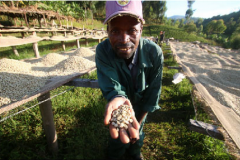
Honduras New Deal Cuts Coffee Production Size
Specialty coffee is also known as specialty coffee. It refers to coffee made from green beans with excellent taste characteristics grown in a few extremely ideal geographical environments. Depending on the particular soil and climatic conditions in which they are grown, they have outstanding flavors. This type of coffee is carefully selected and graded for its hard texture, rich taste and wind.
2016-06-19 Honduras New Deal Coffee Region Size Downsizing
Pu'er Coffee-- shaping the Brand "sharpening the knife to the Market"
To improve the quality of Pu'er coffee in the second half of 2013, Pu'er newly planted ecological coffee garden of 70, 000 mu, coffee area has reached 716000 mu, put into production of 340000 mu, output of 45000 tons, agricultural output value of 780 million yuan; export of 36000 tons, earning foreign exchange of 79.32 million US dollars. There are 386 coffee enterprises registered for industry and commerce in the city, with more than 247500 coffee employees, and the newly established farmers' coffee professional contract.
2014-08-29 Pu'er coffee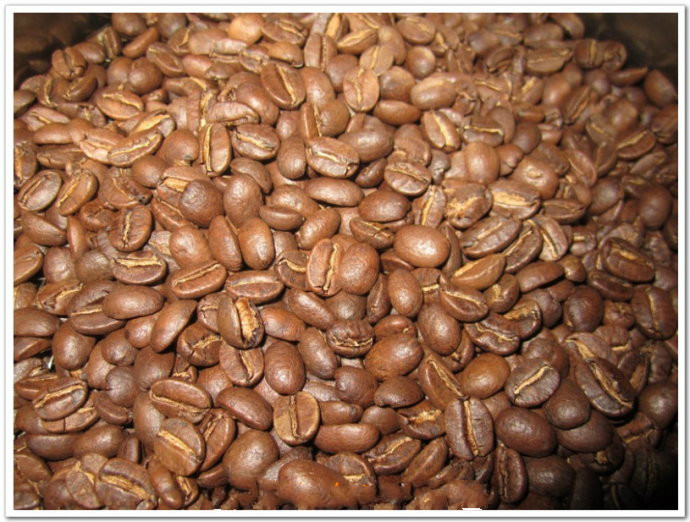
USAID will join Nespresso's lineup to assist coffee farmers in South Sudan
The Republic of Sudan is a country located in northeast Africa and on the west coast of the Red Sea. It is bordered by Egypt to the north, Libya, Chad and the Central African Republic to the west, South Sudan to the south and Ethiopia and Eritrea to the east. The northeast is bordered by the Red Sea, with a coastline of about 720 kilometers, making it the third largest country in Africa and the 16th largest country in the world. Sudan has been ranked as the worst in the world by the list of failed states.
2016-04-11 United States International UNDP joining Nespresso Aid Sudan Caf
Introduction to the quality characteristics of Guatemalan Coffee beans description of the Flavor of Mini Tenanguo Highland Coffee production area
Guatemala is located in the Central American Isthmus, bordering Mexico in the north and Honduras in the south. Due to the high mountains and volcanoes in the country, coupled with the careful care of Guatemalan farmers, the quality of Guanguo coffee appears to be quite excellent. The country's earliest record of growing coffee dates back to 1750, about 250 years ago, but at that time
2022-07-10 Quality ten excellent Guatemala coffee introduction slightly Tenan highland Huai
Introduction to boutique coffee with mellow flavor and taste characteristics of Nicaraguan Heavenly Manor coffee
Columbus arrived here in 1502 and reached the east coast of Nicaragua. In 1522, Spanish colonists began to conquer the region. The cities of Granada and Leon were founded in 1524. From then on, Nicaragua became a Spanish colony and came under the jurisdiction of the Governor's Office of Guatemala. The city of Leon developed into a political and cultural center; Granada became a commercial and agricultural center. In the later period of colonial rule
2016-08-30 Mellow taste Nicaragua divine gift manor coffee flavor characteristics essence
Introduction to the Prospect of Coffee Industry in Brazil
Coffee is a traditional industry in Brazil. Since 1960, coffee cultivation in Brazil has been ranked first in the world, with an average annual output of 24.6 million bags (60 kg each). In 2002, due to favorable weather and a good year for coffee production, Brazilian coffee reached the best level in history, reaching 47.2 million bags, an increase of 59.6 per cent over 28.137 million bags in 2001. According to the November 2002 report of the United States Department of Agriculture,
2016-06-05 Brazil Coffee Industry Prospect introduction tradition 196
Yunnan Baoshan Coffee Export reaches a New High
Baoshan City speeds up the development of coffee planting industry and continues to expand the export of coffee-based agricultural products.
2014-05-29 Coffee news Yunnan coffee export Chinese coffee export
Honduras New Deal to reduce the size of coffee producing areas boutique coffee beans
Everything happens for a reason, the berries believe. What you sow, you reap. Because it is now; it is the future. And we can't predict what the future results will be, so grasp the "cause" of your own species, cherish what you have in front of you, and if you want to change, there will be different results. So don't forget the original heart, stick to yourself. After all, whether the "fruit" is good or bad, the process of heart is worthy of praise.
2016-05-05 Honduras New Deal Coffee Region Size Reduction Fine Coffee Bean
Introduction to the characteristics of Rwanda Coffee Flavor Manor Variety of Rwandan Coffee
Rwanda has been growing coffee since colonial times. Although the crops are mainly coffee, the quality of coffee produced in Rwanda is not outstanding, and its status in the coffee world is low, and few people pay attention to it. Most of the coffee varieties grown in Rwanda are bourbon. Rwanda, known as the country of Thousand Hills, has a high-altitude mountain environment, fertile volcanic soil and abundant precipitation.
2016-08-09 Rwanda coffee flavor taste manor producing area characteristics introduction Mayer variety
Coffee production in Brazil and coffee bean production in coffee farms
Coffee plantations in Brazil range from large farms mechanized on flat land to small farms harvested artificially in mountain areas. There are no shade trees for shade in Brazilian agricultural gardens. The production of coffee is mainly taken into account, ① production, ② diseases and insect pests ③ quality as far as the stability pursued by agriculture is concerned, the first priority is production. In addition, 80% of Brazilian coffee is dried coffee.
2015-02-15 Brazil coffee production farm coffee beans ground implementation
El Salvador Coffee Estate Flavor Features Mercedes Estate
In addition, in 1986 the Government imposed an additional 15 per cent duty on coffee exports, i.e. 15 per cent on top of the existing 30 per cent tax. Taxes, combined with unfavourable exchange rates, severely reduced coffee exports and, with them, quality. The government finally realized the huge role of coffee in the national economy, such as solving employment, earning foreign exchange and developing agricultural production. Therefore, in 1990, the Ministry
2016-08-05 El Salvador Coffee Manor Region Flavor Taste Characteristics Introduction Messe De
Introduction to the planting environment for the flavor and taste of Tanzania's boutique coffee beans with extraordinary quality
In regional affairs, we pursue the policy of making friends, not making enemies, promoting peace and seeking development. He attaches importance to developing good-neighborly and friendly relations with neighboring countries and has close relations with Kenya, Uganda, Ethiopia and other countries. We attach importance to exerting influence in regional affairs and are committed to maintaining regional peace and stability. Actively participate in mediating the political crisis caused by Kenya's general election at the end of 2007 and Zimbabwe's general election
2016-08-17 Different loud quality Tanzania boutique coffee beans flavor taste planting
Discussion on the Feasibility of Fair Trade in Yunnan Coffee
Fair trade is a non-traditional trade method that improves the living conditions of small-scale producers and provides opportunities for sustainable development for disadvantaged producers in a short period of time. In recent years, fair trade system has been gradually perfected, forming a fair trade policy based on producer and recognition.
2014-05-29 fair trade Yunnan coffee industrialization
Chinese coffee has ushered in a recovery period with the country's reform and opening up.
From December 18 to 22, 1978, the third plenary session of Communist Party of China's 11th Central Committee was held in Beijing. The main achievements of this conference are: re-establishing the party's Marxist ideological line. The plenum resolutely criticized the two general erroneous policies, spoke highly of the discussion on the standard of truth, and determined to emancipate the mind, use the brain, seek truth from facts,
2015-02-07 China coffee with the country reform and opening up ushered in recovery period 1978
The introduction of Ruili Jingpo Nongxian coffee was recorded in 1914.
In April 1996, compiled by the compilation Committee of Ruili City Chronicles of Yunnan Province, the fifth coffee section on page 383 of Ruili City Chronicles published by Sichuan Dictionary Publishing House recorded that as early as 1914, the Jingpo nationality had been introduced from Myanmar to Nongxian Township for cultivation. The local series of books of the people's Republic of China, Records of Yunnan Province, Volume 39, Records of Land Reclamation, Chapter 3, Section 2, Coffee is recorded: the cultivation of coffee in China began in 1884.
2015-02-07 About Ruili Jingpeng coffee introduction 1914 records
Introduction of Coffee Flavor description and treatment method of Coffee Flavor in Chilmel Manor, Rwanda
The provinces prior to 2006 are as follows: Butare, Byumba, Cyangugu, Gikongoro, Gisenyi, Gitarama, Kibungo, Kibuye, Kigali, Kigali Ru
2016-10-13 Luwang Dutch Mayer Manor Coffee Flavor description treatment Variety characteristics
History of introduction and expansion of Coffee in early China (1)
1. The introduction of Ruili Jingpo Nongxian Coffee was recorded in 1914. In April 1996, it was compiled by the compilation Committee of Ruili City Chronicles of Yunnan Province. The fifth coffee section on page 383 of Ruili City Chronicles published by Sichuan Dictionary Publishing House recorded that as early as 1914, the Jingpo people have been introduced from Myanmar to Nongxian Township for cultivation. Yunnan Provincial Chronicles, Volume 39, Chapter 3 of the Local Series of the people's Republic of China
2015-04-28 Early China coffee introduction expansion about Ruili Jingpeng
More than half of the coffee shops in China do not make money from coffee.
A few days ago, a "profiteering door" news that the price of Starbucks coffee in the Chinese market is fully higher than that in the United States, causing widespread debate in the society. There are doubts that Starbucks' differential pricing is contrary to the principle of fairness, but there is also a view that calculating only the cost of raw materials while ignoring other operating costs obviously lacks economic common sense, coffee belongs to a non-monopoly industry, and its pricing power should be vested in the market and
2014-08-20 Coffee news coffee shop operation profit
Nicaraguan Coffee Joy Manor Coffee Flavor taste introduction to the characteristics of boutique coffee in the manor area
Managua, the capital of Nicaragua, is located in the west of the border, on the south bank of Lake Managua, hence its name. The northwest is 140 kilometers away from the Collinto seaport on the Pacific coast. 55 meters above sea level. It is a Spanish city with beautiful scenery. Because it is located to the east of the Pacific volcanic active seismic belt, there have been four strong earthquakes in the city in the past 100 years, including one in December 1972.
2016-08-16 Nicaragua coffee joy manor flavor taste producing area characteristics boutique introduction
More than half of the coffee shops in China do not make money from coffee.
A few days ago, a piece of news that the price of Starbucks coffee in the Chinese market is fully more expensive than that of the United States, causing widespread debate in the society. There are doubts that Starbucks' differential pricing is contrary to the principle of fairness, but there is also a view that calculating only the cost of raw materials while ignoring other operating costs obviously lacks economic common sense. Coffee belongs to a non-monopoly industry, and its pricing power should be vested in the market and enterprises.
2015-10-28 Domestic more than half coffee shop do not rely on coffee profit