“about crops” search results (2000)

History of Coffee planting in the early stage of Coffee introduction and expansion in China (2)
1. The presentation of the respective expressions and questions of Zhu Kula Coffee 1.1 I remember that it was still the spring of 1995, when Professor Mao Genhai of the former South China Hot farming Academy and I visited Xishuangbanna, Yunnan Province. I had the honor to see the review and prospect of Yunnan coffee development published in the third issue of Tropical crop Science and Technology in 1994 by Huang Junxiong and Zhang Xingcan, Institute of Tropical and Subtropical Economic crops, Yunnan Academy of Agricultural Sciences
2014-10-14 Coffee knowledge coffee cultivation Chinese coffee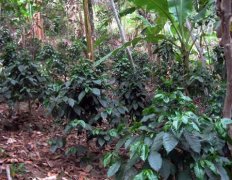
Production of coffee beans coffee output
Coffee trees take 3-5 years from planting to fruiting. 6-10 years of coffee trees are the most likely to bear fruit, about 15-20 years, is the harvest period. Coffee trees are usually bred in nurseries and grow into saplings, and then moved to coffee farms a year later, in full compliance with the way the Arabs planted and cultivated coffee trees. Coffee trees will continue to take root downward and upward in the first four or five years of their growth.
2014-09-25 Coffee bean production coffee output
Having a cup of coffee while having class? The most romantic major will be Yunnan Agricultural University.
Have you ever heard of such a romantic and interesting class in college class, such as identifying coffee beans, learning to taste coffee and making fancy coffee? Yunnan Agricultural University will declare the coffee and coffee project, relying on the Tropical crops College, not only to enable students to master coffee production, consumption, trade and other related knowledge, but also to train students to identify coffee varieties, master coffee services, brew coffee and other specialties.
2016-08-17 While drinking coffee class romance major Yunnan agricultural university university lessons
Introduction of Flavor Coffee in Coffee Variety producing area of San Pedro Manor, Puerto Rico
On 6 November 2012, Puerto Rico held its fourth referendum. The referendum consists of two rounds of voting. In the first round, Puerto Ricans voted on whether they wanted to change the status quo in their relations with the United States. 1.8 million people were eligible to vote, 65000 gave up the first round of voting, and 54 per cent of those who took part in the vote supported a change of relationship. Then, how did the Puerto Ricans
2016-09-23 Puerto Rico San Pei Delo Manor Coffee Variety producing area Flavor description essence
Introduction to the planting environment for the flavor and taste of Tanzania's boutique coffee beans with extraordinary quality
In regional affairs, we pursue the policy of making friends, not making enemies, promoting peace and seeking development. He attaches importance to developing good-neighborly and friendly relations with neighboring countries and has close relations with Kenya, Uganda, Ethiopia and other countries. We attach importance to exerting influence in regional affairs and are committed to maintaining regional peace and stability. Actively participate in mediating the political crisis caused by Kenya's general election at the end of 2007 and Zimbabwe's general election
2016-08-17 Different loud quality Tanzania boutique coffee beans flavor taste planting
The rise of Taiwan's ancient pit coffee
Yunlin County is a large county with traditional agriculture, and most of the county residents also make a living by farming. Rice, sugar cane, sweet potato, peanut and garlic have always been the main crops cultivated by farmers in turn. For generations, they have relied on it to feed their families and reproduce their children. No one thought coffee would become a strange flower in this land, attracting foreign tourists or young and fashionable consumers.
2016-10-14 magic bean legend taiwan ancient pit coffee rise lin county one tradition agriculture
Introduction of boutique coffee beans in Ethiopia Yega Sheffivoka Coffee Flavor
In July 1991, EGF hosted a national conference with the participation of more than 20 political and ethnic organizations. The meeting adopted the Transitional Charter and elected an 87-member House of Representatives, with EGF Chairman Meles Zenawi as President of the Transitional Government and President of the House of Representatives. A transitional government was established. On May 24, 1993, Eritrea (formerly the province of Eritrea, Ethiopia) adopted
2016-08-31 Ethiopia Yega Sheffield Waka Coffee Flavor Taste Manor boutique
The production of high-quality coffee beans
Coffee trees take 3-5 years from planting to fruiting. 6-10 years of coffee trees are the most likely to bear fruit, about 15-20 years, is the harvest period. Coffee trees are usually bred in nurseries and grow into saplings, and then moved to coffee farms a year later, in full compliance with the way the Arabs planted and cultivated coffee trees. Coffee trees will continue to take root downward and upward in the first four or five years of their growth.
2014-09-30 Coffee knowledge boutique coffee science coffee bean production
Yemeni coffee features Yemeni coffee flavor
Coffee has been a traditional export product of Yemen for hundreds of years, and it is still one of the most important cash crops and export products of Yemen. Statistics show that among the top 30 exports of Yemen in 2000, cooked coffee beans, raw coffee beans and coffee shells ranked second, eighth and 21st respectively, with a total value of about $17.5 million, of which raw coffee was about $12.25 million.
2016-08-31 Yemeni coffee specialty flavor hundreds of years has always been Yemen tradition
Analysis of the process from coffee tree planting to coffee bean harvest
Coffee trees take 3-5 years from planting to fruiting. 6-10 years of coffee trees are the most likely to bear fruit, about 15-20 years, is the harvest period. Coffee trees are usually bred in nurseries and grow into saplings, and then moved to coffee farms a year later, in full compliance with the way the Arabs planted and cultivated coffee trees. Coffee trees will continue to take root downward and upward in the first four or five years of their growth.
2015-05-14 Coffee planting coffee beans harvest process analysis coffee results 3-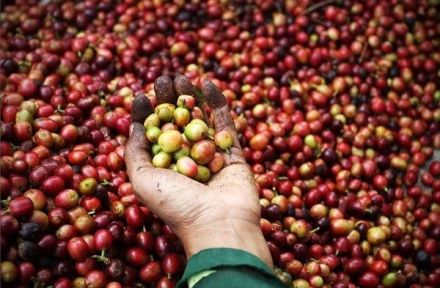
From the planting of coffee trees to the harvest of coffee beans
Coffee trees take 3-5 years from planting to fruiting. 6-10 years of coffee trees are the most likely to bear fruit, about 15-20 years, is the harvest period. Coffee trees are usually bred in nurseries and grow into saplings, and then moved to coffee farms a year later, in full compliance with the way the Arabs planted and cultivated coffee trees. Coffee trees will continue to take root downward and upward in the first four or five years of their growth.
2015-03-27 Coffee planting coffee beans harvest process coffee fruit 3-5 year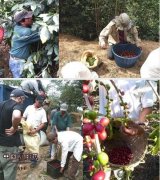
It takes 3-5 years from coffee tree planting to coffee bean harvest.
Coffee trees take 3-5 years from planting to fruiting. 6-10 years of coffee trees are the most likely to bear fruit, about 15-20 years, is the harvest period. Coffee trees are usually bred in nurseries and grow into saplings, and then moved to coffee farms a year later, in full compliance with the way the Arabs planted and cultivated coffee trees. Coffee trees will continue to take root downward and upward in the first four or five years of their growth.
2015-11-02 Coffee planting coffee beans harvest 3-5 years coffee fruit 3-5
The Development of Coffee cultivation
Coffee in Laos has gone through a lot of development in the past 20 years. The speed of development in the past 20 years is faster than that in the past 80 years. The coffee history of Laos can be traced back to 100 years ago. At that time, France was the colonial ruler of Vietnam, Cambodia and Laos, and they began to experiment with growing various crops in these areas. Coffee was quickly found in farmers in Vietnam and Laos.
2016-09-24 Coffee planting development course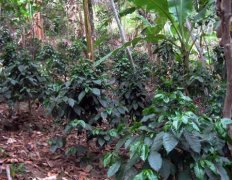
Coffee trees take 3-5 years from planting to fruiting.
Coffee trees take 3-5 years from planting to fruiting. 6-10 years of coffee trees are the most likely to bear fruit, about 15-20 years, is the harvest period. Coffee trees are usually bred in nurseries and grow into saplings, and then moved to coffee farms a year later, in full compliance with the way the Arabs planted and cultivated coffee trees. Coffee trees will continue to take root downward and upward in the first four or five years of their growth.
2015-09-15 Coffee planting fruit 3-5 years old coffee
General knowledge of boutique coffee from coffee tree planting to coffee bean harvest
Coffee trees take 3-5 years from planting to fruiting. 6-10 years of coffee trees are the most likely to bear fruit, about 15-20 years, is the harvest period. Coffee trees are usually bred in nurseries and grow into saplings, and then moved to coffee farms a year later, in full compliance with the way the Arabs planted and cultivated coffee trees. Coffee trees will continue to take root downward and upward in the first four or five years of their growth.
2014-12-19 Boutique coffee common sense planting coffee beans harvest results 3-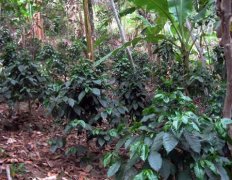
Production of coffee beans Coffee trees from planting to fruiting
Coffee trees take 3-5 years from planting to fruiting. 6-10 years of coffee trees are the most likely to bear fruit, about 15-20 years, is the harvest period. Coffee trees are usually bred in nurseries and grow into saplings, and then moved to coffee farms a year later, in full compliance with the way the Arabs planted and cultivated coffee trees. Coffee trees will continue to take root downward and upward in the first four or five years of their growth.
2015-06-04 Coffee beans production coffee planting fruit 3-5 year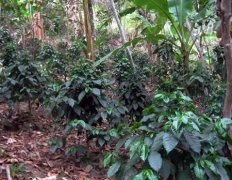
Production of coffee beans Coffee trees from planting to fruiting
Coffee trees take 3-5 years from planting to fruiting. 6-10 years of coffee trees are the most likely to bear fruit, about 15-20 years, is the harvest period. Coffee trees are usually bred in nurseries and grow into saplings, and then moved to coffee farms a year later, in full compliance with the way the Arabs planted and cultivated coffee trees. Coffee trees will continue to take root downward and upward in the first four or five years of their growth.
2015-10-13 Coffee beans production coffee planting fruit 3-5 year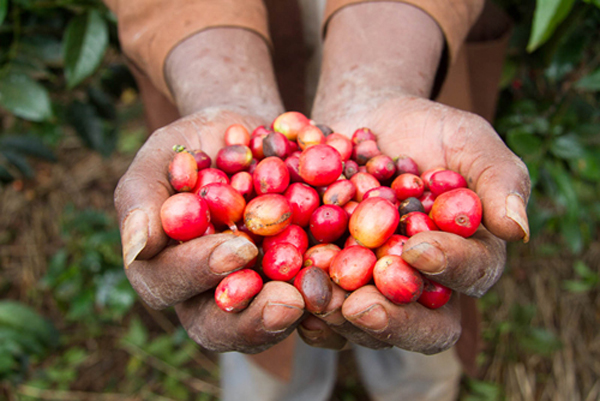
Do you know? The climate will affect your coffee.
As the second most traded commodity, coffee is second only to oil in value. Usually, it is thought that large food companies will always be able to get coffee from somewhere in the future, but global climate change is affecting coffee cultivation in tropical countries on both sides of the equator, and the coffee crisis is already brewing. This cup of coffee in your hand may be affected by the global climate! Changes in temperature and precipitation: reduction
2015-11-05 Know climate influence yours coffee curry reading guide as ranking second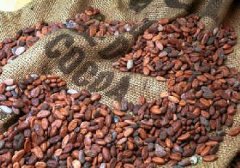
The Magic of Laos Coffee Coffee History
Coffee in Laos has gone through a lot of development in the past 20 years. The speed of development in the past 20 years is faster than that in the past 80 years. The coffee history of Laos can be traced back to 100 years ago. At that time, France was the colonial ruler of Vietnam, Cambodia and Laos, and they began to experiment with growing various crops in these areas. Coffee was quickly found in farmers in Vietnam and Laos.
2015-07-28 Laos coffee magic place history common sense
Introduction to the characteristics of coffee flavor description and grinding degree in Shaqiso producing area of Ethiopia
Ethiopia has unique natural conditions suitable for growing all imaginable varieties of coffee. As a highland crop, Ethiopian coffee beans are mainly grown in areas between 1, 100 and 2300 meters above sea level, roughly distributed in southern Ethiopia. Deep soil, well drained soil, weakly acidic soil, laterite and soil are soft and contain
2016-09-28 Ethiopia Shaquiso producing area Coffee Flavor description Grinding taste characteristics