“a genus” search results (320)

Coffee grows on trees.
As I often say, Nestle Coffee makes a lot of people know about coffee and the taste of coffee, but people's understanding of coffee is only on Nestle Coffee (instant coffee).
2014-07-03 Coffee knowledge coffee common sense coffee tree coffee encyclopedia
Small coffee Coffea arabica Linn Arabica coffee
Small coffee Coffea arabica L. Coffea arabica Linn. Sp. Pl. one hundred and seventy two。 1753; A. Cheval. Op. Cit. 196; A. E. Haarer, op. Cit. 13; Flora of Hainan 3: 349. 1974; Atlas of higher plants in China 4: 285, figure 5929. 1975; Tree Map of Yunnan, Volume 2: 1151. 1991. Small trees or large shrubs, 5-8 m tall
2014-06-30 Small coffee beans Arabica coffee boutique coffee beans
Guatemala Coffee Bean Introduction Volcanic soil is the highest Arabica variety
Each region of coffee beans have their own characteristics, but also for Guatemala won a lot of international praise, especially Antigua it sour, sweet, mellow texture is how perfect harmony; add a hint of smoke, more emphasis on its mystery, after tasting you will have reason not to let yourself look for alternatives everywhere. Guatemala coffee beans are mostly cultivated in volcanic areas at high altitudes where the soil is highest
2016-06-21 mountain soil genus superior Arabica species Guatemala coffee
Basic knowledge of boutique coffee knowledge of growing coffee
Raw coffee beans are the seeds of Rubiaceae, and there are at least 66 species in the genus Coffea. Two of the commercial interests are Arabica (Coffea arabica) and Congolese coffee (C. canephora). The former accounts for 2/3 of the world's production, while the latter, also known as Robusta, accounts for the remaining 1/3. Robastaga
2014-12-28 Boutique Coffee Basics Common sense planting knowledge Coffee beans Grass Rubia
Coffee growing environment
Arabica scientific name: Coffea arabica family: Rubiaceae coffee morphological characteristics: small trees or large shrubs, plant height 5~8 meters. Base usually much branched, older branches gray. nodes dilated, young branches glabrous. Leaves thin leathery ovate-lanceolate or lanceolate, apex long acuminate, base cuneate or slightly obtuse, entire or shallowly undulate, glabrous on both sides. Cymes several clustered in leaf axils
2014-08-08 Coffee knowledge Arabica coffee Coffee encyclopedia
Processing of Coffee Cherry
The word coffee comes from the Latin biological genus Coffea, and all Coffea are native plants.
2014-07-08 Coffee knowledge coffee bean processing coffee encyclopedia
Basic knowledge of fine coffee basic knowledge of coffee botany
According to the botanical description of coffee: coffee is Rubiaceae, coffee genus, perennial evergreen shrubs or small trees. There are more than 60 types of coffee classified, but there are roughly two varieties of coffee grown commercially on a large scale, one is Arabica, accounting for about 70 percent of the world's coffee planting area, and the other is Robasta, accounting for about 30 percent of the world's coffee planting area. According to our country
2015-03-12 Boutique coffee basics common sense botany knowledge
Strong but not bitter, fragrant but not strong, slightly fruity Yunnan coffee flavor, characteristics, taste and manor
The western and southern parts of Yunnan Province are located between 15 N and the Tropic of Cancer, most of which are 1000-2000 meters above sea level. The topography is dominated by mountains and slopes, with large ups and downs, fertile soil, sufficient sunshine, rich rainfall and large temperature difference between day and night. These unique natural conditions form the special taste of Yunnan small-grain coffee, which is strong but not bitter, fragrant but not strong, slightly fruity. As early as fifty years
2016-08-30 Not bitter not strong slightly fruity Yunnan coffee flavor characteristics taste manor
Strong but not bitter, fragrant but not strong, slightly fruity Yunnan coffee flavor, characteristics, taste and manor
The western and southern parts of Yunnan Province are located between 15 N and the Tropic of Cancer, most of which are 1000-2000 meters above sea level. The topography is dominated by mountains and slopes, with large ups and downs, fertile soil, sufficient sunshine, rich rainfall and large temperature difference between day and night. These unique natural conditions form the special taste of Yunnan small-grain coffee, which is strong but not bitter, fragrant but not strong, slightly fruity. As early as fifty years
2016-08-30 Not bitter not strong slightly fruity Yunnan coffee flavor characteristics taste manor
The most expensive and exotic coffee
The most expensive coffee in the world is not Nanshan Coffee, but Kopi Luwah coffee from Sumatra. The price is as high as $300 per pound! KOPI (Indonesian, coffee) LUWAK is produced in Sumatra, Zawa, and Sulvish and is part of the 13677 islands of Indonesia. LUWAK coffee is as expensive as gold and silver is not an infinite scenery on a fake island, but it is
2014-05-12 Coffee beans coffee salon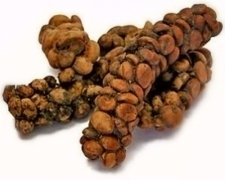
Famous Coffee the most expensive Coffee
The most expensive coffee in the world is not Nanshan Coffee, but Kopi Luwah coffee from Sumatra. The price is as high as $300 per pound! KOPI (Indonesian, coffee) LUWAK is produced in Sumatra, Zawa, and Sulvish and is part of the 13677 islands of Indonesia. LUWAK coffee is as expensive as gold and silver is not the infinite scenery on the fake island, but it is because
2014-09-22 Coffee knowledge the most expensive coffee famous coffee
Botanical classification of coffee beans Cankun Italian coffee machine
The botanical classification of coffee beans Coffee Tree Atlas Coffee Tree Coffee Tree Coffee is defined as the most unique alkaloid drinking flora. Usually after sowing for two to three years, coffee trees can grow to five in height.
2016-06-13 Coffee beans Botany Classification Cankun Italian Coffee Machine points
Indonesian Coffee Arabica Coffee Flavor introduces the characteristics of Indonesian Coffee
Arabica coffee trees grow between 900m and 2000 m above sea level; they are hardy, and the suitable growth temperature is 1524 ℃; they need more humidity, and the annual rainfall is not less than 1500 ml. At the same time, they also require higher cultivation techniques and conditions. Arabica coffee beans are mainly grown in South America (except Argentina and parts of Brazil), Central American countries and Africa.
2016-08-03 Indonesia coffee rabbi manor producing area flavor taste introduction characteristics
Flavor characteristics of Guatemalan coffee beans the planting environment of Guatemalan coffee
In Guatemala, migratory birds are found in different ecosystems on coffee farms. Legume trees are like cuje. Gushi N, and chalum (INGA), used in Guatemala as the main shade tree type, are not only beneficial to coffee plants, but also to migratory birds foraging birds, attracting nectar from flowers or flowers from insects. Other species of trees, epiphytic plants of the pineapple family
2016-05-24 Guatemala coffee beans flavor characteristics coffee planting environment melon land Mara
The knowledge of coffee botany is mainly divided into the following five varieties
According to the botanical description of coffee: coffee is Rubiaceae, coffee genus, perennial evergreen shrubs or small trees. There are more than 60 types of coffee classified, but there are roughly two varieties of coffee grown commercially on a large scale, one is Arabica, accounting for about 70 percent of the world's coffee planting area, and the other is Robasta, accounting for about 30 percent of the world's coffee planting area. According to our country
2015-10-19 Coffee botany knowledge mainly divided into the following varieties
The introduction and source of small coffee novice must see
Arabica scientific name: Coffea arabica family: Rubiaceae coffee morphological characteristics: small trees or large shrubs, plant height 5~8 meters. Base usually much branched, older branches gray. nodes dilated, young branches glabrous. Leaves thin leathery ovate-lanceolate or lanceolate, apex long acuminate, base cuneate or slightly obtuse, entire or shallowly undulate, glabrous on both sides. Cymes several clustered in leaf axils
2015-11-24 Arabica Coffee Introduction Origin Beginners Must-See Scientific Name Cof
Yunnan coffee common sense coffee growing environment and brewing
Arabica scientific name: Coffea arabica family: Rubiaceae coffee morphological characteristics: small trees or large shrubs, plant height 5~8 meters. Base usually much branched, older branches gray. nodes dilated, young branches glabrous. Leaves thin leathery ovate-lanceolate or lanceolate, apex long acuminate, base cuneate or slightly obtuse, entire or shallowly undulate, glabrous on both sides. Cymes several clustered in leaf axils
2015-02-07 Yunnan coffee common sense small grains growth environment brewing scientific name
Yunnan coffee Yunnan small grain coffee Yunnan boutique coffee
Yunnan small-grain coffee in China is a beverage crop with high economic value, which is called the three largest beverages in the world together with cocoa and tea, and its output and consumption ranks first among the three beverages. Coffee is rich in protein, fat, sucrose, starch, glucose, caffeine and other substances, rich aroma and delicious taste. Coffee is a perennial evergreen shrub of the genus Coffee of Rubiaceae or Xiao Qiao.
2014-09-16 Yunnan coffee Yunnan small grain coffee Yunnan boutique coffee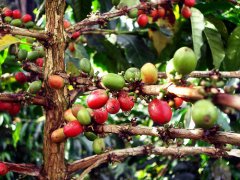
Plant classification of coffee beans
Green trees and Rubiaceae plants have been dominated by plants with special effects since ancient times, such as quinine tree, which is regarded as a specific drug for malaria, and Dugen, which is used to treat amigellosis. Coffee is positioned as the most unique alkaloid drinking plant group. Usually after sowing for two to three years, coffee trees can grow to a height of about five to ten meters, but to prevent coffee beans from losing their aroma and taste, and
2016-05-25 Coffee beans plants taxonomy trees grasses since ancient times special efficacy
What kind of coffee beans do they belong to in plants
Coffee tree belongs to the evergreen tree of Rubiaceae. Since ancient times, most of the plants of Rubiaceae are plants with special effects, such as quinine tree, which is regarded as a specific drug for malaria, and Dugan, which is used to treat amoeba dysentery. Coffee is defined as the most unique alkaloid drinking flora.
2014-08-22 Coffee knowledge coffee beans plants