“Street Farm” search results (300)

Coffee bean producing areas Caribbean Sea Haitian boutique coffee beans
Haiti, located in the north of the Caribbean Sea and west of Hispaniola Island, covers an area of about 27800 square kilometers. It is bordered by the Dominican Republic to the east, the Caribbean Sea to the south, the Atlantic Ocean to the north, and Cuba and Jamaica to the west across the Strait. It is an island country in the eastern Caribbean with a coastline of more than 1080 kilometers. The region where the country is located is on the circum-Pacific seismic belt. The whole territory is 3x4 for mountains.
2015-01-04 Coffee beans producing areas Caribbean Haiti boutique located in north
Tanzania Coffee Flavor Manor with excellent Taste characteristics of Arusha Coffee Manor
The coffee beans produced here are all exported from Kilimanjaro, but in addition to Mount Kilimanjaro, there are several major coffee producing areas throughout Tanzania, there are more small farms in other areas, and most small farms also have a planting area of several hundred mu. Some have their own washing equipment and bean drying farms, but the grading treatment still has to go through large-scale treatment.
2016-08-09 Taste excellent Tanzania coffee flavor manor producing area characteristics introduction A
The practice of Kona Coffee Hawaii Kona Coffee Coffee Price famous coffee brand
The Kona Coffee Editor, produced in the Kona area of Hawaii, is a rare species that can only be grown on volcanic slopes. The taste is rich and mellow, with a mixed aroma of wine, fruit and spice, with a special flavor. The selected Kona coffee has a moderate sour taste and a gentle and full-bodied taste, as well as a unique mellow flavor. As the output is decreasing, the price is catching up.
2016-05-03 Kona Coffee practice Hawaii Price famous Brand
Subtle sentiment: Sulawesi and Papua New Guinea
This month's review includes coffee growers in two Indo-Pacific regions, Indonesia's Sulawesi Island and Papua New Guinea. Our original plan included Java Coffee from several other Indo-Pacific Islands, Bali, East Timor, but we were unable to prove that their sufficient sample sources included. It doesn't matter; we found some excellent and raw coffee from these two places.
2014-07-25 Coffee News Papua New Guinea Sulawesi
Thai Coffee Malaysia Coffee Laos Coffee Robusta Coffee Lana Coffee (Lanna Cafe)
Southeast Asian coffee visiting trip Malaysian coffee. Malaysia has more in common with Singapore in cafe culture and coffee drinking, but Malaysia is the only Liberica coffee producer in the world outside West Africa.
2016-07-05 Thailand Coffee Malaysia Laos Robbs Booth Lana Lanna
Delicious Colombian Coffee. Hawaiian Kona Coffee.
Kona Coffee Click claim Open Coffee: character Coffee Biological Natural Kona Coffee, derived from the world-famous Hawaiian Kona Coffee, is the most beautiful coffee bean in the world. it tastes fresh and crisp with wine, fruit and spice aromas. as charming as the colorful colors of its native Hawaii, the volcanic archipelago. When you are in Hawaii, watching the night like fire
2016-05-03 Exquisite Columbia Coffee delicious Hawaii Kona Click
Cafes with World characteristics recommend that you can become a coffee expert after visiting these cafes.
There is no denying that Starbucks used to be a symbol of the way we know coffee. I once thought that I had entered the coffee world with a paper cup full of mochas in my hand. It was not until I witnessed the change of a coffee from seed to cup, learned the whole process of planting, picking, processing, transportation, roasting, grinding and making, and tasted all kinds of coffee.
2016-01-15 The world characteristics cafes recommendations after shopping these can also be transformed coffee up to people
Oceania Fine Coffee Melbourne International Coffee Fair Australian Coffee Culture
Australia can't miss the opportunity to taste Australian coffee. Australia is an amazing country in many ways. The high-quality coffee grown here is perhaps one of the most amazing things. Australian coffee is of high quality and has a soft taste with a slightly bitter taste of caffeine. It is a pity that only a small number of products enter the export market, which is due to high labor in production.
2016-04-11 Oceania boutique coffee Melbourne international fair Australia coffee culture
Taste characteristics of Diamond Mountain Coffee Bean Variety treatment in Panamanian Jade Manor
The BOQUETE region of Panama, located in the province of CHIRIQUI on the border with Costa Rica, is the home of Panama's famous GEISHA coffee and is famous for producing high-quality Arabica coffee. Tedman & TEDMAN&MACINTYRE ESTATE Manor in the mountains 4000 feet above sea level in Poggett, originated in Panama
2016-10-17 Panama coffee beans flavor description processing taste characteristics varieties producing areas introduction
Recommended for boutique coffee beans-what coffee beans should be used for hand-brewed coffee?
First, what coffee beans should be used to make coffee by hand? The types of coffee beans are divided into two types, namely, individual products and blends. Individual coffee beans and blended coffee are also suitable for different coffee making utensils, if separated by the system, single coffee beans are suitable for filtered coffee production, while blended coffee beans are suitable for pressure extraction.
2023-01-31 Coffee knowledge hand coffee how to make coffee boutique coffee beans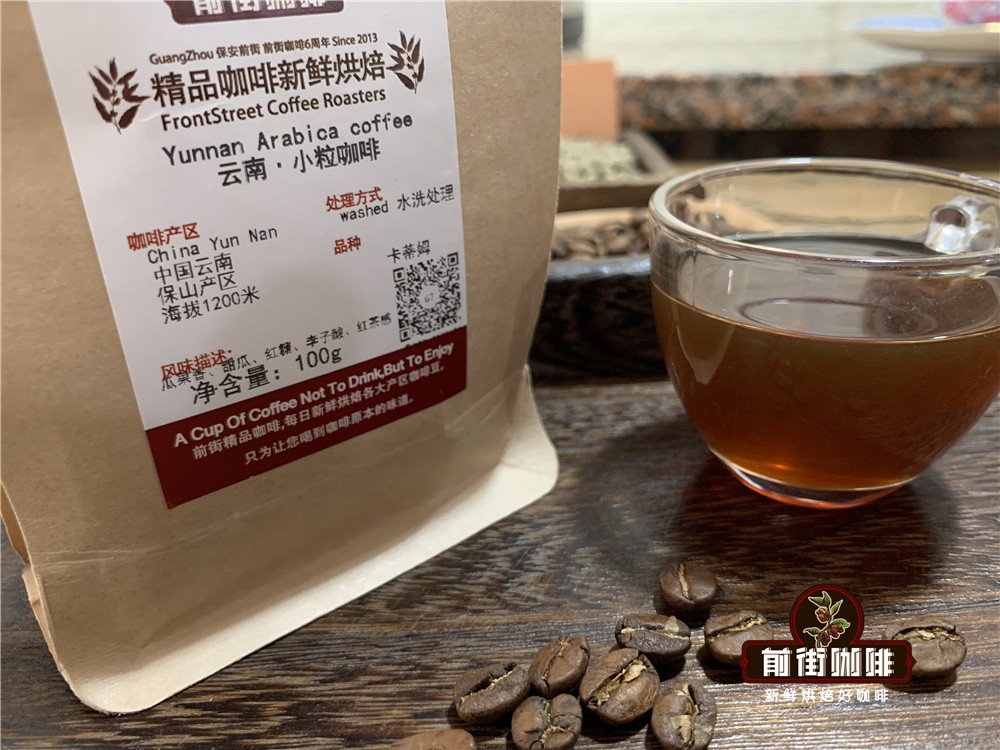
Introduction to the basic knowledge of Yunnan Fine Coffee Bean varieties description of hand-made taste of Yunnan small-grain coffee
[scientific name] small grain species are CoffeaarabicaL., medium grain species are Coffeacanephora, large grain species are Coffealiberica family genus: Rubiaceae Coffea [alias] small grain species, also known as Arabian species, medium grain species also known as Gaffra species, large grain species also known as large seed species
2023-02-05 Boutique Coffee Basics Common sense Yunnan Xiao Grain characteristics Scientific name Cof
Coffee bean production process and common coffee processing methods
Process Description: 1. Remove the shell and remove the coffee shell. 2, choose beans, remove moldy coffee beans. 3, cleaning, washing coffee with water to wash away surface dirt. 4. Bake, bake at 90~100℃ for half an hour. 5. Grinding: grinding and crushing the processed coffee with a roller grinder. 6, pulping (add water), add coffee about 3 times the 95℃ hot water
2014-07-08 Coffee knowledge Coffee bean production Coffee encyclopedia
Panamanian Rosa Coffee Story description of flavor and taste characteristics of Panamanian Rosa coffee bean hand-brewing parameters
In such a unique planting environment as Poquet, there is naturally not only the rose summer of emerald, the king of coffee, regardless of flavor, quality and value, but I think it is quite extravagant to drink rose summer every day, even if there is no economic pressure. it's not like eating shark's fin and bear's paw every day. So is coffee.
2022-10-12 Panama coffee taste coffee beans types introduction Bokui so day thick
Coffee dissemination chronology
Coffee spread to Arabia (eleventh century), Egypt, Syria. (13th century) Damascus (16th century) Europe (17th century) the first people to plan to grow and eat coffee were Arabs. At the beginning of the eleventh century, people in the Arab region boiled coffee into soup or dried it and then boiled it as stomach medicine. Because Muslim precepts are strict and alcohol is strictly forbidden, Muslims
2014-07-01 Coffee spread Coffee History
Coffee dissemination chronology
Arab (eleventh century) Egypt, Syria (13th century) Damascus (16th century) Europe (17th century) the earliest people who planned to grow and eat coffee were Arabs. At the beginning of the eleventh century, people in the Arab region boiled coffee into soup or dried it and then boiled it as stomach medicine. Because of the strict Muslim precepts and forbidden to drink alcohol, Muslims
2016-10-19 Coffee spread chronology Arab first Century Egypt Syria . Thirteen
Exploration of Coffee in Southeast Asia
Singapore Cafe. Tourists are often at a loss in front of a Southeast Asian coffee sign on the streets of Singapore, on the corner of Vietnam, Malaysia and other places. Although coffee was transliterated by clever ancestors in the early years of its spread, Singaporeans always refer to coffee by Kopi, which is pronounced from Minnan dialect, causing Kopi O and Kopi C to inexplicably become many Southeast Asian coffee.
2014-07-31 Southeast Asia coffee exploration Singapore cafes tourists regular meetings streets
High-quality coffee Honduran coffee manor Honduran coffee making method
Honduran coffee seems strange to many coffee drinkers. When it comes to coffee production, the geographical conditions of Honduras are no less than those of neighboring coffee-producing countries such as Guatemala and Nicaragua. However, in the past, Honduras was less well-known in the consumer market because it did not have strong support in the handling and transportation of raw beans. But in recent years, the country has become extremely
2016-05-22 Boutique coffee Honduras manor production method many
Hawaiian Fine Coffee-- Kona Fine Coffee
In 1813, a Spaniard first grew coffee in the ManoaValley Valley of Oahu, which is today the main campus of the University of Hawaii. In 1825, an English agronomist named John Wilkinson transplanted some coffee from Brazil to grow in the coffee garden of Chief Birch on the island of Oahu. Three years later, a man named Samuel Riflandrag
2016-03-21 Hawaii boutique coffee Kona origin introduction
Boutique Coffee introduction to 53 Coffee producing areas around the World
forty-four. In 1715, the first coffee trees (about 40) were transported from the Yemeni port of Moka to La Runion, but unfortunately only two survived. By 1719, coffee plantations had flourished and the first beans were sold. Over the next few years, the government took a hard measure: the islanders, black and white, had to plant 100 coffee trees a year.
2015-01-19 Boutique Coffee Global 53 Origin introduction 44 Reunion 171st
Basic knowledge of fine coffee in coffee communication period chronology
Coffee spread to Arabia (eleventh century), Egypt, Syria. (13th century) Damascus (16th century) Europe (17th century) the first people to plan to grow and eat coffee were Arabs. At the beginning of the eleventh century, people in the Arab region boiled coffee into soup or dried it and then boiled it as stomach medicine. Because Muslim precepts are strict and alcohol is strictly forbidden, Muslims
2015-06-18 Coffee communication chronology boutique basics common sense coffee Arab I