“Pest” search results (456)
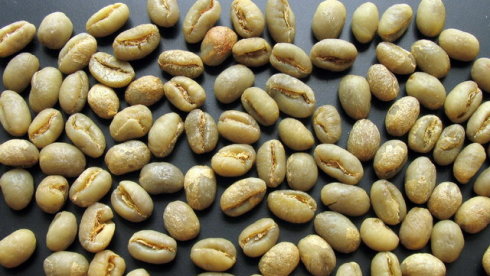
Tanzania Coffee Green Bean Kilimanjaro AA Black Plum Flavor Balanced Acidity Soft Mild
Political instability and pest infestation have disrupted Tanzania's coffee industry, leading to a decline in overall coffee levels and instability in quality, which in turn has led to lower prices, which usually result in further declines in the coffee industry. More notably, it is estimated that from 1969 to 1985 more than 12 per cent of the Arabica coffee grown in northern Tanzania was lost.
2016-04-26 Tanzania Coffee Green Bean Chili Mazar Plum Flavor Balance Acidity Softness
The planting system of Ethiopian coffee is roughly divided into four types.
The planting system of Ethiopian coffee is roughly divided into four categories: 1) primeval forest coffee (Forest Coffee:8-10%) 2) semi-virgin forest coffee (Semi-forest Coffee: 30-35%) 3) Manor coffee (Garden/Cottage: 50% mae 55%) 4) Enterprise coffee cultivation (Plantation Coffee: 5-6%) specifically: primeval forest coffee belongs to the category
2014-08-13 Coffee knowledge Ethiopia coffee cultivation planting system
Yunnan Dehong small Coffee planting Base
Dehong small grain coffee is native to Africa and Ethiopia and is the main cultivated variety in the world. In 1951, coffee seed was first introduced to Dehong Luxi Cotton cropping Experimental Station for productive cultivation. The seedlings were planted in 6 mu and grew well. In 1956, the Dehong Prefecture Committee decided to vigorously develop coffee in the whole state, and held a training course on coffee planting techniques throughout the state, so that small-grain coffee was widely developed in the whole state. 1958 de
2015-10-07 Yunnan Dehong Xiao Grain Coffee planting Base Origin
Yunnan Dehong small Coffee planting Base
Dehong small grain coffee is native to Africa and Ethiopia and is the main cultivated variety in the world. In 1951, coffee seed was first introduced to Dehong Luxi Cotton cropping Experimental Station for productive cultivation. The seedlings were planted in 6 mu and grew well. In 1956, the Dehong Prefecture Committee decided to vigorously develop coffee in the whole state, and held a training course on coffee planting techniques throughout the state, so that small-grain coffee was widely developed in the whole state. 1958 de
2014-04-27 Yunnan Dehong Xiao Grain Coffee planting Base Origin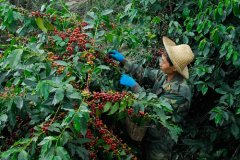
Chinese Academy of Tropical Agricultural Sciences sets up Coffee Innovation Center in Yunnan
On March 6, the Coffee Innovation Center of the spice and Beverage Research Institute of the Chinese Academy of Tropical Agricultural Sciences was established in Pu'er City, Yunnan Province. The establishment of the center is an important measure for the institute to promote the joint and cooperation of tropical agricultural research and promotion based on the development needs of Yunnan coffee industry.
2014-05-27 Coffee News Yunnan Coffee Coffee Innovation Center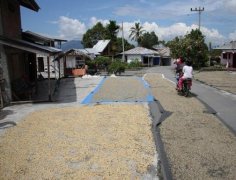
Development of Coffee Industry in Pu'er City, Yunnan Province
In recent years, our city closely revolves around the strategy of ecological establishment and green development, with the goal of developing agriculture with plateau characteristics and building a coffee capital of China, to establish and improve the guarantee mechanism and service mechanism to promote the healthy development of the coffee industry in the whole city. it has effectively promoted the large-scale, intensive and industrial development of the coffee industry in the whole city, and demonstrated the experiment of building the coffee industry into a national green economy in Pu'er.
2015-01-22 Yunnan Pu'er City industrial chain model development coffee industry in recent years our city
Common sense of coffee beans in Yunnan Dehong small grain coffee planting base
Dehong small grain coffee is native to Africa and Ethiopia and is the main cultivated variety in the world. In 1951, coffee seed was first introduced to Dehong Luxi Cotton cropping Experimental Station for productive cultivation. The seedlings were planted in 6 mu and grew well. In 1956, the Dehong Prefecture Committee decided to vigorously develop coffee in the whole state, and held a training course on coffee planting techniques throughout the state, so that small-grain coffee was widely developed in the whole state. 1958 de
2015-02-15 Yunnan Dehong Xiao Grain Coffee planting Base Coffee Bean Common sense
Factors affecting the price increase of coffee futures
Coffee futures trade coffee beans, and futures are both an investment and an increase in coffee. The increase in coffee lies not only in the origin, good or bad, but also for many piecemeal reasons. In the coffee futures market, the main factors affecting the price of coffee beans can be summarized as follows:
2014-07-16 Coffee news coffee futures futures rise
Description of Manor name and Flavor in boutique Coffee producing area in Kenya introduction to planting environment of taste varieties
This is the earliest classification of Kenyan coffee beans and is still in use in many parts of Brazil. The method of identification is to randomly take 300 grams of samples and put them on black paper, because black paper can best avoid reflection. Then, examined carefully by the professional appraiser, find out the defective beans in the sample, and accumulate different scores according to the types of defects. For example, one black bean counts as one point and one stone counts as one.
2016-10-21 Boutique Kenya coffee producing area manor name flavor description taste variety
What are defective beans? how to calculate defective beans?
High-quality coffee beans are refined by water treatment. The coffee beans with less impurities can be obtained by the water washing method, but if the water quality and time are not properly controlled during the fermentation process, the coffee beans will easily be infected with the sour taste of excessive fermentation. and dry beans also need to pay attention to timely re-inspection to prevent coffee beans from being contaminated by wet ground and sundries. Processed
2016-06-03 Flaws yes what how?
Coffee trading knowledge Coffee Futures Price increase
Coffee futures trade coffee beans, and futures are both an investment and an increase in coffee. The increase in coffee lies not only in the origin, good or bad, but also for many piecemeal reasons. In the coffee futures market, the main factors affecting the price of coffee beans can be summarized as follows: 1. Changes in supply: supply and demand have a certain impact on prices, changes in supply
2014-09-15 Coffee knowledge coffee trading knowledge coffee futures price increase factors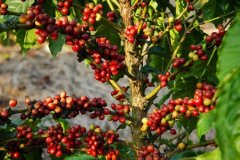
Coffee basics two coffee varieties of coffee beans
Linnaeus (Swedish naturalist) classifies coffee plants into the Rubiaceae family, such as gardenia. The great naturalist named it Coffea. Although wild plants can grow as high as 10-12 meters, the plantations are about 3 to 5 meters high, with the exception of Colombia, where tree species rarely exceed 2 meters. This makes farming and picking easier and more economical to cultivate. Leaves
2015-02-16 Coffee basics coffee beans two varieties
Coffee futures price increase factors coffee common sense
Coffee futures trade coffee beans, and futures are both an investment and an increase in coffee. The increase in coffee lies not only in the origin, good or bad, but also for many piecemeal reasons. In the coffee futures market, the main factors affecting the price of coffee beans can be summarized as follows: 1. Changes in supply: supply and demand have a certain impact on prices, changes in supply
2015-07-30 Coffee futures prices increases factors common sense coffee trading coffee beans
Grading of raw coffee beans there are two ways to grade raw coffee beans.
There are two ways to classify raw coffee beans, one is the filter number, and the other is the elevation. It is divided by the filter number, and the size is size in terms of the screen size. Round beans are generally smaller than flat beans, between 8-13 and 12-29. 8, 9, 10. 12, 13. 18. 29 = small, medium, ordinary. Quasi-big. Big, extra large. The bigger the size, the bigger the beans. Like SC-.
2015-06-05 Coffee beans grading coffee raw beans methods two kinds
Defective beans-a fatal wound in the taste of coffee
The grapes produced on the same vine may not necessarily have a sweet and sour taste, not every grape may have a good appearance and consistent maturity, some may have been bitten by insects, some may be stunted, and so on. This is a normal phenomenon, and so is coffee. The raw coffee beans obtained from the treated coffee fruits are not always good.
2016-08-30 Blemish coffee taste medium fatal wound the same a grape a tree bear fruit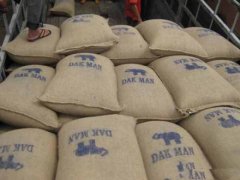
Factors affecting the price increase of coffee futures in coffee beans trading
Coffee futures trade coffee beans, and futures are both an investment and an increase in coffee. The increase in coffee lies not only in the origin, good or bad, but also for many piecemeal reasons. In the coffee futures market, the main factors affecting the price of coffee beans can be summarized as follows: 1. Changes in supply: supply and demand have a certain impact on prices, changes in supply
2015-01-07 Coffee beans trading coffee futures prices increases factors
The main factors affecting the price of coffee beans can be summarized as follows.
Coffee futures trade coffee beans, and futures are both an investment and an increase in coffee. The increase in coffee lies not only in the origin, good or bad, but also for many piecemeal reasons. In the coffee futures market, the main factors affecting the price of coffee beans can be summarized as follows: 1. Changes in supply: supply and demand have a certain impact on prices, changes in supply
2015-10-17 Coffee futures prices increases factors influence coffee beans main general induction
Coffee in the cup depends on climate, pests and plant science.
Photo Source: Baidu Pictures A recent report on the impact of climate change on crop cultivation mentioned that the coffee crisis is already brewing, especially the highly praised Arabica coffee beans. A study published in PLOS One in April mainly simulated coffee cultivation in 21 different climatic conditions up to 2050, covering 60 tropical countries on both sides of the equator.
2015-07-08 Coffee in the cup depending on climate pests plants aspects science pictures sources
Analysis on the Market Price of Coffee beans the main factors affecting the price of coffee beans
Coffee futures trade coffee beans, and futures are both an investment and an increase in coffee. The increase in coffee lies not only in the origin, good or bad, but also for many piecemeal reasons. In the coffee futures market, the main factors affecting the price of coffee beans can be summarized as follows: 1. Changes in supply: supply and demand have a certain impact on prices, changes in supply
2015-09-02 Coffee beans market prices analysis impact prices main factors coffee futures
Do you know? The climate will affect your coffee.
As the second most traded commodity, coffee is second only to oil in value. Usually, it is thought that large food companies will always be able to get coffee from somewhere in the future, but global climate change is affecting coffee cultivation in tropical countries on both sides of the equator, and the coffee crisis is already brewing. This cup of coffee in your hand may be affected by the global climate! Changes in temperature and precipitation: reduction
2015-11-05 Know climate influence yours coffee curry reading guide as ranking second