“Main” search results (17734)

What are the main ingredients of coffee? what are the ingredients of a coffee bean?
1. Caffeine has a particularly bitter taste and stimulates the central nervous system, heart and respiratory system. Appropriate amount of caffeine can also reduce muscle fatigue and promote digestive juice secretion. Because it promotes kidney function, it is diuretic and helps the body to expel excess sodium ions from the body. But eating too much can lead to caffeine poisoning. two。 After the tannic acid is boiled, the tannic acid will be decomposed into pyrouric acid.
2015-09-02 Coffee main ingredient one coffee beans which caffeine special strong bitter
The main coffee growing area in Bolivia is Yungas in the northeast of La Paz.
Bolivia is 1/3 of the Andean mountains, rugged terrain, mainly road transport, accounting for more than 85% of transportation. The main railway and road networks are concentrated in the west, and remote areas rely on air communication. But road coverage is the lowest in South America. And there is also the Ronggas Highway, the world's first insurance road known as the road to death. There is no developed economy here. It is the poorest in South America.
2016-06-30 Bolivia Coffee main growing area La Paz Northeast Garth Yung
Themed Cafe: another main Force in expansion
There is no doubt that various themed cafes are another main force in the expansion of cafes.
2014-05-30 Coffee News Cafe theme Cafe
There are three main points to drink good coffee.
At a time when instant coffee is popular, how can you get a good cup of coffee during your trip? There are three main points to drink good coffee: producing area, fresh grinding and ingredient technology.
2014-06-12 Coffee knowledge coffee skills coffee encyclopedia
Main chemical constituents of raw coffee beans
Main chemical components of raw coffee beans: content (%) carbohydrate 60.0 reducing sugar 1.0 sucrose 7.0 pectin 2.0 starch 10.0 garrison 5.0 hemicellulose 15.0 holocellulose 18.0 lignin 2.0
2014-08-09 Coffee knowledge coffee bean composition chemical composition
The main features of Kopi Luwak
Main features: coffee beans generally go through the process of shell fermentation, coffee beans in the civets' intestines, special bacteria provide a unique Kopi Luwak fermentation environment, the flavor becomes unique, particularly thick and mellow. The coffee beans fermented by civets' intestines and stomach are very thick and mellow, so they collect civets' feces, sift out the coffee beans and brew them to drink.
2014-09-02 Coffee knowledge the characteristics of Kopi Luwak the flavor of Kopi Luwak
The main chemical components of coffee beans
The main chemical composition of green coffee beans: composition content (%) carbohydrate 60.0 reducing sugar 1.0 sucrose 7.0 pectin 2.0 starch 10.0 tulose 5.0 hemicellulose 15.0 total cellulose 18.0 lignin 2.0
2014-10-29 Coffee knowledge fine coffee science coffee bean ingredients chemical composition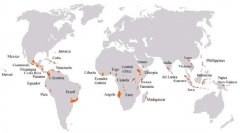
Tanzania: Kilimanjaro coffee taste and its main origin
Tanzania: Kilimanjaro coffee flavor taste characteristics: soft acidity, attractive aroma. Coffee from Tanzania has long been loved by Europeans and is among the most famous products. Europeans give Tanzania a nickname for coffee gentleman, and Chinese coffee connoisseurs call it the coffee swordsman with the coffee king Blue Mountain and the coffee lady's mocha. Tansan
2016-02-29 Tanzania Kili Mazar Luo Coffee Coffee Flavor and its main Origin
Boutique coffee what is the main producing country of boutique coffee
Major coffee producing countries: coffee production zones generally range from 25 degrees north to 30 degrees south, covering most countries in Central Africa, East Africa, the Middle East, India, South Asia, the Pacific, Latin America and the Caribbean. The reason why coffee is mainly concentrated in this area is that coffee is very vulnerable to frost, and the temperature and humidity are most suitable for coffee in the tropics.
2016-05-16 Boutique coffee what main producing country production zone
Boutique coffee what is the main producing country of boutique coffee
Major coffee producing countries: coffee production zones generally range from 25 degrees north to 30 degrees south, covering most countries in Central Africa, East Africa, the Middle East, India, South Asia, the Pacific, Latin America and the Caribbean. The reason why coffee is mainly concentrated in this area is that coffee is very vulnerable to frost, and the temperature and humidity are most suitable for coffee in the tropics.
2016-05-16 Boutique coffee what main producing country production zone
What are the main ingredients of coffee beans? what is the flavor description of coffee?
The fiber of fiber raw beans will be carbonized after baking and combine with caramel to form the hue of coffee. The main source of protein calories, the proportion is not high. Most of the protein in coffee powder will not dissolve out when brewing coffee, so the intake is limited. Sugar coffee raw beans contain about 8% sugar. After baking, most of the sugar will be converted to caramel, making the coffee brown.
2016-06-06 Coffee beans main ingredients which coffee flavor description fiber raw beans roasting
Introduction to the main economies of the coffee-producing countries of Venezuela
Venezuela's main economic source industry is relatively developed, focusing on the development of iron and steel, petrochemical, aluminum smelting and other industries since the 1970s. Agricultural arable land accounts for only 7.1% of the arable land area, mainly producing corn, rice, coffee, cocoa, sugar cane, cotton and so on. Animal husbandry is mainly cattle raising, and agricultural and animal husbandry products are not self-sufficient. Crude oil and its products account for more than 90% of the total export value, followed by iron
2016-06-27 Coffee producing country Venezuela main economy introduction
Main coffee producing areas and planting methods in Indonesia
The main coffee producing area Java, the oldest producing area, continues its reputation from the glorious era of Indonesian coffee in the 18th century. When it comes to Java coffee, it is still reminiscent of quality and delicacy. At that time, the most famous blend was Java coffee with Yemeni mocha. In addition, Java also has a very famous old coffee Aged coffee, or monsoon coffee Monsooned c
2016-06-02 Indonesia coffee producing areas planting mode Java the most ancient
Kilimanjaro, Tanzania's main coffee producing area, is rich in volcanic soil.
Tanzania's main coffee producing area, located at the foot of Mount Kilimanjaro, is rich in volcanic soil. Some coffee trees planted here are more than 100 years old. Coffee was first introduced by Christians from Kenya to grow coffee. Coffee trees must be carefully taken care of, weeded and fertilized. And old branches must be cut off so that new branches can grow to maintain the quality of coffee beans.
2016-06-17 Own rich volcano soil Tanzania main coffee producing area Kili horse
Introduction to the characteristics of manor flavor and taste in the main producing areas of Nicaraguan coffee
Coffee is Nicaragua's main export. According to the president of the Nicaraguan Coffee Farmers' Federation, due to the poor harvest of coffee in Nicaragua's Pacific region, the country's total coffee production in 1998 may be 12% lower than that in 1997. In the coffee year of 1997 and 1998, Nicaragua harvested 1.422 million bags of coffee (each bag of 46kg), which has been producing 1% of coffee in the past 14 years.
2016-07-16 Nicaragua coffee main producing area manor flavor taste characteristics introduction
Introduction of main Coffee (4)
14. Vietnam Coffee (Vietnam Coffee): Vietnam is the first place in Indo-China to grow coffee. Because it was once a colony of France, it has a habit of drinking coffee for a long time, but the general folk way of drinking coffee is very similar to that of Indonesia. At present, its output has leapt to the second place in the world, with Romsda as the bulk. 15. Indian coffee (India Coffee): Indian coffee in recent years
2014-08-22 Main Coffee introduction 14.Vietnam Vietnam Cof
Coffee from main producing areas in Tanzania Kilimanjaro Coffee Kilimanjaro Mountain Fire area
Tanzania's main coffee producing area, located at the foot of Mount Kilimanjaro, is rich in volcanic soil. Some coffee trees planted here are more than 100 years old. Coffee was first introduced by Christians from Kenya to grow coffee. Coffee trees must be carefully taken care of, weeded and fertilized. And old branches must be cut off so that new branches can grow to maintain the quality of coffee beans.
2016-07-21 Tanzania main producing areas coffee introduction Kili Mazar Luo coffee Geely
The main coffee producing areas in Ethiopia
The main producing areas of Ethiopian coffee are Harald (Harar) in the east, Djimmah (southwest) and Sidamo (south). The unique fragrance of Yirgacheffe comes from Yirga, a small town in the northwest of Sidamo province. Yirgacheffe Coffee Raw beans are the most popular coffee in the world.
2016-06-05 Ethiopia coffee yes producing area
Coffee Origin-Coffee Classification of the main Coffee producing countries
Coffee Origin-Coffee trees in the main coffee producing countries are very similar to laurel and usually grow in the area between the Tropic of Cancer. A coffee tree usually grows for about three to four years before it begins to bear fruit. the fruit is a red berry and a small number of yellow berries. After drying and removing the pulp, the coffee beans can be separated. There are coffee beans all over the world.
2016-06-07 Coffee origin main country of origin classification coffee laurel
The two main varieties of Colombian coffee Kaddura and Colombian production
The Colombian Coffee producers Association (Federacion Nacional de Cafeteos de Clolmbia), known as [FNC] for short in the industry, introduced the two main varieties of Colombian coffee, Kaddura and Colombia. Kaddura, which was introduced from Brazil in the 1960s, now accounts for 45-50% of the country's output and has replaced the earliest Tibica. A new breed with the same name as Colombia [Goran]
2016-04-29 Colombia coffee two major main force variety Dula production