“December 18th” search results (200)

Grindability parameters of graded hand-flushing water temperature of Kenyan AA coffee beans in Kenyan coffee producing area
Kenyan coffee, known as the Cup of connoisseurs (ConnoisseursCup), is famous in the coffee industry for its rich aroma, bright and vibrant acidity, full and elegant mellowness and red wine flavor. Caffeine in different producing areas has its own subtle flavor due to the difference of microclimate. Kenya
2023-04-01 World Coffee Manor producing area introduction producing country Kenya detailed known as reference
Angolan Coffee Tree Angolan Coffee Price
Angola is located in southwest Africa, with the capital Luanda, the western Atlantic Ocean, the Democratic Republic of the Congo to the north and northeast, Namibia to the south and Zambia to the southeast, and an outer enclave of Cabinda province bordering the Republic of the Congo and the Democratic Republic of the Congo. The Angolan economy is dominated by agriculture and minerals, as well as oil refiners.
2016-05-03 Angola coffee coffee beans price
Introduction of coffee beans and some boutique coffee in the main producing areas of coffee beans in the world (4)
Introduction of coffee beans and some boutique coffee in the main coffee producing areas of the world: Asia and Arabian Peninsula
2014-06-18 Coffee knowledge coffee bean producing areas boutique coffee
The Green Dream of Yunnan Coffee
In 2012, Yunnan is expected to produce 60, 000 tons of coffee, accounting for 98% of the country's coffee production and 7/1000 of the world's coffee production. Pu'er City, as an important producing area of small grain coffee in Yunnan, by the end of 2011, the planting area of coffee is 439000 mu, the output is 28000 tons, the output value is 850 million yuan, the planting area and output account for more than half of the country respectively. This year, new plants will be planted in Pu'er City.
2014-04-27 Yunnan coffee green dream 2012 output forecast
The Green Dream of Coffee in Yunnan Coffee planting Environment in Yunnan
Abstract: introduction: outshining others is not spring. In order to make great progress in Yunnan coffee industry, intensive processing is the only way, and in the face of competition from international coffee giants, Yunnan coffee needs the effect of industrial clusters more. And this will be the situation that zhengfu likes to hear and see. In 2012, Yunnan coffee output is expected to be 60,000 tons, accounting for 98% of the national coffee output, accounting for the world.
2016-05-05 Yunnan Coffee Green Dream Coffee Bean planting Environment Abstract Guide one
African Coffee Bean producing areas and characteristics Story of Starbucks Coffee Bean producing areas
To visit Hawaii, in addition to the beautiful beach, don't forget the Hawaiian coffee bean-Kona. The taste is sweet with the sour taste of wine, which is very special. The most traditional and famous coffee in Hawaii. However, due to the low production here, the surprisingly high cost, and the increasing demand for individual coffee in the United States and other places, its unit price is not only getting higher and higher, but also
2016-10-17 Africa coffee beans producing areas characteristics Buck Big three Hawaii sightseeing except for the United States
The introduction of Ruili Jingpo Nongxian coffee was recorded in 1914.
In April 1996, compiled by the compilation Committee of Ruili City Chronicles of Yunnan Province, the fifth coffee section on page 383 of Ruili City Chronicles published by Sichuan Dictionary Publishing House recorded that as early as 1914, the Jingpo nationality had been introduced from Myanmar to Nongxian Township for cultivation. The local series of books of the people's Republic of China, Records of Yunnan Province, Volume 39, Records of Land Reclamation, Chapter 3, Section 2, Coffee is recorded: the cultivation of coffee in China began in 1884.
2015-02-07 About Ruili Jingpeng coffee introduction 1914 records
History of introduction and expansion of Coffee in early China (1)
1. The introduction of Ruili Jingpo Nongxian Coffee was recorded in 1914. In April 1996, it was compiled by the compilation Committee of Ruili City Chronicles of Yunnan Province. The fifth coffee section on page 383 of Ruili City Chronicles published by Sichuan Dictionary Publishing House recorded that as early as 1914, the Jingpo people have been introduced from Myanmar to Nongxian Township for cultivation. Yunnan Provincial Chronicles, Volume 39, Chapter 3 of the Local Series of the people's Republic of China
2015-04-28 Early China coffee introduction expansion about Ruili Jingpeng
The History of Coffee introduction and expansion in China in the early stage (1)
1. The introduction of Ruili Jingpo Nongxian Coffee was recorded in 1914. In April 1996, it was compiled by the compilation Committee of Ruili City Chronicles of Yunnan Province. The fifth coffee section on page 383 of Ruili City Chronicles published by Sichuan Dictionary Publishing House recorded that as early as 1914, the Jingpo people have been introduced from Myanmar to Nongxian Township for cultivation. Yunnan Provincial Chronicles, Volume 39, Chapter 3 of the Local Series of the people's Republic of China
2014-12-01 Coffee history common sense early China introduction expansion about Ruili Jingpolong
History of introduction and expansion of Coffee in China in the early stage of Coffee Development (1)
1. The introduction of Ruili Jingpo Nongxian Coffee was recorded in 1914. In April 1996, it was compiled by the compilation Committee of Ruili City Chronicles of Yunnan Province. The fifth coffee section on page 383 of Ruili City Chronicles published by Sichuan Dictionary Publishing House recorded that as early as 1914, the Jingpo people have been introduced from Myanmar to Nongxian Township for cultivation. Yunnan Provincial Chronicles, Volume 39, Chapter 3 of the Local Series of the people's Republic of China
2015-03-09 China Coffee Development course early introduction expansion about Ruili Jingpeng
History of introduction and expansion of Coffee in China in the early stage of Coffee Development (5)
1. From the first peak period of the development of China's coffee industry (1952-1961) to the late 1940s, according to recorded figures, there are 2173.33 hectares of rubber plantations in Hainan Island, with a total of 867600 rubber trees, with an annual output of 199,000 tons of dry rubber, and more than 300,000 coffee plants. the annual output of coffee beans is 1 ton. According to a survey in the early 1950s, there was a large amount of coffee left in Fushan area of Chengmai County, with a total of 70,000.
2015-03-09 China coffee development course early stage introduction expansion
World Map of Coffee beans-- introduction of 53 coffee producing areas in the world
twenty-one. Venezuela oil was once considered the main export of Venezuela (Venezuela). Although coffee trees were introduced from Martinique in 1730 and Venezuela, coffee production was almost abandoned at the height of the oil industry. Recently, coffee plantations have begun to recover, with original Tipica and bourbon coffee trees and new plantations
2016-05-07 Coffee beans World Map Global 53 Coffee Origin introduction Comprehensive America
Coffee planting History of Coffee introduction and expansion in China in the early stage (5)
1. From the first peak period of the development of China's coffee industry (1952-1961) to the late 1940s, according to recorded figures, there are 2173.33 hectares of rubber plantations in Hainan Island, with a total of 867600 rubber trees, with an annual output of 199,000 tons of dry rubber, and more than 300,000 coffee plants. the annual output of coffee beans is 1 ton. According to a survey in the early 1950s, there was a large amount of coffee left in Fushan area of Chengmai County, with a total of 70,000.
2014-10-14 Coffee knowledge coffee growing history Chinese coffee
The History of Coffee introduction and expansion in China in the early stage (5)
1. From the first peak period of the development of China's coffee industry (1952-1961) to the late 1940s, according to recorded figures, there are 2173.33 hectares of rubber plantations in Hainan Island, with a total of 867600 rubber trees, with an annual output of 199,000 tons of dry rubber, and more than 300,000 coffee plants. the annual output of coffee beans is 1 ton. According to a survey in the early 1950s, there was a large amount of coffee left in Fushan area of Chengmai County, with a total of 70,000.
2014-12-01 Coffee History Common sense early China introduction expansion planting Industry
A detailed introduction to the establishment, historical origin and current situation of the International Coffee Organization
The International Coffee Organization is an intergovernmental organization founded in London in 1963. It is composed of coffee importers and exporters. The organization is responsible for implementing the International Coffee Convention and is committed to improving the situation of the world coffee industry through international cooperation. Organizational and functional editorial contributions the International Coffee Organization has made a special contribution to the world coffee industry through: (1) organizing regular high-level meetings
2015-12-03 International Coffee Organization Establishment History Origin status quo details introduction
Have a comprehensive understanding of coffee
Legend of Coffee the person who first discovered coffee: a shepherd in Ethiopia, in the fifth and sixth centuries AD. It is said that Niankadi, a shepherd with talent as a poet, herded sheep on the mountain paths of the Ethiopian plateau every day. He liked to drive the sheep home with a shrill flute, but one day the flute sounded again and there was no sign of the sheep. He looked everywhere. Find sheep
2014-07-23 Understand coffee coffee encyclopedia coffee knowledge
The main producing area of coffee knowledge coffee
Coffee production zones (commonly known as coffee belts) range from 25 degrees north latitude to 30 degrees south latitude, covering many countries in Central, West Africa, the Middle East and South Asia, the Pacific, Latin America and the Caribbean. The reason why coffee cultivation is concentrated in this area is mainly due to the limitation of temperature. Because coffee trees are vulnerable to frost, neither north nor south latitude is suitable, especially in the tropics.
2014-09-19 Coffee knowledge coffee origin coffee encyclopedia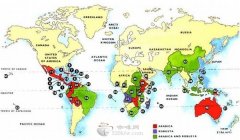
Introduction of Coffee from 53 Coffee producing areas in the World
one. Costa Rican coffee has full grains, ideal acidity and unique strong aroma. Tarrazu of Costa Rica is one of the major coffee producing areas in the world. Costa Rica, with its fertile volcanic soil and good drainage, is the first country in Central America to grow coffee and bananas for commercial value. Coffee and fragrance
2014-09-15 Coffee knowledge global coffee producing area coffee producing area coffee introduction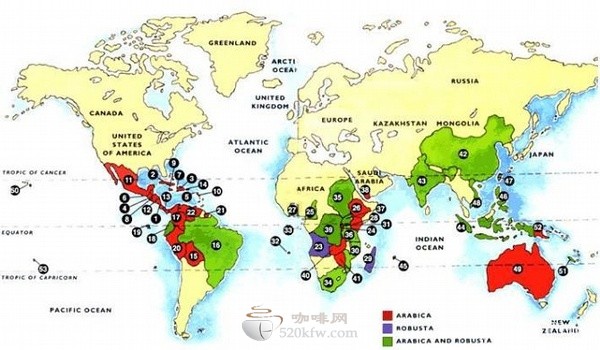
Coffee beans from 53 producing areas-enough to make you memorable
one. Costa Rican coffee has full grains, ideal acidity and unique strong aroma. Tarrazu of Costa Rica is one of the major coffee producing areas in the world. Costa Rica, with its fertile volcanic soil and good drainage, is the first country in Central America to grow coffee and bananas for commercial value. Coffee and fragrance
2015-11-17 53 producing areas coffee beans enough to make you endless aftertaste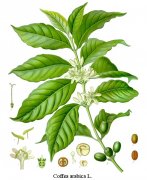
Coffee cultivation techniques detailed explanation of planting knowledge of Coffee trees
Coffee, cocoa and tea are called the three major beverages in the world, and their output, consumption and output value all rank first. In addition to being used as a beverage, coffee can also extract caffeine and coffee oil; in medicine, it can be used as an anesthetic, stimulant and diuretic cardiotonic agent. Coffee pulp can be used to make wine, vinegar, pectin and molasses; dried pulp can be used as animal feed; dried fruit shell can be used as fertilizer and burning
2015-02-16 Coffee cultivation techniques planting knowledge detailed explanation