“Central and South” search results (3000)

Introduction of boutique coffee producing areas: coffee beans from Central and South America, Mexico, Jamaica, Brazil, Goran.
Coffee beans are the essential raw materials for making coffee, and there are more coffee bean producing areas, while some continents write less. The following editor will introduce to you the five major coffee bean producing areas in Central and South America. 1. Mexican coffee production is concentrated in the south near Guatemala, with mountains running through the east and west, making its mountains sloping, making it ideal for coffee.
2016-03-15 Boutique coffee producing areas introduction Central and South America coffee beans Mexico Jamaica Brazil
More fertile soil in the south-central coffee producing area of Puerto Rico Larez Yaoke Coffee
Yaocote's choice of coffee, which is grown only on three farms in the southwest of the island, is fragrant and has a long aftertaste. This kind of coffee is very expensive and its flavor is comparable to that of any other coffee variety in the world. In the Yauco area, the coffee is owned and operated by local planters. The mountain climate here is mild, and the plants have a long mature period (from October to February of the following year).
2016-06-30 Soil more fertile Puerto Rico Coffee producing areas South Central Les Yaoke
Basic knowledge of Fine Coffee Coffee History of South America
[Colombia] is the world's second-largest coffee producer, accounting for about 12% of the world's annual output, which is much lower than Brazil's 30% to 35%, but most of them are high-quality mountain-washed beans. Central Colombia is divided into valleys by three north-south longitudinal mountains, of which the central and eastern mountains are the main coffee producing areas. The coffee here is named after the distributed market
2015-04-27 Boutique coffee basics common sense South America Colombia World No. 2 Coffee
Introduction to the characteristics of coffee flavor and taste in the fragrant Santa Cruz Manor of Ecuador
The Republic of Ecuador is located in northwestern South America. It is bordered by Colombia in the northeast, Peru in the southeast and the Pacific Ocean in the west. It covers an area of 256370 square kilometers and the coastline is about 930km long. The equator runs through the north of the border, and Ecuador means the Spanish equator. Ecuador is divided into the western coast, the central mountains, the eastern Amazon River basin and the four central regions of the Galapagos Islands.
2016-08-26 Aroma fragrance Ecuador Crewe Manor Coffee Flavor Taste characteristics introduction
Central and South American Coffee Manor Coffee beans Bana Carmen Coffee Coffee prices in Carmen Manor Panama
Carmen Manor [Origin]: Panama [Manor]: Carmen Manor [Grade]: SHB, EP [altitude]: 1750 m [soil]: black soil [particles]: 17 mesh [varieties]: Kaduai Catuai 70%, Kaddura Caurra20%, tin card Typica, dwarf San Ramon SanRamon, New World MundoNovo10% [raw bean treatment]: semi-washed [taste]
2016-04-27 Central and South America Coffee Manor Coffee beans Bana Carmen Panama
Single coffee Guatemala Vivetna fruit imported raw beans Central American SHB very hard beans boutique coffee beans
Coffee Bean details: country: Guatemala Grade: SHB production area: Vivette Nan Fruit Baking degree: medium-depth Baking method: washing Variety: Kaddura, Kaduai, bourbon soil: volcanic soil Flavor: nuts, Dark Chocolate, cut Tobacco Guatemala is famous for its highland topography, its unique flavor of high-altitude extremely hard beans is extremely good in all-inclusive coffee producing areas.
2016-03-10 Item Coffee Guatemala Viv Tenan Import Raw Bean Central America SHB
Coffee training knowledge: the effect of altitude on coffee flavor
The influence of geographical location on the flavor of coffee beans is profound. All coffee grows in the tropics, and the altitude at which it grows has a profound effect on the taste of coffee. The tropical belt extends from 30 degrees north latitude to the equatorial regions of the southern mountains that produce the world's truly high-quality Arabica coffee. Central and South America, South Asia and some Pacific islands, south-central Africa is also the most important in the world.
2014-10-08 Coffee knowledge coffee flavor coffee planting altitude
Effect of Coffee Bean planting altitude on Coffee Flavor
The influence of geographical location on the flavor of coffee beans is profound. All coffee grows in the tropics, and the altitude at which it grows has a profound effect on the taste of coffee. The tropical belt extends from 30 degrees north latitude to the equatorial regions of the southern mountains that produce the world's truly high-quality Arabica coffee. Central and South America, South Asia and some Pacific islands, south-central Africa is also the most important in the world.
2014-12-30 Coffee beans planting altitude coffee flavor influence geographical location coffee beans
Basic knowledge of boutique coffee introduction to coffee in South America
[Colombia] is the world's second-largest coffee producer, accounting for about 12% of the world's annual output, which is much lower than Brazil's 30% to 35%, but most of them are high-quality mountain-washed beans. Central Colombia is divided into valleys by three north-south longitudinal mountains, of which the central and eastern mountains are the main coffee producing areas. The coffee here is named after the distributed market
2014-11-27 Boutique Coffee Basics Common sense South America introduction Columbia World No. 2
Flavor and taste of Ecuadorian boutique coffee beans introduction to Hasunda Coffee Garden
West coast: including coastal plains and foothills, high in the east and low in the west, generally below 200 meters above sea level, with some hills and low mountains at an altitude of 600 to 700 meters. Belongs to the tropical rain forest climate, the southernmost end begins to transition to the savanna climate. The average annual precipitation decreases from more than 3000 mm to about 500mm from north to south. Central Mountains: the Andes enter Ecuador from Colombia
2016-08-23 Ecuador boutique coffee beans flavor taste manor producing area characteristics Hasenda
The History and Culture of Fine Coffee Coffee History of South America
[Colombia] is the world's second-largest coffee producer, accounting for about 12% of the world's annual output, which is much lower than Brazil's 30% to 35%, but most of them are high-quality mountain-washed beans. Central Colombia is divided into valleys by three north-south longitudinal mountains, of which the central and eastern mountains are the main coffee producing areas. The coffee here is named after the distributed market
2014-11-27 Boutique Coffee History and Culture South America Colombia World No. 2 Health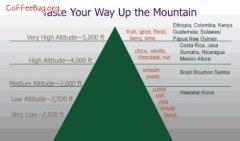
The relationship between altitude and Coffee Flavor
The influence of geographical location on the flavor of coffee beans is profound. All coffee grows in the tropics, and the altitude at which it grows has a profound effect on the taste of coffee. The tropical belt extends from 30 degrees north latitude to the equatorial regions of the southern mountains that produce the world's truly high-quality Arabica coffee. Central and South America, South Asia and some Pacific islands, south-central Africa is also the most important in the world.
2015-01-26 Coffee beans planting common sense altitude coffee flavor relationship geographical location
The relationship between altitude and Coffee Flavor
The influence of geographical location on the flavor of coffee beans is profound. All coffee grows in the tropics, and the altitude at which it grows has a profound effect on the taste of coffee. The tropical belt extends from 30 degrees north latitude to the equatorial regions of the southern mountains that produce the world's truly high-quality Arabica coffee. Central and South America, South Asia and some Pacific islands, south-central Africa is also the most important in the world.
2015-04-13 Coffee basics common sense altitude flavor relationship geographical location coffee beans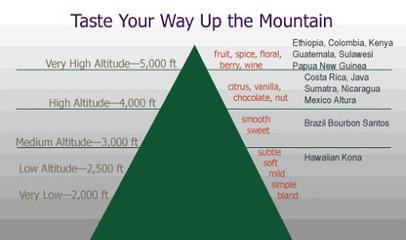
Effect of altitude on Coffee Flavor
The influence of geographical location on the flavor of coffee beans is profound. All coffee grows in the tropics, and the altitude at which it grows has a profound effect on the taste of coffee. The tropical belt extends from 30 degrees north latitude to the equatorial regions of the southern mountains that produce the world's truly high-quality Arabica coffee. Central and South America, South Asia and some Pacific islands, south-central Africa is also the most important in the world.
2015-05-06 Altitude height coffee flavor influence geographical location coffee beans
An introduction to the producing area of Larez Yaoke Coffee Flavor Manor in South-Central Puerto Rico
Yaocote's choice of coffee, which is grown only on three farms in the southwest of the island, is fragrant and has a long aftertaste. This kind of coffee is very expensive and its flavor is comparable to that of any other coffee variety in the world. In the Yauco area, the coffee is owned and operated by local planters. The mountain climate here is mild, and the plants have a long mature period (from October to February of the following year).
2016-07-15 Puerto Rico south-central les Yaoke coffee flavor taste manor producing area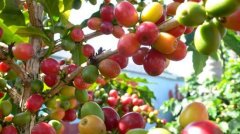
Unique flavor coffee Colombian Central and South American coffee beans imported coffee
Colombian coffee has a silky taste. Colombian coffee is equated with high quality and good taste. It is sweet in acid, low in bitterness, rich in nutrition, with a unique sour and mellow taste, and the sour, bitter and sweet flavors of Colombian super coffee match well. Unique fragrance, after drinking, the aroma fills the whole mouth. Put the fragrance in the mouth
2016-04-15 Unique flavor coffee Colombia Central and South America coffee beans imports
Introduction to Honduran coffee beans located in northern Central America San Juan Cido San Barra Estate
Honduras is a mountainous country in Central and North America with a population of more than 8.3 million and an area of about 112,000 square kilometers. Located in northern Central America. It is bordered by the Caribbean Sea to the north, the Gulf of Fonseca in the Pacific Ocean to the south, Nicaragua and El Salvador to the east and south, and Guatemala to the west. More than three-quarters of the territory is mountainous and plateau. Mountains extend from west to east, inland for lava plateau, mountainous
2016-07-05 Located in Central America North Honduras Coffee beans Introduction San Juan Cido Producing areas
Introduction of San Pedro Manor Puerto Rico Coffee Manor in South-Central Puerto Rico
In Spanish, Puerto Rico means the port of wealth. The history of coffee in Puerto Rico dates back to 1736, when coffee seedlings were brought into the country by early Spanish settlers. In the 18th world, sugar cane was the main economic crop, so little attention was paid to it. At the beginning of the 19th century, the French began to move from the Mediterranean island of Corsica because of European politics.
2016-07-20 Puerto Rico South-Central Coffee Manor producing area introduction San Pei Delo Spain
Lively fragrant coffee flavor description of Incht Manor in Guatemala
Located in the northern part of Central America, bordering Mexico, Belize, Honduras and El Salvador. It is bordered by the Pacific Ocean to the south and the Gulf of Honduras in the Caribbean Sea to the east, bordering Mexico, El Salvador, Honduras and Belize on land. 2/3 of the territory consists of mountains and plateaus. There are Kuchu Matanes Mountains in the west, Madre Mountains in the south, and volcanic belts in the west and south.
2016-10-07 Lively fragrant Guatemala Hutt Manor Coffee Flavor description processing mouth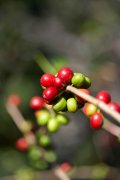
Guatemala Fine Coffee Extra Hard Coffee Beans Central and South American Coffee
The extra hard coffee beans here are full, delicious and balanced, and the coffee brewed with them is pure and rich. Guatemala coffee once enjoyed a reputation as the best coffee in the world, but quality declined for a while. Happily, however, its popularity is gradually being restored. Father Jesuit introduced coffee trees to Guatemala in 1750, late 19th century
2016-05-19 Guatemala Fine Coffee Extra Hard Coffee Bean Central and South America Here