“Animal” search results (2301)
Introduction to the flavor and taste characteristics of high-quality coffee beans in Indonesian civet coffee producing areas
Kopi Luwak is produced by the feces of Indonesian coconut cats (a kind of civet) as raw materials, so it is called Kopi Luwak. This kind of animal mainly feeds on coffee beans. After completing fermentation in the coconut cat's stomach, it destroys proteins, produces short peptides and more free amino acids, reduces the bitterness of coffee, and then excretes feces as the main raw material. Because coffee beans cannot be digested, they will be
2016-09-24 Indonesia musk coffee varieties producing areas boutique coffee beans flavor taste characteristics
Indonesia's Kopi Luwak, one of the most expensive coffees in the world, introduces the Furn Manor in Sumatra.
Kopi Luwak, which is produced in Indonesia, is one of the most expensive coffee in the world. Kopi Luwak is just another name. Its official name is Kopi Luwak,Kopi, which means coffee in Indonesian, and Luwak is a wild animal called civet. The coffee is as thick as syrup, the aroma is exclusive, and there is a hint of mint cool in the mouth. Shit coffee has an individual name, it is called you
2016-06-24 World expensive coffee one Indonesia cat shit introduction Sumatra producing area
Production conditions of Coffee trees Shijiazhuang Cafe
Fertilization was carried out in combination with plastic surgery within 1-2 days after planting. The fertilization of young coffee trees is mainly nitrogen fertilizer, while appropriate application of phosphorus and potassium fertilizer, in order to accelerate the formation of crown and promote the development of roots. Human and animal manure and green leaf retting fertilizer also have a good effect on the growth of young coffee trees. Coffee seedlings can be fertilized for the first time two months after planting, and then once every 1-2 months. Such as human and animal dung
2016-06-08 Coffee production conditions Shijiazhuang characteristics cafes planting combination plastic surgery
Introduction to the flavor and taste of Rwanda boutique coffee bean manor with high altitude mountain.
Rwanda, located in the southern equator of central Africa, is a landlocked country, bordered by Tanzania to the east, Burundi to the south, the Democratic Republic of the Congo to the west and Uganda to the north. The territory is mountainous, known as the country of a thousand hills. The divide between the Congo River and the Nile River runs through western Luanda from north to south. Rwanda's economy is dominated by agriculture. The population engaged in agriculture and animal husbandry accounts for 92% of the country's population.
2016-09-14 There are high altitude mountain Rwanda boutique coffee beans manor producing area flavor mouth
Sumatra coffee producing area Introduction Sumatra coffee producing area
Cat poop coffee is produced from the feces of Indonesian coconut cats (a civet cat), so it is called cat poop coffee. This kind of animal mainly feeds on coffee beans. After fermentation in the coconut cat stomach, protein is destroyed, short peptides and more free amino acids are produced, the bitter taste of coffee will be reduced, and the feces discharged will be the main raw material. Since coffee beans cannot be digested, they will be digested.
2016-07-19 Musk Coffee Flavor Taste Manor Region Introduction Sumatra Cat poop
What is organic coffee? what's the difference between organic coffee and ordinary coffee?
Organic ∶ has life. Relating to or derived from an organism. It now refers to those containing carbon atoms, except carbon monoxide, carbon dioxide, carbonic acid, carbonates and certain carbon compounds. Its compound refers to the compound composed of carbon element and hydrogen, oxygen, nitrogen or sulfur. It's called organic matter for short. General plant bodies and animal remains, faeces and other decaying substances, after micro
2016-06-05 What organic coffee ordinary difference living biological related come
The secret behind the world's most expensive coffee
In the earliest days, civet droppings were collected from the wild and mixed with partially digested coffee beans. Gradually, more and more civets were confined to crowded, unsanitary cages on coffee plantations. Photograph: ULET IFANSASTI, GETTY IMAGES Wildlife Conservation Research Centre, University of Oxford and World Conservation Society, a London-based non-profit organisation
2016-08-26 world most expensive coffee after secret
How does the civet coffee taste?
Kopi Luwak is made in Indonesia. In the early 18th century, the Dutch established coffee plantations in the Indonesian colonies of Sumatra and Java, and banned locals from picking and eating their own coffee fruits. Indonesian locals inadvertently found that civets love to eat these coffee fruits and will drain the beans intact when defecating. The civet can only pick the most familiar.
2016-05-06 Musk coffee practice taste how
Introduction to the flavor and taste of Indonesian Fuyin Manor Coffee Manor treated by sun treatment
This kind of coffee is called the most fragrant poop since there is shit. Although its name is not very elegant, it is a fact. It is the poop of an arboreal wild animal called the civet on the Indonesian island of Sumatra. Local farmers usually regard the discovery of civet poop as a gift from heaven, because not all civet droppings are lucky to be found. Once you find a few of these,
2016-07-19 Solarization processing Indonesia Furin Manor Coffee producing area Flavor Taste introduction
The Pure aftertaste of Indonesian Coffee Flavor the characteristics of the manor producing area introduce Kahayang Gan Manor
In particular, there is a special kind of animal in the Indonesian mountains: the civet, because it makes Indonesia produce almost the most expensive coffee in the world-civet coffee, also known as Kopi Luwak. This kind of cat likes to eat coffee berries, and hard coffee beans are eventually excreted because they are indigestible. During the period of passing through the digestive tract, coffee beans are fermented to produce a unique and complex
2016-08-09 Purity aftertaste Indonesia coffee flavor taste manor producing area characteristics introduction
The origin of Kopi Luwak is the practice of civet coffee.
Kopi Luwak is produced by the feces of Indonesian coconut cats (a kind of civet) as raw materials, so it is called Kopi Luwak. This kind of animal mainly feeds on coffee beans. After completing fermentation in the coconut cat's stomach, it destroys proteins, produces short peptides and more free amino acids, reduces the bitterness of coffee, and then excretes feces as the main raw material. Because coffee beans cannot be digested, they will be
2016-05-22 Cat shit coffee origin what is it musk practice cat shit is made by Indonesia
Description of Ethiopian Coffee Flavor with Jasmine Flavor introduction to Fine Coffee Bean Manor
Local aborigines often grind the fruit of the coffee tree and knead it with animal fat to make many ball-shaped balls. These indigenous tribes use these coffee balls as precious food for soldiers who are about to go out to battle. It was not until around the 11th century that people began to use boiled coffee as a drink. In the 13th century, Ethiopian troops invaded Yemen
2016-09-23 Jasmine fragrant Ethiopia coffee flavor description producing area characteristics boutique
Speed up the development of ecological agriculture
The development of ecological agriculture is an important embodiment of the strategic plan of the 18th CPC National Congress to put the construction of ecological civilization in a prominent position and strive to build a beautiful China. it is also an important measure to implement the forest Yunnan construction of the provincial party committee and provincial government and the construction of Lincang and beautiful Lincang forests of the municipal party committee and municipal government, to enhance the brand of green, ecological and safe agricultural products in Lincang, and to speed up the development of rural economy.
2014-08-12 Speed up ecology agricultural development ecological agriculture implementation the Party's
The history and characteristics of Kopi Luwak where does the best Kopi Luwak come from? how much is the price?
Coffee comes from the excrement of an animal called the civet (commonly known as the civet in Indonesia), which likes to choose the most ripe, sweet, juicy coffee fruit in the coffee tree as food. While the coffee fruit passes through its digestive system, what is digested is only the pulp on the outside of the fruit, the hard coffee.
2022-10-02 Cat shit coffee history origin characteristics from a kind of musk animal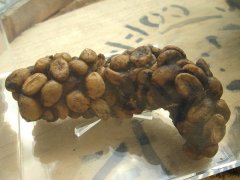
Monkey coffee
You may have heard of Kopi Luwak, a coffee bean obtained by eating cherry coffee, digested and excreted by a civet cat. This kind of coffee is really a wonder in the coffee world! But now, Kopi Luwak is not the only "animal-processed" coffee. Currently in Chickmagalur, India, it produces this kind of coffee called Monkey Caf.
2014-05-20 Coffee news coffee knowledge monkey coffee
South Korean study finds caffeine inhibits brain cancer growth
Researchers in South Korea and other countries reported in the latest issue of the US Journal of Cancer Research that they found through animal experiments that caffeine contained in coffee, green tea, etc. can effectively inhibit the growth of a brain tumor.
2014-05-23 Coffee News Coffee Knowledge
The most expensive coffee-Ruwak
The world's most expensive coffee, the Kopi Luwah variety of coffee from Sumatra. The price is as high as $300 per pound! Usually, after the coffee fruit is picked, the peel, pulp and silver skin are removed either by the sun or by washing. But Ruwak coffee takes advantage of natural fermentation in the animal's digestive system to extract coffee beans. Musk cat hi in the mountains of Indonesia
2014-07-04 Coffee knowledge the most expensive coffee beans Ruwak coffee encyclopedia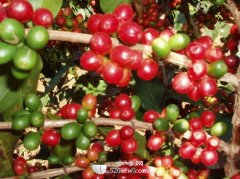
The earliest Arab way to eat coffee was to chew the whole fruit.
Do you know? The earliest Arabs ate coffee by chewing the whole fruit to absorb its juice. They then mixed the ground coffee beans with animal fat as a physical supplement for long trips, and it was not until about 1000 AD that the green coffee beans were boiled in boiling water to make an aromatic drink. It took another three centuries for the Arabs to open it.
2014-07-16 Coffee knowledge ways of eating coffee chewing coffee fruit
Cat Cafe
In Japan, there are some cat cafe (Cat Coffee). Instead of using cat poop to make coffee, there are many cats in this cafe. Customers who come to the store to rest and play can choose a few cats they like as entertainment objects for torture. For cat lovers, this is their paradise. Well, it's not really torture, customers have to comply with a lot of animal protection.
2014-07-25 Cat cafe specialty cafe
Raccoon Coffee-- Stinky Tofu in Coffee
Civet Coffee is also called civet Coffee. Its official name is Kopi Luwak,Kopi, which means coffee in Indonesian, and Luwak is a wild animal called civet. The coffee is as thick as syrup, the aroma is exclusive, and there is a hint of mint cool in the mouth. Its name is comparable to stinky tofu. Stinky tofu smells smelly and tastes delicious.
2014-08-25 Coffee knowledge Kopi Luwak civet coffee