“20th” search results (2000)

Introduction of Crystal Coffee Manor in southeastern Cuba
The earliest archaeological landscape of coffee plantations in southeastern Cuba, located in the Maestra Mountains in southeastern Cuba, was a coffee-growing area in southeastern Cuba in the 19th and early 20th centuries. Mount Maestra averages 1500 meters above sea level, straddling Guantanamo and San Diego
2016-06-30 Cuba Southeast Crystal Coffee Manor introduction
Vienna Cafe, once a global intelligence and political center
That sentence I am not in the cafe, on the way to the cafe Vienna coffee culture advertising language, although already widely known, but only sit in Vienna cafe can experience, drinking coffee here is not just to pass the time so simple. Viennese cafe culture flourished in the late 19th century and early 20th century. At that time, the café here was the most important social event in Vienna's cultural world.
2014-09-03 Cafe Intelligence Center Political Center Vienna Cafe Special Cafe
Honduras: coffee exports rank second in Central America
Xinhua Managua, Sept. 20 (Reporter Xu Lei Liu Xuan) Tegucigalpa news: data released by the Honduran Coffee producers Association on the 20th show that as of September 2008, the country's total coffee export this year has reached 4.5 million bags, ranking second in Central America. Data show that Honduras has exported 4.5 million bags of coffee, a total of 207 million kilograms. Hong Coffee producers Association
2016-02-25 Honduras coffee export volume leapt to Central America second Xinhuanet Managua
Ecuadorian coffee has a long history, single coffee, manor beans.
Coffee has a long history in Ecuador. Coffee was Ecuador's main export from the early 19th century to the early 20th century. But Ecuadorian coffee has never been included in the category of high-quality coffee due to its destructive deforestation and low processing of raw beans. Ecuador, like its neighboring coffee-growing countries, has ideal elevations and climate bars.
2016-06-07 Ecuador coffee has long history single product manor
Chateau San Pedro, a coffee-growing area in south-central Puerto Rico.
The national economy of Puerto Rico developed rapidly in the 20th century. Stimulated by the strong support of the government and the expanding demand of the local market, Polish coffee gradually returned to its former elegant demeanor. The Yauco region is internationally renowned for its full Body, creamy and red wine aftertaste and chocolate nut finish. Regional characteristics at higher elevations, slower maturity, surpassing
2016-07-06 Puerto Rico south-central coffee producing areas manors San Pei Delo 20th century Bo
Espresso knowledge: what's the difference between dry cappuccino and wet cappuccino?
[introduction] Cappuccino at the beginning of the 20th century, the Italian Agatha invented the steam pressure coffee machine, but also developed the cappuccino coffee. Cappuccino is filled with steamed milk on strong coffee. At this time, the color of coffee is like a cappuccino monk covering a dark brown coat with a headscarf, hence the name.
2015-12-05 Italian Coffee knowledge Card Puccino what difference introduction Cabo Chino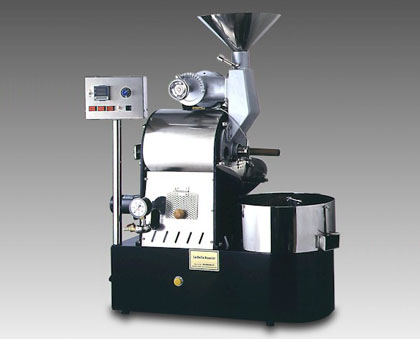
The evolution history of coffee roaster
As early as the 13th century, the Arabs invented to put coffee beans in a pot, stir-fry them with fire, grind them into powder, and then brew coffee. The early Arabs liked to bake the beans shallowly and boil them with spices such as cardamom. Later, this coffee stir-frying method spread to Syria, Turkey and Egypt, where it was used to stir-fry the coffee black, then grind it into powder and add it.
2015-11-17 Coffee roaster evolution history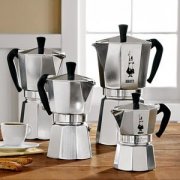
Introduction to the Brand characteristics, usage and principle of Bilody Bialetti Mocha Pot Coffee utensils
The earliest way to cook coffee is to directly boil the coffee powder with water on the stove and filter it to drink. Since the 19th century, some people have tried to use steam to brew coffee, hoping to make a strong cup of coffee in a very short time. At the beginning of the 20th century, the industrial revolution began to ferment around the world, and the Italians created a shape and momentum.
2022-12-30 Biele Bialetti mocha pot coffee utensils introductions early
The earliest coffee plantation in southeastern Cuba introduces crystal coffee.
The earliest archaeological landscape of coffee plantations in southeastern Cuba, located in the Maestra Mountains in southeastern Cuba, was a coffee-growing area in southeastern Cuba in the 19th and early 20th centuries. Mount Maestra averages 1500 meters above sea level, straddling Guantanamo and San Diego
2016-06-27 Cuba Southeast Morning Coffee Plantation introduction Crystal
About the history of coffee roasters
The history of coffee roasters as early as the 13th century, the Arabs invented to put coffee beans in a pot, heat and stir-fry them, then grind them into powder, and then brew coffee. The early Arabs liked to bake the beans shallowly and boil them with spices such as cardamom. Later, this method of stir-frying coffee spread to Syria, Turkey and Egypt, where it was used to stir-fry coffee black.
2014-09-11 Coffee roaster roaster history coffee knowledge
Trickle filter Percolator
This kind of pot came into use during the pioneering period of the western United States in the 19th century and was popular in ordinary families at the beginning of the 20th century. The drip filter is quite easy to use, just put the coffee and hot water on the fire and cook it. Usage: 1 put the extremely coarse ground coffee powder into the filter cup, the quantity of the powder is about 10 grams per person. Put the filter cup into the pot and add hot water to about 1 cm away from the filter cup. 3 heating
2014-09-16 Drip filter pot coffee utensils coffee encyclopedia
The Vienna Caf é, once the center of global intelligence and politics.
Although the Viennese coffee culture slogan, which I am not in the coffee shop, is on the way to the coffee shop, it can only be experienced by sitting in the coffee shop in Vienna, where drinking coffee is more than just killing time. Viennese cafe culture flourished from the end of the 19th century to the beginning of the 20th century. At that time, the cafe here was the most important social event in Vienna's cultural circles.
2016-09-07 Used to be global intelligence politics center Vienna cafe that sentence no coffee
The history of coffee roaster basic knowledge of coffee
As early as the 13th century, the Arabs invented to put coffee beans in a pot, stir-fry them with fire, grind them into powder, and then brew coffee. The early Arabs liked to bake the beans shallowly and boil them with spices such as cardamom. Later, this coffee stir-frying method spread to Syria, Turkey and Egypt, where it was used to stir-fry the coffee black, then grind it into powder and add it.
2015-07-06 Coffee roaster history basics common sense
General knowledge of roasting of coffee beans electrothermal baking technology
Electricity was only used to drive the rollers of traditional drum dryers and blowers and cooling fans at the end of the 19th century, but it was not an effective source of heat for large-scale baking at that time. Any chef knows that the rate at which electricity is converted into heat is much lower than that at which gas is converted into heat; in addition, the price of gas is much cheaper than electricity. Just from here.
2015-04-13 Coffee beans roasting common sense electroheating technology
Coffee flavor-Galapagos Coffee region Santa Cruz Island
Ecuador began to grow coffee in the 19th century and was one of the world's major coffee producers in the early 20th century. Ecuadorian coffee has about 60% Arabica species and 40% Robbins species. Ecuador's coffee production has been declining over the past decade, and now there are only about 700000 bags. And the export volume is also very low, because
2016-06-16 Coffee flavor Lapa Goss archipelago producing area Crewe Zizi Island Ecuador is
The 4th China Mang City (International) Coffee Culture Festival Held
International Coffee Business Forum
2015-01-26 The 4th International Coffee and Culture Festival in Mang City China
Mocha Country--Yemen Ethiopia introduced mocha pot gold coffee
The word mocha first arose in Europe in the sixteenth and seventeenth centuries, because coffee imported from the Arab world at that time was transferred from the port of mocha in Yemen, so people initially regarded mocha as synonymous with coffee, so until the invention of the mocha pot in the 20th century, people naturally called this coffee brewing appliance mocha pot. As for Ethiopian mocha and Yemeni mocha, the difference starts
2016-04-13 mocha country Yemen Ethiopia incoming mocha pot gold medal coffee
Knowledge of coffee culture when coffee was introduced into China
The history of the introduction of coffee into China is not long, and it was not until 1884 that coffee was first planted in Taiwan Province. In the mainland of the motherland, the earliest coffee cultivation began in Yunnan. At the beginning of the 20th century, French missionaries brought the first batch of coffee saplings to Binchuan County, Yunnan Province, and began to grow coffee in the mainland. The history of coffee introduced into our country is not long, until 188
2014-10-14 Coffee knowledge coffee culture coffee introduced into China
Introduction to the origin and characteristics of Kenyan coffee
Ethiopia, the origin of Arabica coffee trees in the north of Kenya, was not engaged in coffee cultivation until the beginning of the 20th century. Missionaries introduced Arabica trees from the leaves in the 19th century, but did not plant them in large quantities until 1893. Brazil's ancient bourbon coffee seeds were introduced and coffee was cultivated on a large scale in Kenya. There are two types of coffee farms in Kenya, one covering an area of five acres.
2016-06-15 Kenya coffee origin characteristics introduction boutique coffee beans
Coffee roaster development history Capsule coffee machine introduction
Coffee beans were fried in iron pans in the early days. After coffee was introduced into Europe, Europeans used Turkish iron pans to fry beans on the one hand, and later invented hand-rotating roasting, which could bake several pounds of beans at the same time, which was used by some coffee shops. In the 1860s, large roasters began to appear, and in 1867 the use of blowers to cool beans after roasting gave birth to
2016-10-24 coffee roaster history capsule coffee machine introduction