What are the main ingredients of coffee
Main components
1. Caffeine
It has a particularly strong bitter taste and stimulates the central nervous system, heart and respiratory system. Appropriate amount of caffeine can also reduce muscle fatigue and promote digestive juice secretion. Because it promotes kidney function, it is diuretic and helps the body to expel excess sodium ions from the body. But eating too much can lead to caffeine poisoning.
two。 Tannic acid
Boiled tannic acid will decompose into pyrouric acid, so coffee that has been brewed for too long will taste worse.
3. Fat
The most important of these are acidic fat and volatile fat.
4. Acid fat
That is, fat contains acid, its strength will vary according to the type of coffee.
5. Volatile fat
Is the main source of coffee aroma, it is a substance that emits about 40 kinds of aroma.
6. Protein
The main source of calories, the proportion is not high. Most of the protein in coffee powder will not dissolve out when brewing coffee, so the intake is limited.
7. Sugar
Raw coffee beans contain about 8% sugar. After roasting, most of the sugars are converted to caramel, which browns the coffee and combines with tannins to produce sweetness.
8. Fibre
The fiber of raw beans will be carbonized after baking and combine with caramel to form the hue of coffee.
9. Mineral substance
Contains a small amount of lime, iron, phosphorus, sodium carbonate and so on.
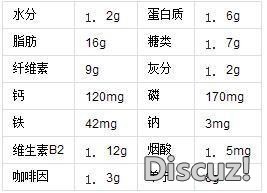
10. Table of nutritional components of coffee
The nutrients in every 100 grams of coffee beans are shown in the following table
Share
Follow Coffee Search for the latest coffee updates. Reproduced from "Coffee Search"
Article URL: https://www.coffeesearch.net/coffee7414.html
Related Articles
- Beginners will see the "Coffee pull flower" guide!
- What is the difference between ice blog purified milk and ordinary milk coffee?
- Why is the Philippines the largest producer of crops in Liberia?
- For coffee extraction, should the fine powder be retained?
- How does extracted espresso fill pressed powder? How much strength does it take to press the powder?
- How to make jasmine cold extract coffee? Is the jasmine + latte good?
- Will this little toy really make the coffee taste better? How does Lily Drip affect coffee extraction?
- Will the action of slapping the filter cup also affect coffee extraction?
- What's the difference between powder-to-water ratio and powder-to-liquid ratio?
- What is the Ethiopian local species? What does it have to do with Heirloom native species?