CBC pre-match sharing meeting, Zhang Yinzhe interprets the 2016WBC score form for you.
Keynote speaker Zhang Yinzhe
The thinker in the barista
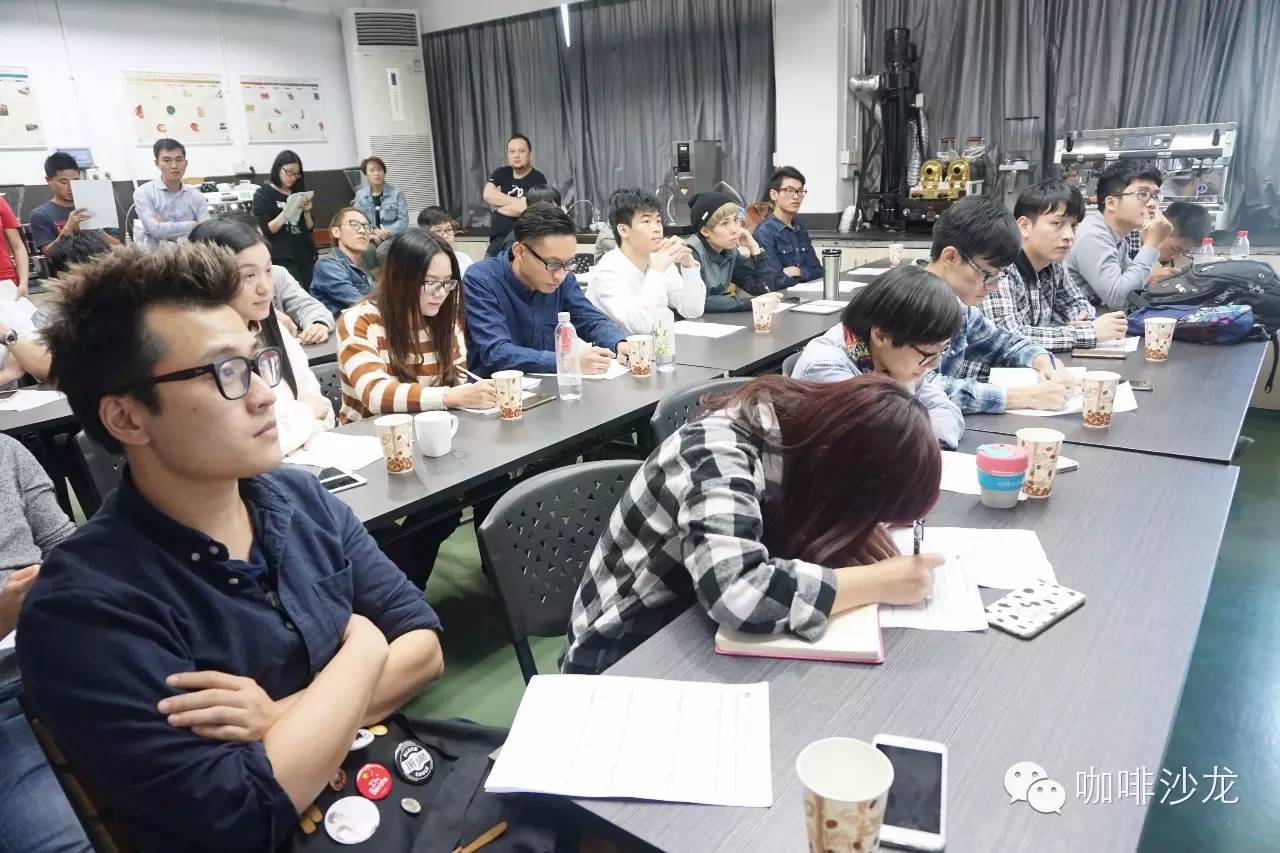
The editor is very lucky to participate in the "Zhang Yinzhe CBC sharing meeting" hosted by Klima training Center on November 2, 2015. thank you very much to team leader Zhang and Yinzi for traveling a long way to share with you, and thank you very much to Klima training Center for holding such a good sharing activity.
The whole article is that after the editor participates in the sharing meeting, I will organize my understanding and share it with you. If there is any lack of understanding of the content, please forgive and correct the team leader.
Share the preface
Before parsing the 2016 score table, team leader Zhang chatted with the baristas for a while. Team leader Zhang asked several questions: "what is fine coffee?" "what is the purpose of your competition?" Not many people can answer immediately.
The editor will understand the summary that team leader Zhang wants to convey:
First, baristas need to introduce coffee to customers rather than using proper terms that customers don't understand. When baristas convey some messages to guests, first of all, do they have a clear understanding of the basic concepts?
Second, contestants should always be clear about their own purpose of the game, whether they and their team can grow in terms of operation through a game. Because in the end, the competition needs to return to operation.
WBC is actually an international competition in a simulated cafe to promote boutique coffee. According to the scoring rules of WBC, it is not difficult to see that it uses certain criteria to consider the services and products presented by a barista from the point of view of customers and cafe operators.
The following is a simple summary of the analysis of the 2016 scoring rules. Team leader Zhang has many very good experiences and examples that the editor has failed to list one by one.
WBC is a simulation cafe to promote boutique coffee, it has sensory judges, technical judges and shadow judges. Contestants can know their performance by giving back the words and numbers of the score form.
Sensory judges
Customers of mock cafes experience the coffee presented by contestant baristas with their passion, technology, knowledge and production skills, and the way they share coffee with "customers". Sensory judges use this to score.
Technical judges
He is the owner of a simulated coffee shop to observe whether baristas are professional enough to make coffee, whether they waste materials, and whether they keep the production process clean. As a way to judge.
Share
Follow Coffee Search for the latest coffee updates. Reproduced from "Coffee Search"
Article URL: https://www.coffeesearch.net/coffee58117.html
Related Articles
- What brand of black coffee is the most authentic and delicious? what are the characteristics of the flavor of the authentic Rose Summer Black Coffee?
- Introduction to the principle and characteristics of the correct use of mocha pot A detailed course of mocha pot brewing coffee is described in five steps.
- Which is better, decaf or regular coffee? how is decaf made?
- How much is a bag of four cat coffee?
- How about four Cat Coffee or Nestle Coffee? why is it a cheap scam?
- Which is better, Yunnan four Cats Coffee or Nestle Coffee? How about cat coffee? is it a fake scam? why is it so cheap?
- How about Cat Coffee? what grade is a hoax? which instant coffee tastes better, four Cat Coffee, Nestle Coffee or G7 coffee?
- Process flow chart of coffee making-Starbucks coffee making process what coffee tastes good at Starbucks
- The top ten best coffee beans in the world Rose summer coffee or Tanzanian coffee tastes good
- Yunnan four cat coffee is good to drink?_four cat coffee is a big brand? four cat blue mountain coffee is fake?