The world's top ten delicious coffee the handling of Ethiopian boutique coffee beans. What on earth is the sun treatment?
70% of the coffee fruits in Ethiopia are treated in the sun, which is more suitable for coffee farmers with low income than water washing, which can be carried out in their own courtyards, roofs and even by the side of the road. this method is simple and rough, and the self-employed method of tanning is generally dominated by domestic consumption.
The production time of sun treatment is long. First of all, the impurities and immature coffee fruits should be screened out, leaving only the good quality for treatment, and then drying by direct sunlight or direct sun drying of beans. The former is to put the fruit in a cool place to dry, reduce the moisture content and then sun the other day, in order to avoid excessive changes in the fruit caused by excessive sunlight on the first day. The latter is to turn frequently on the first day to avoid uneven sun exposure on one side of the fruit for too long.
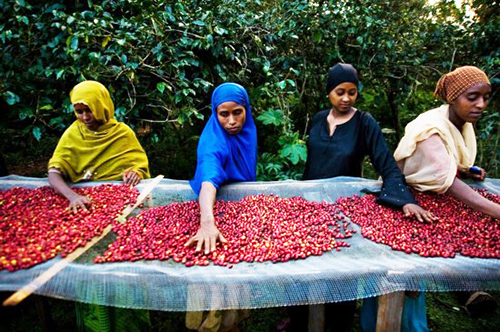
-indirect sun exposure
Second, it needs to be turned every day, and it needs to be turned evenly before the moisture content of the fruit is reduced to 25%. After the moisture content is reduced from 25% to 11.5%, 12%, the shelled beans are bagged and sent to a cool place for static treatment. Finally, the shell beans will be sent to the dry treatment plant for shelling treatment, the sun treatment of each step is very important, workers need to turn coffee beans frequently every day, the process is highly affected by natural factors, easy to cause deterioration.
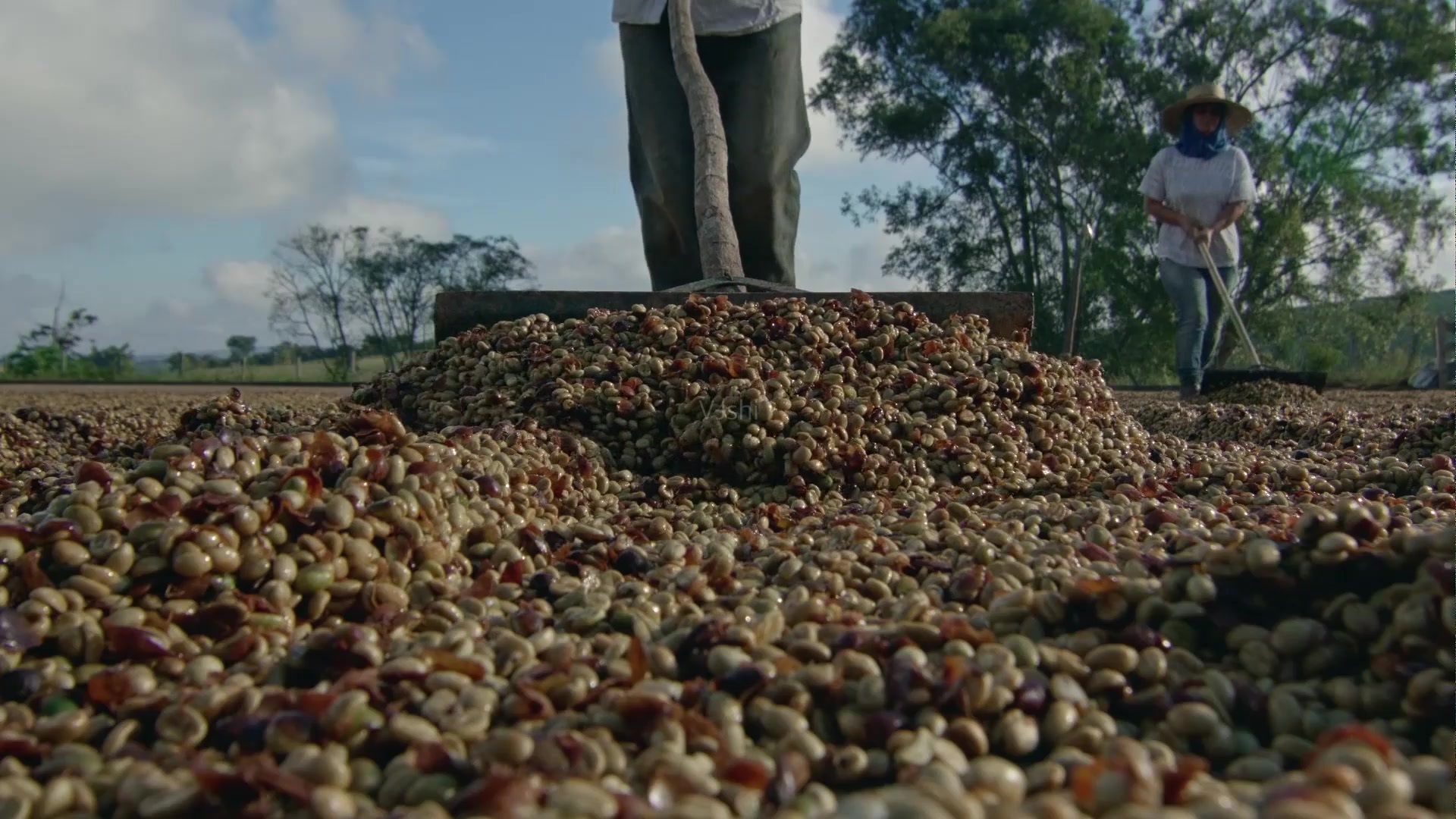
Coffee workers flip coffee beans by hand
It is generally believed that the cost of sun treatment will be lower than that of water washing treatment, but some large cooperatives still have a huge investment in manpower and equipment.
Share
Follow Coffee Search for the latest coffee updates. Reproduced from "Coffee Search"
Article URL: https://www.coffeesearch.net/coffee144920.html
Related Articles
- Beginners will see the "Coffee pull flower" guide!
- What is the difference between ice blog purified milk and ordinary milk coffee?
- Why is the Philippines the largest producer of crops in Liberia?
- For coffee extraction, should the fine powder be retained?
- How does extracted espresso fill pressed powder? How much strength does it take to press the powder?
- How to make jasmine cold extract coffee? Is the jasmine + latte good?
- Will this little toy really make the coffee taste better? How does Lily Drip affect coffee extraction?
- Will the action of slapping the filter cup also affect coffee extraction?
- What's the difference between powder-to-water ratio and powder-to-liquid ratio?
- What is the Ethiopian local species? What does it have to do with Heirloom native species?