“Hybridization” search results (106)

Coffee varieties with artificial hybridization of boutique coffee knowledge
Kaduai is an artificial hybrid of Kaddura and Mondu Novo. Kaduai has a good ability to resist natural disasters, especially wind and rain. Kaduai tree species are relatively low, compared with other coffee trees, the fruit of Kaduai is stronger and harder to pick. The fruit is both red and yellow. So far, it has not been found that yellow fruit is better than red fruit.
2015-01-17 Boutique Coffee knowledge artificial Hybrid Variety Kadu one Dula Mon
Timor (Tim)
Timor: a hybrid of Arabica and Robusta found in East Timor, but closer to Arabica because its chromosomes are 44 in Arabica rather than 22 in Robusta. Tim's sour taste is low, lack of characteristics, Taiwan is often used to make low-cost formula beans, but East Timor also has washed high-altitude purebred Tibica, which has entered the boutique market in the United States
2014-06-28 Timor coffee cultivar coffee bean species
Kenya [SL28] and [SL34]
Kenya [SL28] and [SL34]: French and British missionaries and researchers sifted in Kenya at the beginning of the 20th century
2014-06-28 Kenya coffee varieties coffee tree cultivation
Ruyilu 11 (Ruiru 11)
Ruyilu 11 (Ruiru 11): another hybrid product that reproduces low quality. In 1985, the Ruilu Coffee Research Center in Kenya used Tim as a stallion to create a new variety of Arabica and Robusta, which aims to improve disease resistance and increase production capacity, but the flavor is not good. Kenyan enthusiasts are worried that the popularity of this hybrid may affect farmers' planting [SL28] and [SL34].
2014-06-30 Boutique coffee beans Ruyilu 11 coffee beans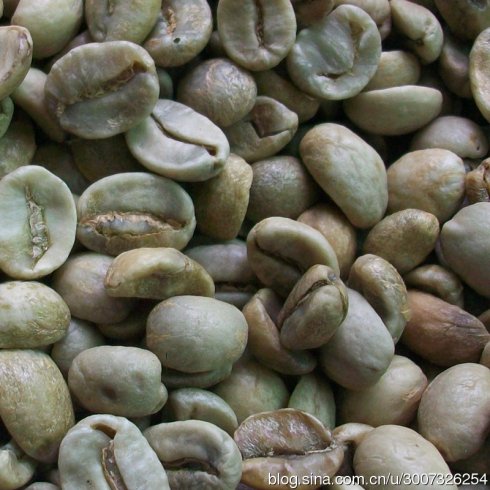
World Fine Coffee Bean Introduction: India Di Bika Hybrid Variety Kent
Kent: A hybrid variety of Tibica discovered in India with high yield and disease resistance, but has never won an international cup test. Common coffee cultivars, coffee bean types: Typica Bourbon Gene mutants: Kenya [SL28] and [SL34](Bourbon descent) Geisha
2015-12-14 world boutique coffee beans presentation india tibi hybrid breed kent Ke
Species botany of coffee beans
Scientific taxonomy of coffee: Plantae phylum: embryonic phylum Spermatophyta (unclassified) true dicotyledons eudicots core true dicotyledons core eudicots class: angiosperms Angiosperma (ungraded) chrysanthemum asterids lip-shaped branches lamiids: Gentianales family: Rubiaceae Rubi
2014-06-30 Species of coffee beans botany
Pacas (Pacas)
Pacas (Pacas): a variety of bourbon found in El Salvador. In 1935, Salvadoran coffee farmer Pacas selected high-capacity varieties of San Ramon bourbon (San Ramon bourbon) to be planted on farms. In 1956, a friend found that the amount of bourbon in his farm was higher than that of the same kind of coffee tree, so he asked a professor from the University of Florida to identify it and confirm that the bourbon had a genetic mutation.
2014-06-30 Pacas (Pacas) Pacas (Pacas) coffee beans fine coffee beans
Geisha: Late bloomer variety
In 1931, it was exported from Geisha Mountain in southwestern Ethiopia to Kenya, Tanzania and Costa Rica. In the 1960s, it was transplanted to Panama. After nearly half a century, it was amazing. It defeated the ever-winning varieties such as Bourbon, Kadura, Kaduai and Tibika.
2014-06-30 Geisha Fine Coffee Beans Single Coffee Beans
How to distinguish the defective beans in coffee beans
Caused by poor dryness or abnormal hybridization; the bean breaks from the central line and the inside is turned out like a shell. Shell beans can cause uneven baking and are easy to catch fire during deep baking. The moth invades and lays eggs when the coffee fruit is ripe and red, and the larvae eat the coffee fruit and grow, leaving traces of moth on the surface of the beans. Moth-eaten beans can cause cloudy coffee liquid and sometimes produce.
2016-06-07 How to distinguish coffee beans medium blemish dry bad or hybrid abnormal
Yellow bourbon (Bourbon Amarello)
Yellow bourbon (Bourbon Amarello): the English name can also be written as [Yellow bourbon]. It is suitable for both shallow and deep baking. It is a bourbon variety of yellow skin peculiar to the state of Sao Paulo, Brazil. Generally speaking, the coffee fruit will turn red when it is ripe, but the bourbon will not turn red when it is ripe, so it gets its name from orange. Huang Boben has swept the Brazilian [COE] competition in the past two years, and almost all of the top three prizes were won by Huang Boben.
2014-06-30 Yellow bourbon boutique coffee beans
Introduction to the species of coffee beans in Indonesia
ANDONG SARI Anton sari Kartika/Bourbon hybridization, Kadika / bourbon mixture. Medium tall trees with slender leaves with red tips, coffee trees with the best shadows, usually big cherries. Producing areas: Aceh, Simalungun KOPI LUWAK civet coffee, Kopi Luwak civets' red coffee cherries, pulled poop coffee beans, expensive GAYO
2016-06-15 Indonesia coffee beans species introduction ANDONG SARI Anton
Elephant bean (Maragogype)
Elephant beans (Maragogype): beans are at least three times larger than the average Arabica, making it the largest in the world, hence the name. Elephant beans, the most well-known variety of beans in Tibica, were first discovered in the Maragogype region of Bahia in northeastern Brazil in ○ in 187. The high-quality bean industry is often called the birthplace of Malago Gibbs, commonly known as elephant beans.
2014-06-28 Elephant beans Tibica coffee beans
Kaddura (Caturra)
Kaddura (Caturra): a single-gene variant of bourbon, discovered in Brazil in the ○'s. The production capacity and disease resistance are better than bourbon, but the trees are shorter and easy to harvest, but like bourbon, they all have periodic problems of production capacity fluctuation every two years. The flavor is comparable to or slightly worse than that of bourbon beans, but more importantly, it is super adaptable and does not need shade trees. It can also be full of vitality in direct exposure to the sun.
2014-06-30 Kaddura coffee beans fine coffee beans
Bourbon list
Bourbon (Bourbon is also transliterated as Bourbon list): it is an ancient and excellent variety alongside Tibica. Some botanists even believe that Bourbon is a variant of the early Tibika transplanted to Yemen, where the bean shape changed from a thin tip to a round body. Bourbon coffee is a variety of small-grain coffee second only to Tibica. At first, the main branch and the trunk grow upward at 45 degrees, and droop with the fruit load.
2014-06-26 Types of coffee trees coffee beans fine coffee
An introduction to the characteristics of the grindability of Yunnan Tieka Coffee
Bourbon: juxtaposed with Tibica as an ancient and excellent variety. Some botanists even believe that Bourbon is a variant of the early Tibika transplanted to Yemen, where the bean shape changed from a thin tip to a round body. It was not until 1715 that France transplanted Mocha round beans from Yemen to the island of Bourbon on the east coast of Africa, and it was not until 1715 that it received the name round bourbon. Spread to Brazil in 1727 and
2016-10-12 Yunnan pickup coffee grinding characteristics treatment taste boutique coffee beans introduction
Tiebika (Typica) Tibicati pickup truck
Tiebika (Typica Tibikati pickup) is the species name of coffee beans and is one of the oldest varieties of Arabica. Iron pickup, also known as the old variety of small-grain coffee, its yield is less, cultivation is difficult, so the price is much higher than ordinary small-grain coffee. Tibica coffee, native to Ethiopia and southeastern Sudan, is the most widely cultivated in the Western Hemisphere.
2014-06-26 Types of coffee coffee beans boutique coffee beans
The variety and style of Typica Tibikati pickup truck
Tiebika (Typica Tibikati pickup) is the species name of coffee beans and is one of the oldest varieties of Arabica. Iron pickup, also known as the old variety of small-grain coffee, its yield is less, cultivation is difficult, so the price is much higher than ordinary small-grain coffee. Tibica coffee, native to Ethiopia and southeastern Sudan, is the most widely cultivated in the Western Hemisphere.
2016-02-25 Tiebi Typica pickup variety style
A variety of coffee that is artificially crossbred.
Kaduai is an artificial hybrid of Kaddura and Mondu Novo. Kaduai has a good ability to resist natural disasters, especially wind and rain. Kaduai tree species are relatively low, compared with other coffee trees, the fruit of Kaduai is stronger and harder to pick. The fruit is both red and yellow. So far, it has not been found that yellow fruit is better than red fruit.
2014-10-28 Coffee knowledge boutique caffeine artificial hybridization coffee varieties
Common cultivated varieties of coffee, types of coffee beans
Typica bourbon (Bourbon bourbon) gene mutant: Kenya [SL28] and [SL34] Rosa (Geisha geisha coffee) yellow bourbon (Bourbon Amarello) Kaddura (Caturra) Pacas (Pacas) Vera Shaki (Villa Sarchi) elephant bean (Maragogype Malago Rippi) Arabica intraspecific hybridization (Intraspecific)
2016-06-07 Coffee Common cultivated Variety Coffee beans species Tiby Typica Bo
Introduction of Jintamani Manor Arabica Coffee Manor in Bali, Indonesia
Generally, it is a natural hybrid variety of iron pickup, and it is generally washed. In the northernmost part of Sumatra, lake tawar Tawahu or Axie aceh or Takengon Kengang are planted by another Gaga friend in the traditional shade method, and mainly washed or semi-washed, with a bright sour flavor and a light dull fragrance. American boutique coffee industry mostly uses this area coffee.
2016-06-27 Indonesia Bali coffee producing areas introduction Jinta Marni manor rabbi general