“1961” search results (179)

When is the first peak period for the development of coffee planting industry in China?
By the end of the 1940s, according to recorded figures, there were 2173.33 hectares of rubber plantations on Hainan Island, with a total of 867600 rubber trees, with an annual output of 199,000 tons of dry rubber, more than 300,000 coffee plants and an annual output of 1 ton of coffee beans. According to a survey in the early 1950s, a large number of coffee was left in Fushan area of Chengmai County, with a total of 70,000 plants, including more than 40,000 plants in Daji Village and Fushan Farm (Hongguang Farm) 1
2015-02-07 China coffee planting industry development the first peak period when the 1940s
Introduction of special sweet Panamanian boutique coffee bean manor producing area flavor and taste variety
According to the statistics of the Food and Agriculture Organization of the United Nations, the coffee production in this country is 10100 tons, accounting for about 2013 of the world's production. [8] this is a yield of 4509 hectograms per hectare planted on an area of 22400 hectares (55000 mu). [8] Coffee production statistics period from 1961 to 2015 indicates a low of 1961 1985 1422 tons, 510 tons and 2014 tons. [9] is called
2016-09-08 Special sweet Panama boutique coffee beans manor producing area flavor taste special
Chinese coffee has experienced a low period of national macro-adjustment.
In August 1960, the CPC Central Committee put forward the eight-character policy of readjusting, consolidating, enriching, and improving, and once again stressed the need to shorten the capital construction front. It was only after the 7,000-member meeting was held in early 1962 that the Central Committee gradually agreed. In April 1962, after the Central Financial and Economic Group approved and transferred the report of the Central Financial and Economic Group on discussing the 1962 adjustment plan, it was only after the Central Committee of the Central Committee of Finance and Economics approved and transferred the report of the Central Financial and Economic Group on the discussion of the 1962 adjustment plan that the problem that the infrastructure front had been too long for many years was taken seriously.
2015-02-07 China Coffee experience country Macro Adjustment low 1960 August
Coffee History the Evolution History of Commercial Coffee machines
Gestation period: perfect Steam Theory of Coffee extraction before 1900 in 1818, Dr. Romershausen obtained a patent for an extractor in Prussia. In 1822, the Frenchman Louis Bernard Rabout obtained a patent to obtain a cleaner extract based on the characteristics of oil-absorbing ink paper combined with the design of Dr. Romershausen. 1824, Paris worker
2014-09-11 Coffee culture coffee machine history commercial coffee machine
Common Coffee utensils: the Evolution of Commercial Coffee machines
Gestation period: perfect Steam Theory of Coffee extraction before 1900 in 1818, Dr. Romershausen obtained a patent for an extractor in Prussia. In 1822, the Frenchman Louis Bernard Rabout obtained a patent to obtain a cleaner extract based on the characteristics of oil-absorbing ink paper combined with the design of Dr. Romershausen. 1824, Paris worker
2015-12-03 Coffee common use utensils commercial coffee machine evolution history
Commercial coffee machine ~ La Pavoni Rapavani espresso machine
La Pavoni Coffee maker, which began in 1905, has been working on coffee makers that can make espresso and cappuccinos perfectly. The company is always committed to the research and development of new products, design, production, sales and after-sales service. La Pavoni cooperates with famous designers to create products full of Italian style. La Pavoni coffee maker is now available in families and businesses.
2016-04-28 Commercial coffee maker Pavoni Lapa Vanni Italian started in 1905
Semi-automatic coffee machine brand introduction: Pegasus FAEMA
The emergence of Pegasus FAEMA E61 in 1961 is the result of co-production between Italy and Spain. By buckling into the pressurized pump device, E61 provides a stable source of extraction pressure, replacing the previous use of mechanical handles or hydraulic control system, and has become the mode still used by most models today. the design concept of heat exchange (sub-master pot) solves the mechanical surface of the original single boiler.
2015-07-07 Semi-automatic coffee maker brand introduction Pegasus FAEMA FAEM
Semi-automatic coffee machine brand introduction: Pegasus FAEMA
The emergence of Pegasus FAEMA E61 in 1961 is the result of co-production between Italy and Spain. By buckling into the pressurized pump device, E61 provides a stable source of extraction pressure, replacing the previous use of mechanical handles or hydraulic control system, and has become the mode still used by most models today. the design concept of heat exchange (sub-master pot) solves the mechanical surface of the original single boiler.
2016-05-09 Semi-automatic coffee maker brand introduction Pegasus FAEMA FAEM
La Pavoni Coffee maker has been committed to the development of perfect production of espresso and
Abstract: the La Pavoni coffee maker, which began in 1905, has been working on coffee makers that can make espresso and cappuccinos perfectly. La Pavoni Coffee maker, which began in 1905, has been working on coffee makers that can make espresso and cappuccinos perfectly. The company is always committed to the research and development of new products, design, production, sales and
2016-05-03 Pavoni coffee maker manufacturing company has been committed to research and development can
History of introduction and expansion of Coffee in China in the early stage of Coffee Development (5)
1. From the first peak period of the development of China's coffee industry (1952-1961) to the late 1940s, according to recorded figures, there are 2173.33 hectares of rubber plantations in Hainan Island, with a total of 867600 rubber trees, with an annual output of 199,000 tons of dry rubber, and more than 300,000 coffee plants. the annual output of coffee beans is 1 ton. According to a survey in the early 1950s, there was a large amount of coffee left in Fushan area of Chengmai County, with a total of 70,000.
2015-03-09 China coffee development course early stage introduction expansion
Brand introduction of Pegasus FAEMA semi-automatic Coffee Machine
Abstract: the FAEMA E61 provides a stable source of extraction pressure by tapping into the pressurized pump device, replacing the previous use of mechanical handles or hydraulic control systems, and has become the mode still used in most models today. the emergence of the Pegasus FAEMA E61 in 1961 is the result of co-production between Italy and Spain. E61 provides stable extraction by buckling into a pressurized pump device
2016-04-29 Pegasus FAEMA semi-automatic Coffee Machine Brand introduction Summary FAEM
History of introduction and expansion of Coffee in early China (5)
1. From the first peak period of the development of China's coffee industry (1952-1961) to the late 1940s, according to recorded figures, there are 2173.33 hectares of rubber plantations in Hainan Island, with a total of 867600 rubber trees, with an annual output of 199,000 tons of dry rubber, and more than 300,000 coffee plants. the annual output of coffee beans is 1 ton. According to a survey in the early 1950s, there was a large amount of coffee left in Fushan area of Chengmai County, with a total of 70,000.
2015-04-28 Early China coffee introduction expansion
Coffee planting History of Coffee introduction and expansion in China in the early stage (5)
1. From the first peak period of the development of China's coffee industry (1952-1961) to the late 1940s, according to recorded figures, there are 2173.33 hectares of rubber plantations in Hainan Island, with a total of 867600 rubber trees, with an annual output of 199,000 tons of dry rubber, and more than 300,000 coffee plants. the annual output of coffee beans is 1 ton. According to a survey in the early 1950s, there was a large amount of coffee left in Fushan area of Chengmai County, with a total of 70,000.
2014-10-14 Coffee knowledge coffee growing history Chinese coffee
Coffee machine chronicles
Exclusive privilege of one cup of coffee in childhood in 1901, the coffee machine designed by Luigu Bezzera successfully applied for a patent. In 1902, his friend Desiderio Pavoni added a pressure relief piston device to the machine and commercialized the machine for production and sale. In 1903, because of financial difficulties, Bezzern will specialize in ten thousand lire.
2014-07-28 Coffee machine coffee machine magazine coffee utensils
The History of Coffee introduction and expansion in China in the early stage (5)
1. From the first peak period of the development of China's coffee industry (1952-1961) to the late 1940s, according to recorded figures, there are 2173.33 hectares of rubber plantations in Hainan Island, with a total of 867600 rubber trees, with an annual output of 199,000 tons of dry rubber, and more than 300,000 coffee plants. the annual output of coffee beans is 1 ton. According to a survey in the early 1950s, there was a large amount of coffee left in Fushan area of Chengmai County, with a total of 70,000.
2014-12-01 Coffee History Common sense early China introduction expansion planting Industry
Coffee basic knowledge Coffee Machine Chronicle
Exclusive privilege of one cup of coffee in childhood in 1901, the coffee machine designed by Luigu Bezzera successfully applied for a patent. In 1902, his friend Desiderio Pavoni added a pressure relief piston device to the machine and commercialized the machine for production and sale. In 1903, because of financial difficulties, Bezzern will specialize in ten thousand lire.
2015-07-14 Coffee basics common sense coffee machine chronology
Introduction of sweet citrus and floral flavor varieties in Tanzania coffee manor
In 1886, Tanganyika Inland was placed under the German sphere of influence. In November 1917, British forces occupied the whole territory of Tanganyika. In 1920, Tanganyika became a British mandate. In 1946, the United Nations General Assembly adopted a resolution to change it into a British trust. On May 1, 1961, Tanzania achieved internal autonomy. On December 9 of the same year, independence was declared, and the Republic of Tanganyika was established a year later. Zanzibar became a British guarantor in 1890
2016-09-02 Citrus aroma Tanzania Coffee Manor producing area Flavor Taste Variety medium
History of Coffee Machine Chronicle Development of Commercial Coffee Machine
Exclusive privilege of one cup of coffee in childhood 1901, the coffee machine designed by Luigu Bezzera successfully applied for a patent. In 1902, his friend Desiderio Pavoni added a pressure relief piston device to the machine and commercialized the machine for production and sale. In 1903, because of financial difficulties, Bezzern will specialize in ten thousand lire.
2014-09-13 Coffee culture coffee machine history coffee machine development history
The Historical basic knowledge of Coffee Machine Chronicles of Coffee
Exclusive privilege of one cup of coffee in childhood in 1901, the coffee machine designed by Luigu Bezzera successfully applied for a patent. In 1902, his friend Desiderio Pavoni added a pressure relief piston device to the machine and commercialized the machine for production and sale. In 1903, because of financial difficulties, Bezzern will specialize in ten thousand lire.
2015-09-25 Coffee machine chronology coffee history basics common sense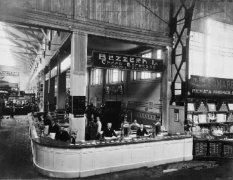
Understand the development history of coffee machine Coffee at the point in time
Exclusive privilege of one cup of coffee at a time in childhood (1901-1947) in 1901, the coffee machine designed by Luigu Bezzera successfully applied for a patent. In 1902, his friend Desiderio Pavoni added a pressure relief piston device to the machine and commercialized the machine for production and sale. In 1903, Bezzern spent ten thousand lire because of financial difficulties.
2015-11-03 Understand coffee machine development history coffee time