The source of Kopi Luwak continues.
For the past 20 years, cat poop coffee has been the "ultimate coffee", regarded by coffee sellers around the world as a money-making treasure due to its excellent taste and hard to come by, and even appeared in CNN News, Oprah and Hollywood movies.
I first read about cat poop coffee in a National Geographic magazine in 1981. Ten years later, in 1991, as coffee director at Taylors of Harrogate, I was the first to introduce cat poop coffee to the West. I bought only a kilo and didn't sell it through the company, thinking that maybe the novelty would interest the Yorkshire newspapers and radio stations where the company was based, which is naive now. The result was far more than I expected-newspapers, television, and radio were all over it. Since then, cat poop coffee has gradually entered the public eye.
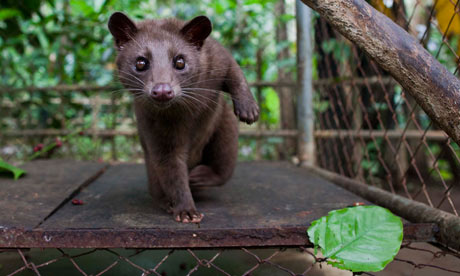
Coconut cats roam coffee plantations in Indonesia, and cat poop coffee comes from their poop
The real Indonesian cat poop coffee is collected from the feces of a local wild animal called Paradoxurus hermaphroditus. The coconut cat is a timid, solitary nocturnal animal that eats ripe coffee berries at night when the coffee plantation harvests. However, they cannot digest the seeds, known as coffee beans, and pass them out in their feces. The beans, which pass through the digestive tract and anal glands of coconut cats (which mark their territory with the smell of anal glands), are collected by farm workers and washed to develop a unique flavor that is widely admired. At that time, because coconut cats were wild and rare, feces were difficult to collect, and the quality of coffee beans harvested at different times varied, cat feces coffee was not a commercially viable crop, but an interesting coffee treasure, which is why I bought it.
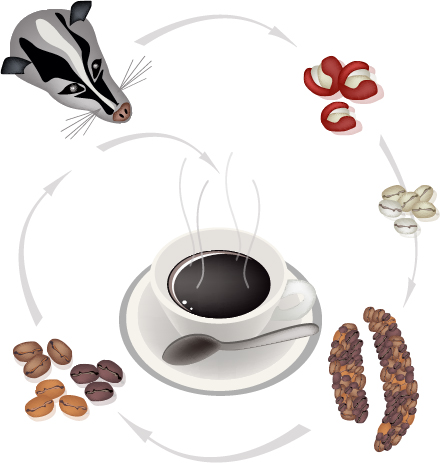
How a cup of cat poop coffee is made: Coconut cats eat coffee berries and expel indigestible seeds from their bodies. After these beans are washed and dried, they become valuable cat poop coffee
But now, it is hard to see the real original cat poop coffee. Most of today's cat poop coffee comes from wild coconut cats kept in cages, and they are generally kept in poor conditions. A Japanese scientist claims to have invented a way to tell the difference between real and fake cat poop coffee, and if only he could figure out whether coffee beans come from wild or captive coconut cats.
Coffee companies around the world are still using the original story of wild animal digestion to sell cat poop coffee, many claiming to harvest only 500 kilograms of cat poop coffee a year and using this scarcity to justify its expensive price (cat poop coffee usually costs $200 -400 per kilogram, sometimes more). In fact, I can't get an exact figure, but I estimate that the global annual production of cat poop coffee is at least 50 tons, and probably much more. Farmers in India, Vietnam, China and the Philippines are now joining in.
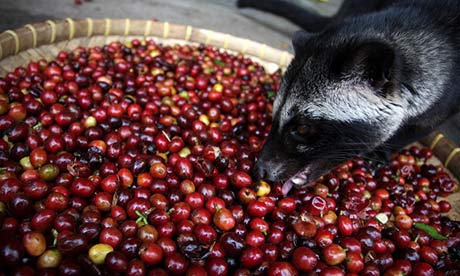
An Indonesian farm claims to produce 7000 kilograms of cat poop coffee a year from 240 captive coconut cats.
Share
Follow Coffee Search for the latest coffee updates. Reproduced from "Coffee Search"
Article URL: https://www.coffeesearch.net/coffee8363.html
Related Articles
- How did the Salvadoran coffee industry develop in Central America?
- What exactly does the golden cup extraction of coffee mean?
- The Origin of Coffee flower
- [2023 Starbucks World Earth Day] there are more meaningful things besides free Starbucks coffee!
- What kind of coffee is there in Spain? 9 Flavors of Spanish Coffee
- Aromatic African coffee| Kenya's coffee culture and historical production area
- Liberica Coffee Bean knowledge: the characteristics of Liberian Coffee beans of the three original species of Coffee beans
- The origin and formula of Spanish latte introduces the taste characteristics of Bombon coffee in Valencia, Spain.
- How to adjust the solution of over-extracted coffee
- What is the tasting period of coffee beans? What is the period of coffee and beans? How should coffee wake up and raise beans?