American media: the change in Chinese taste has boosted global coffee consumption
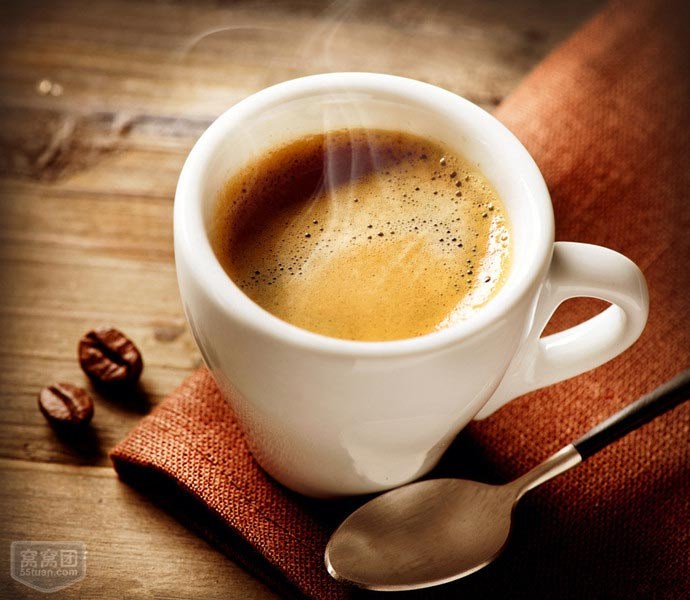
California-born Jim Li came to China to open a coffee shop four years ago. His "OceanGrounds" lattes sell for 38 yuan ($5.97) per cup, and the number of customers is growing. At first, most of the guests were polite white-collar workers and foreigners, but now "from the young to the old-it's hard to say," Li said. "the market is expanding."
Analysts say demand for small luxury goods such as imported fruits is rising rapidly in China, driven by both changes in Chinese tastes and the expansion of the middle class.
Coffee best reflects this shift. China consumes about 4.5 billion cups of coffee a year, well below the 133.9 billion cups in North America, but coffee consumption in China will increase by 18 per cent from 2014 to 2019, compared with 0.9 per cent in the US, according to Euromonitor. While coffee represents a Western lifestyle that is attractive to upper-class and middle-class consumers, tea is considered a more traditional drink, said Rafael Obote, a food and beverage analyst at BMI market research.
China has become the largest consumer of many goods because of its large population. The Chinese consume 30% of the world's rice products. But the Chinese drink only 1% of the world's coffee consumption, and the potential for growth is huge. Large coffee chains, such as Starbucks and Pacific Coffee, have opened stores in major Chinese cities, setting ambitious growth targets. Chinese mainland already has 823 stores and hopes to have 3000 by 2019. (translated by Lucy Kramer and Zhao Jueyun)
Share
Follow Coffee Search for the latest coffee updates. Reproduced from "Coffee Search"
Article URL: https://www.coffeesearch.net/coffee40127.html
Related Articles
- Why do Japanese people like extremely deep roasted coffee so much? The historical story of Japanese baking
- Can you make coffee with cola? Is hand-brewed coffee and iced coke good?
- How long will coffee beans go bad? Is the shelf life of coffee beans 12 months? How to tell if the coffee is bad?
- What is "extremely light roasted coffee"? The difference between Nordic roasted coffee and Japanese deep-roasted coffee
- Why does Ice-Drip coffee smell wine when it is left for a long time? How many days is recommended to finish drinking ice drops? Why do I feel astringent when I just made ice drops?
- Why are there so few coffee shops selling avgado? What kind of ice cream tastes good for Avgado? The origin of Affogato, the taste of making
- How to choose props for beginners in coffee pulling? What equipment do I need to teach myself latte?
- Should the direction of hand-brewed coffee circle be from inside out or from outside to inside? How to teach the size of the coffee circle
- There are many ways to make mocha pot latte. How to add milk to Mocha pot coffee is better to drink? Can a mocha pot be extracted with milk?
- Why can't the flavor of hanging ear coffee be brewed? How to control the concentration of coffee during the season?