How to process raw coffee beans with honey? Differences in the treatment of Costa Rican coffee beans with white, yellow, red, gold and black honey
Honey treatment? Isn't that sweet? How much honey is added to the coffee beans processed with honey? If lose weight can't drink? Please don't worry. You may be familiar with sun coffee and washed coffee but are not very familiar with honey processing coffee beans, today the front street will break down different types of honey processing.
But he is the usual way of Costa Rican coffee. This method requires a great deal of precision and expert knowledge to use correctly. Note that honey processing does not come from genuine honey. The "honey" mentioned in this method is actually from the mucus layer of beans, which is usually sticky and sticky, so it will be called honey treatment.
How exactly did he do it?
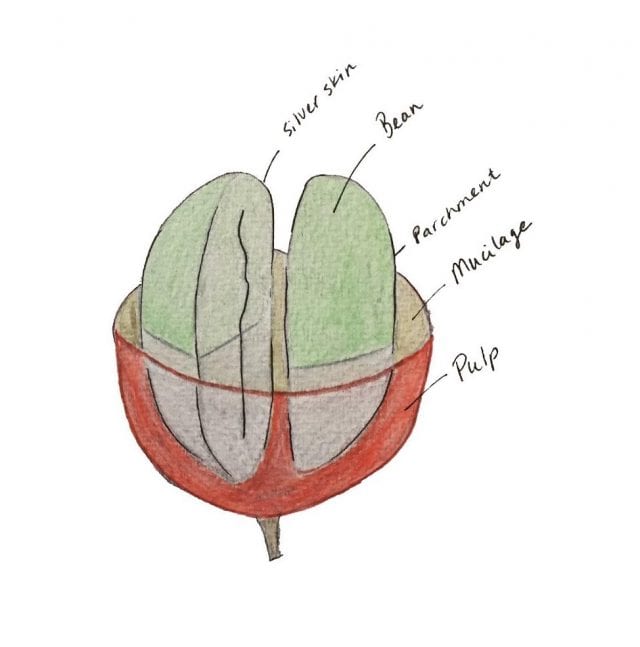
Coffee beans are not beans at all. They are coffee cherry seeds. Yeah, that's right. Your favorite caffeinated drink comes from juicy red (and sometimes yellow or orange) fruit.
Before roasting the "coffee beans", you must remove the coffee berry layer and dry the coffee beans to a moisture content of about 11%. The two most common methods of removing cherries are 1) water removal (water wash treatment) and 2) allowing coffee to dry in sunlight before mechanical removal (natural/dry treatment).
However, honey processing is in the middle. You remove the skin but leave some flesh inside. When the beans dry, the "slime" is still present.
To process coffee in this way, the harvested cherries need to be beaten. This means separating the pulp from the beans. However, unlike the washing method, you must leave some mucus on the beans. After that, the beans are placed in bed and dried for 10-15 days.
The result of this process is that the acidity of the beans is higher than when using natural methods, but lower than when washing the beans. This unique balance makes this method very popular among coffee lovers, and you can see that this method is used to process many coffee beans from Central America, especially Costa Rica.
White honey:
Remove 80-90% of mucus
Beans are dried directly on elevated beds
Beans dry rapidly at high temperatures and parchment turns white
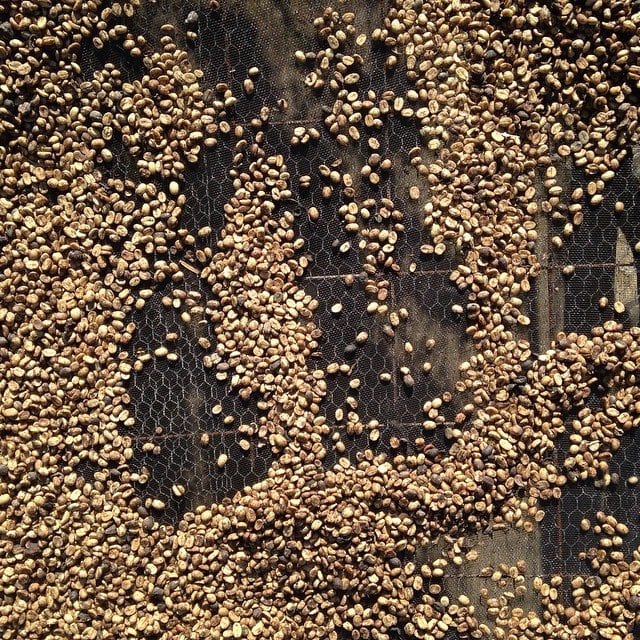
Yellow honey:
Remove 50% of mucus
Beans dry in low wind and moderate sunlight
Beans are raked 3 to 4 times a day and dried for up to a week
White honey coffee tends to be mechanically cleaned, leaving minimal mucus around the beans. Yellow honey coffee is usually washed, leaving more mucus around the forehead of the coffee bean.
Red honey:
80-90% of mucus remains on beans
Beans are dried on elevated beds in cloudy or cool conditions
Beans rake in the first morning and then only once or twice in the afternoon
Black honey:
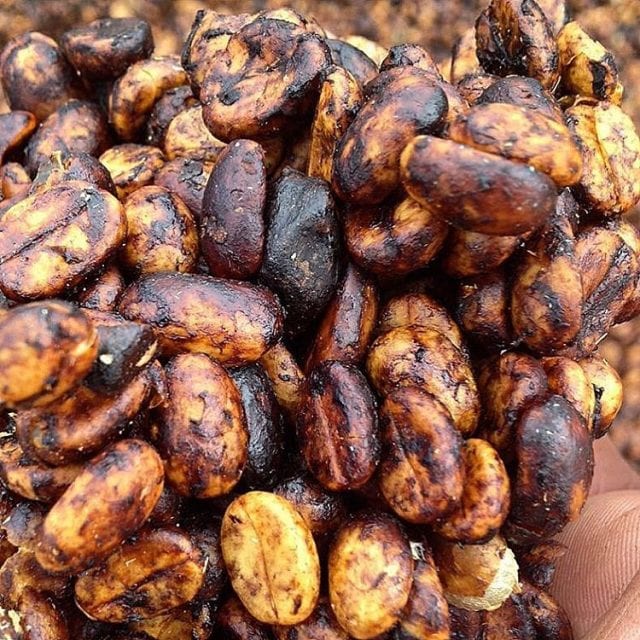
Keep the mucus as close to intact as possible
Beans are dried in full shade on elevated beds
The beans do not move at all on the first day and then rake once a day; drying times can take up to three weeks.
Gold, red and black honey
The difference between the three is the amount of light the beans are exposed to and the drying time. More humidity and slower development can lead to black honey. A little less humidity will result in red, and even less will result in gold.
Gold honey will dry when it is warm, sunny and with little humidity. This helps it dry quickly. However, red honey is processed in more shade to slow drying times. This will increase the moisture to which the beans are exposed. Black honey takes longer and dries in more shade.
The darker the honey, the more work needs to be done. Black honey processed coffee requires continuous monitoring to avoid over-fermentation and mold. They are also generally more likely to lose their freshness. Green beans should be roasted as soon as they arrive to capture their sweet honey flavor.
Dark honey is popular in espresso coffee, and it tastes almost as if someone added a drop of honey to your cup. In contrast, white and yellow processed coffee tends to have a cleaner taste when prepared as filtered coffee.
Share
Follow Coffee Search for the latest coffee updates. Reproduced from "Coffee Search"
Article URL: https://www.coffeesearch.net/coffee143362.html
Related Articles
- Detailed explanation of Jadeite planting Land in Panamanian Jadeite Manor introduction to the grading system of Jadeite competitive bidding, Red bid, Green bid and Rose Summer
- Story of Coffee planting in Brenka region of Costa Rica Stonehenge Manor anaerobic heavy honey treatment of flavor mouth
- What's on the barrel of Blue Mountain Coffee beans?
- Can American coffee also pull flowers? How to use hot American style to pull out a good-looking pattern?
- Can you make a cold extract with coffee beans? What is the right proportion for cold-extracted coffee formula?
- Indonesian PWN Gold Mandrine Coffee Origin Features Flavor How to Chong? Mandolin coffee is American.
- A brief introduction to the flavor characteristics of Brazilian yellow bourbon coffee beans
- What is the effect of different water quality on the flavor of cold-extracted coffee? What kind of water is best for brewing coffee?
- Why do you think of Rose Summer whenever you mention Panamanian coffee?
- Introduction to the characteristics of authentic blue mountain coffee bean producing areas? What is the CIB Coffee Authority in Jamaica?