Indonesian coffee cultivation history Indonesian coffee bean flavor taste characteristics How does it taste good
Coffee cultivation in Indonesia
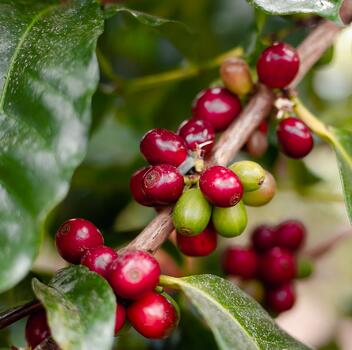
When the Dutch and Japanese left, the local governor distributed the plantation to the labourers. To this day, more than 90% of coffee on Indonesian islands is grown by small family farms.
Unfortunately, about 90% of the coffee is still in the Robusta category-you can't blame them after the coffee rust. Fortunately, Arabica coffee production has revived in recent years, making specialty coffee beans from Sumatra and Java increasingly popular.
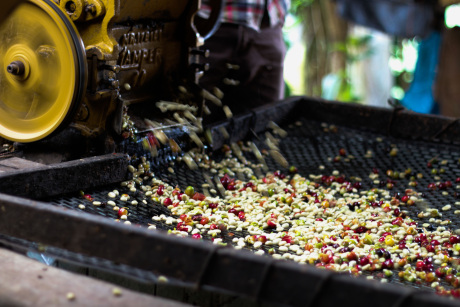
Most coffee beans in Indonesia are processed by the "Giling Basah" method, which emerged in the 1970s, when Japanese investors saw success in other parts of the neighborhood. Unlike washing or processing, the harvested coffee cherries are hand-desized on the farm of origin and then dried on the patio for a few days.
The semi-dried beans (about 30-50% moisture) are then brought to the collector, who mixes beans from different producers, passes them through a sheller while they are still wet, and then leaves them on the patio to dry for a few days. This process is thought to enhance the earthy and spicy flavor of coffee grown in this part of the world.
How does Indonesian coffee taste?
Since Indonesia contains thousands of islands, not all coffee from the country tastes the same. In fact, some skilled professional coffee tasters can easily tell the difference between islands by flavor alone.
Let's take a closer look at the three major producers of specialty coffee beans.
Sumatra is a household name in North America and is popular for its full-bodied, low acidity and earthy, spicy and forestry flavors.
Sulawesi (sometimes called Celebes) is little known, but its super beans are very similar to those in Sumatra. However, they do tend to have a lighter butter taste, more intense cedar aromas and slightly fruity flavors.
Java coffee beans are unlikely to come from Arabica plants, but the few super coffee beans we encounter there have a strong spicy flavor and earthy sweetness.
List of Indonesian Coffee
Flavor: earthy, spicy, forestry, low acidity, mild sweetness
Processing: Giling Basah, washing, natural
Main producing areas: Sumatra, Java, Sulawesi
Harvest: may to November
Share
Follow Coffee Search for the latest coffee updates. Reproduced from "Coffee Search"
Article URL: https://www.coffeesearch.net/coffee143194.html
Related Articles
- Detailed explanation of Jadeite planting Land in Panamanian Jadeite Manor introduction to the grading system of Jadeite competitive bidding, Red bid, Green bid and Rose Summer
- Story of Coffee planting in Brenka region of Costa Rica Stonehenge Manor anaerobic heavy honey treatment of flavor mouth
- What's on the barrel of Blue Mountain Coffee beans?
- Can American coffee also pull flowers? How to use hot American style to pull out a good-looking pattern?
- Can you make a cold extract with coffee beans? What is the right proportion for cold-extracted coffee formula?
- Indonesian PWN Gold Mandrine Coffee Origin Features Flavor How to Chong? Mandolin coffee is American.
- A brief introduction to the flavor characteristics of Brazilian yellow bourbon coffee beans
- What is the effect of different water quality on the flavor of cold-extracted coffee? What kind of water is best for brewing coffee?
- Why do you think of Rose Summer whenever you mention Panamanian coffee?
- Introduction to the characteristics of authentic blue mountain coffee bean producing areas? What is the CIB Coffee Authority in Jamaica?